

The insect mesh
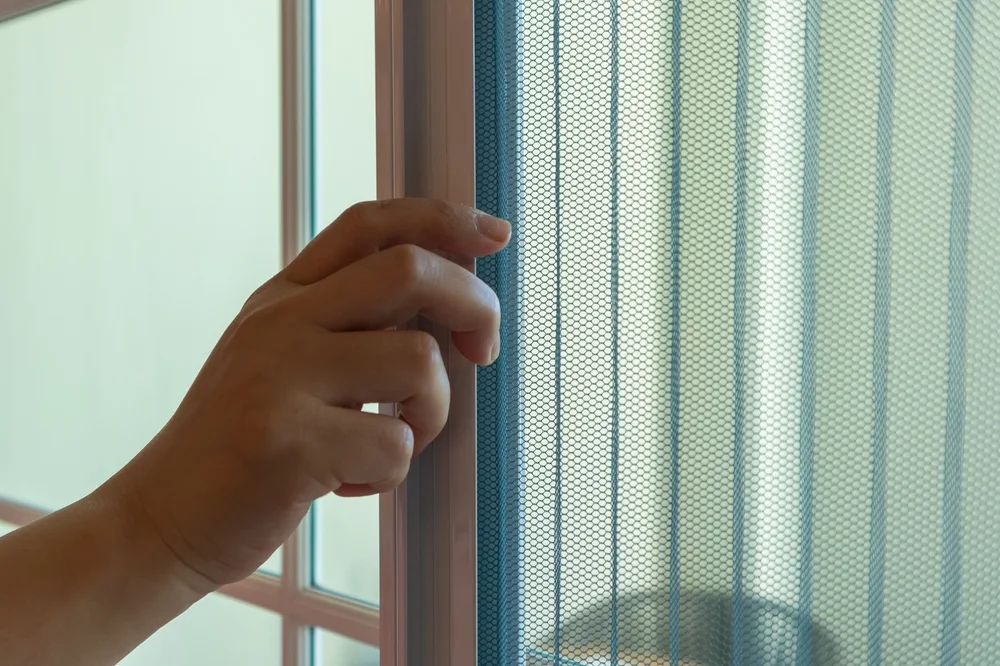
A fine fibreglass layer that lets the air and the light through while it holds back mosquitoes and flies. Pull it down on its own for a breeze.
A blind fly screen is two things in one slim unit above the window. One layer is a fine insect mesh, the other a roller blind, each with its own bar. Pull the mesh and you get air with no bugs. Pull the blind and you get shade, privacy or a fully dark room. So one fitting deals with the insects and the sun at once, and we look after homes the length of Dubai and the UAE.
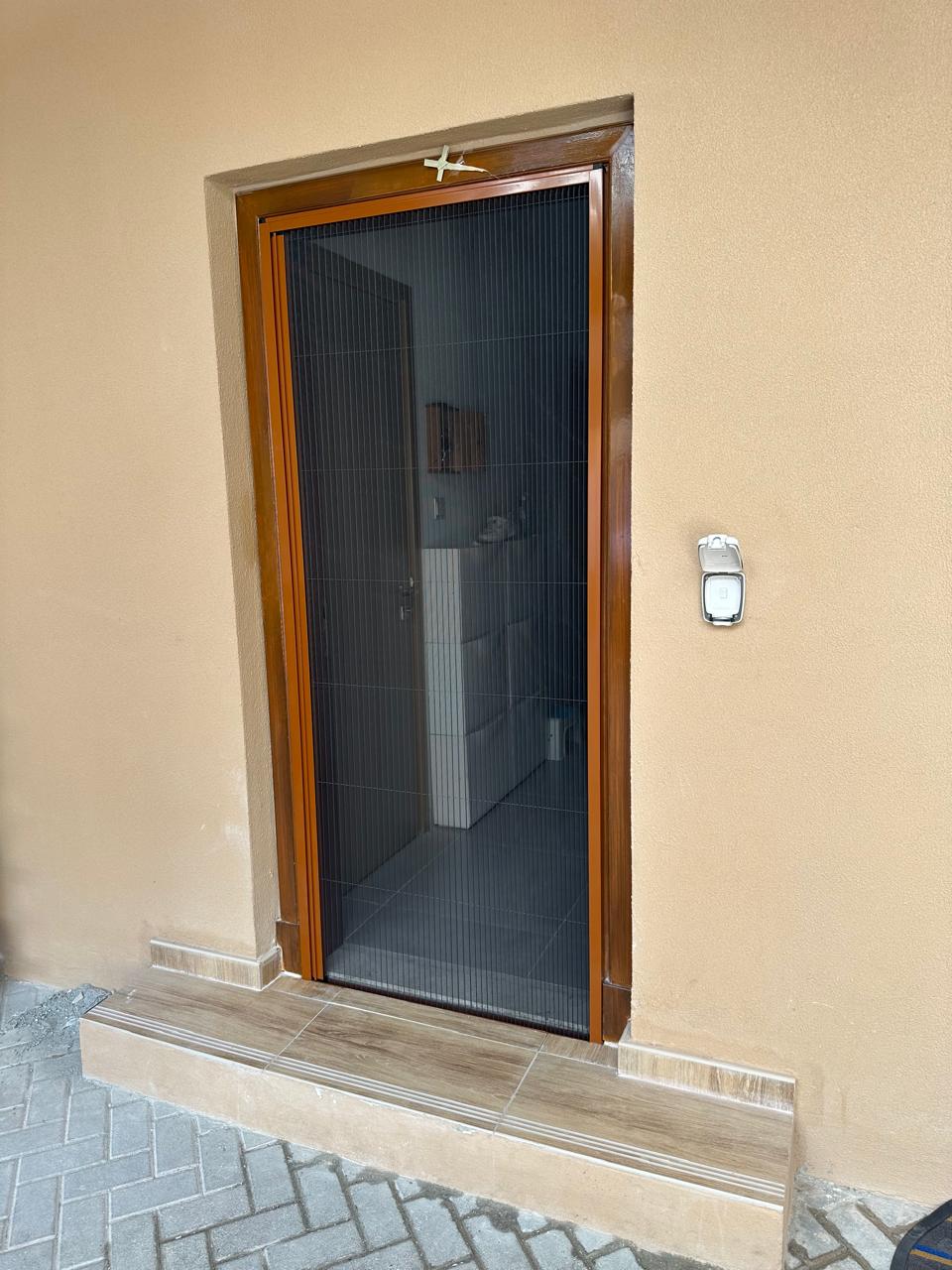 Screen + blind · One unit
A short look at the mesh layer, the blind layer and the two of them together on a real window. Press a clip to watch.
One cassette sits above the opening and holds two rollers. Here is what each part of the unit gives you, and the choices that come with it.
A fine fibreglass layer that lets the air and the light through while it holds back mosquitoes and flies. Pull it down on its own for a breeze.
A second layer in your chosen fabric, lowered for shade, a dark room or privacy from the street, then wound back up once you are done.
Both rollers tuck into a single neat housing across the top of the frame, so the window keeps a clean look with either layer up or down.
The mesh and the blind each have their own bottom bar on their own track, so you move one without touching the other, or run both together.
With the blind down, less of the harsh UAE sun reaches the glass, so the room stays comfortable through the hottest stretch of the day.
Mesh by day for air and a clear view, blind by night for dark and privacy, or both at once. The unit handles each setting from one spot.
The 2-in-1 shines in any room where you want fresh air but also need to manage the light. These are the spots people choose it for first.
Sleep with the window open for air, with a blackout blind pulled down behind the mesh so the early sun never wakes the room too soon.
The windows that catch the fierce late sun. Drop the blind in the afternoon to cut the glare and the heat, then raise it for the evening.
Glare washing out the television is a daily annoyance. A dimout blind tames the bright window while you keep the room open and aired.
Daytime naps need a dark room and fresh air at once. The blind brings the dark, the mesh keeps the window open and bug-free.
Windows that face a street or a walkway need privacy. The blind closes the view in from outside while the mesh still lets the air in.
A bright window puts glare on a laptop screen all afternoon. Drop the blind to a comfortable level and keep working with the window aired.
We have fitted screens and 2-in-1 units in UAE homes since 2017. The rest of what we make sits on our services page.
The mesh and the blind are both cut to your exact opening, so each layer runs true on its track and the cassette sits square across the top.
Strong tape holds the housing in most cases, not screws, so your frames stay unmarked and a tenant can have one fitted without a worry.
Blackout, dimout or sunscreen for the blind, grey or charcoal for the mesh, picked from samples so the unit suits the room it goes in.
The mesh and the roller mechanisms come from Italian and European makers, so both layers keep moving smoothly through years of daily use.
We measure the openings at no cost and charge nothing for the call. You see the 2-in-1 price before a thing is built, with nothing due up front.
The aluminium frame is covered for five years and the mesh for one, with a mend or a re-mesh down the line should either layer want it.
A 2-in-1 runs higher than a plain screen, since a whole blind is built in beside the mesh. Every figure here is a starting point, fixed in the end by the size and the blind fabric, before 5 percent VAT.
The first three are 2-in-1 units; the last is a mesh-only screen for anyone who wants insect protection without a blind. A bigger opening or a blackout fabric pushes the figure up, so it is set one opening at a time at the free measure, with nothing due until you say yes. Prices come before 5 percent VAT, and payment can be cash or card.
Three steps take you from a first message to a screen-and-blind unit working on the window, arranged around your day.
We come round, measure each opening, and bring mesh and blind samples so you can settle on the fabric and colour before we make a thing.
The mesh and the blind are cut to your opening and set in one cassette, in the fabric you chose, ready within four to eight working days.
We mount the unit, mostly on tape with nothing drilled, then run both layers up and down to check each rolls and seals before we leave.
Our blind screens go in all over the Emirates, and the measure is free wherever you sit. Separate pages cover Abu Dhabi and Dubai Hills, with every community in between looked after too.
A handful of 2-in-1 units from recent work. We will put real photos from homes around the country here before long.
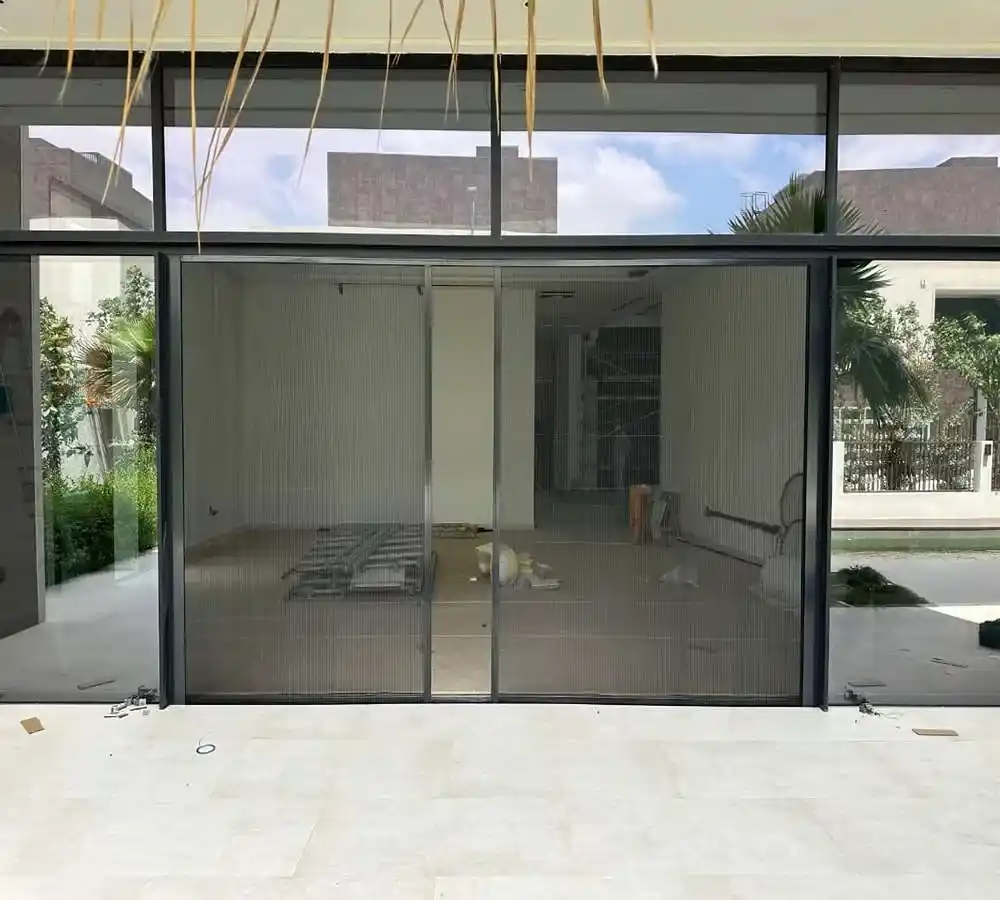
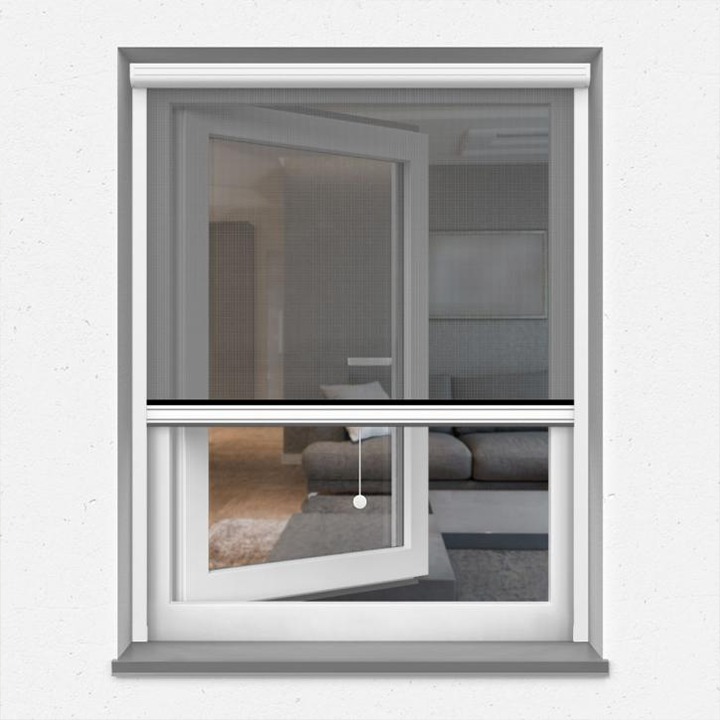
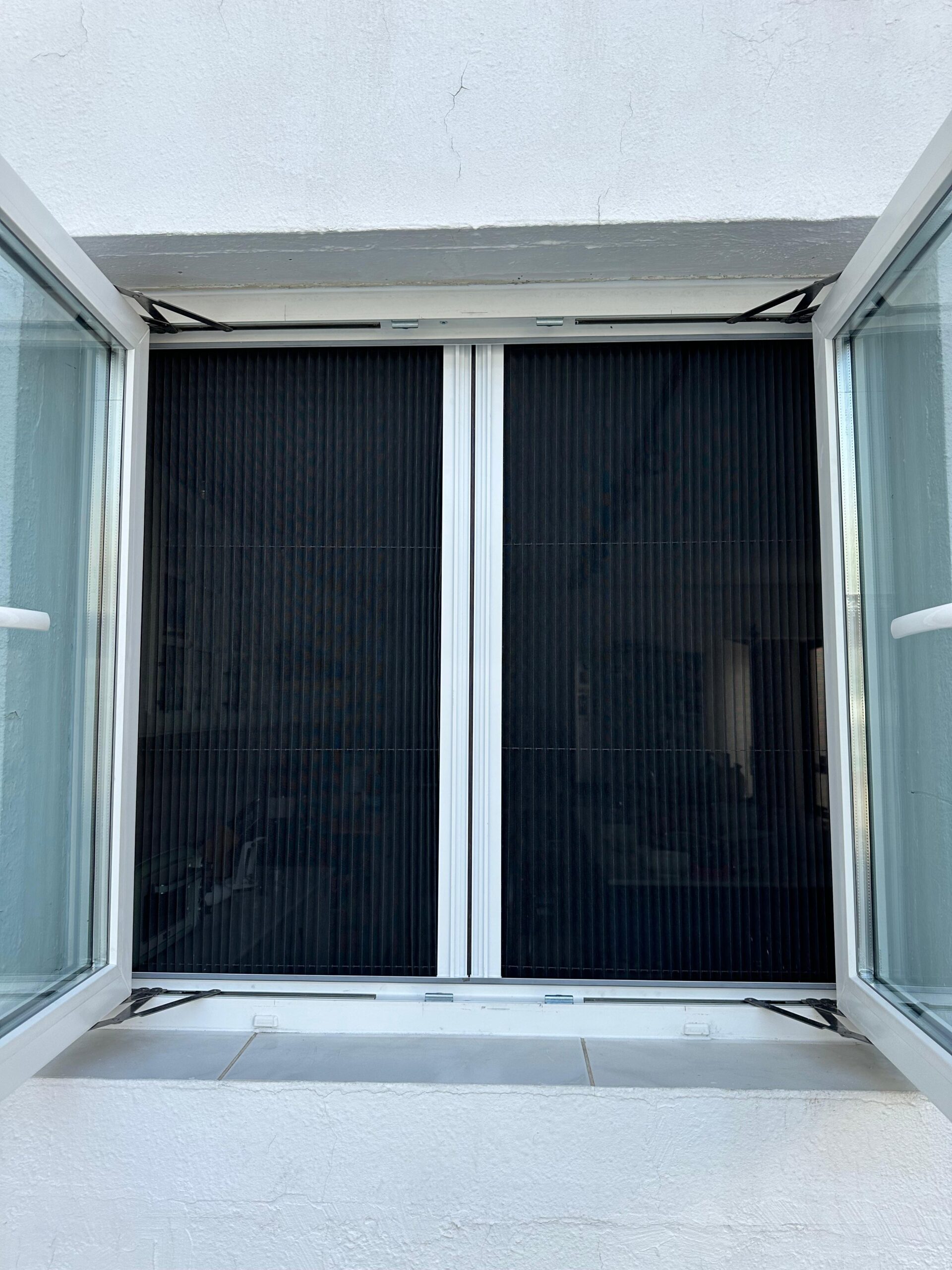
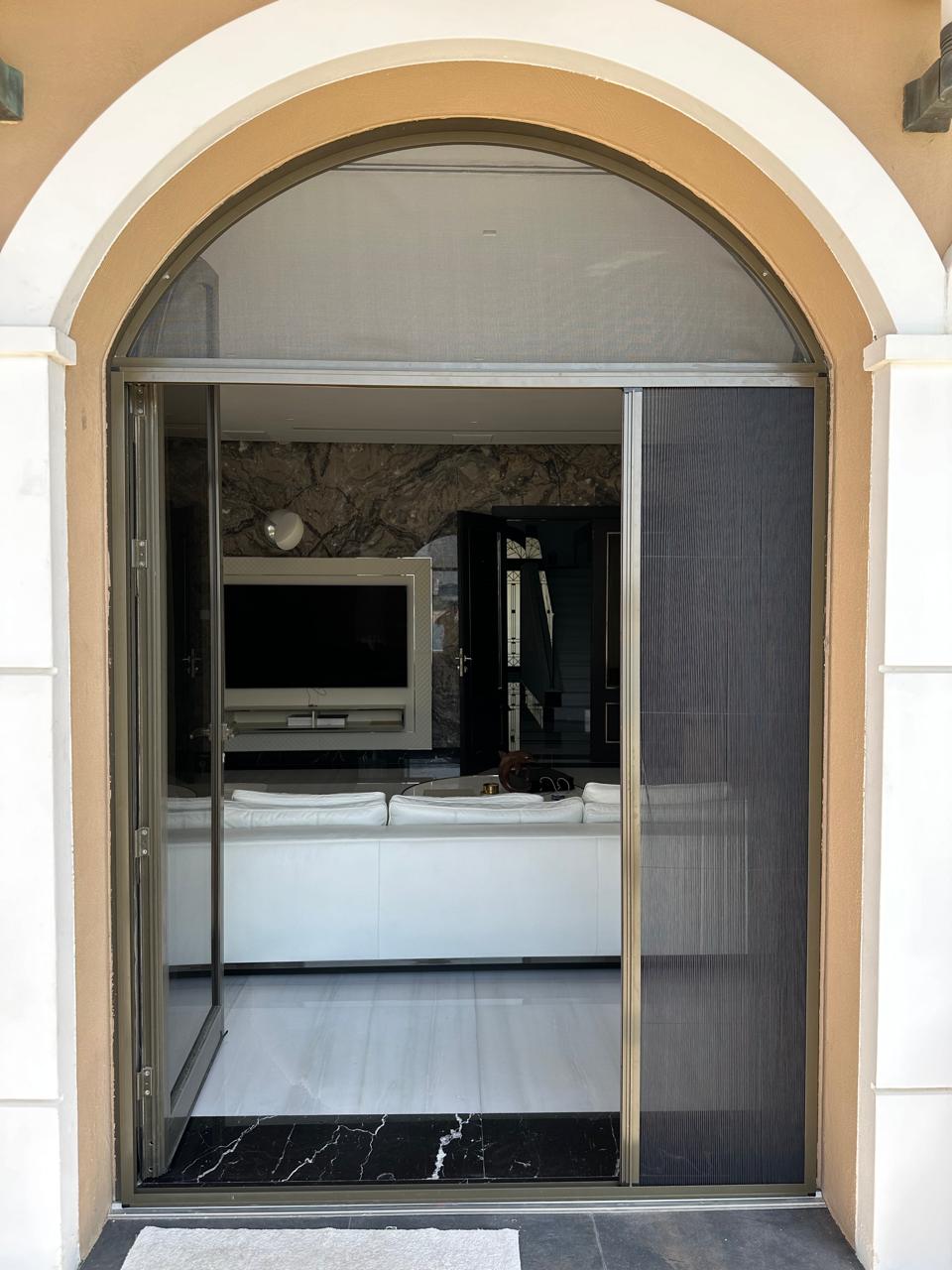
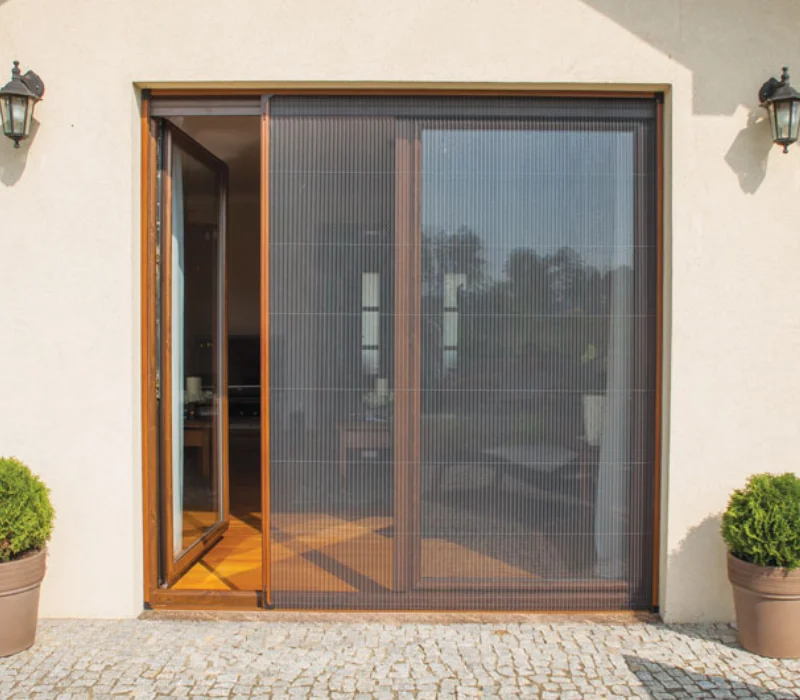
How the 2-in-1 works, what each layer does, which fabric to pick, and what the unit costs to fit. Tap a heading to read more.
A blind fly screen rolls two products into one. Inside a single cassette across the top of the opening sit two rollers, one carrying a fine insect mesh and the other a blind in the fabric you choose. Each layer has its own bottom bar running in its own channel, so they move on their own. You can have only the mesh down, only the blind down, or both at the same time, and either winds back up out of sight when you do not want it.
The point of the design is that one opening usually needs two things at different times. In the daytime you want air and a view but no insects, which is the mesh. At night or in the harsh afternoon you want dark, cool or privacy, which is the blind. Buying them on their own means two units and two fittings on the same window. The 2-in-1 handles both jobs from one tidy housing, which is why people reach for it on the windows that matter most.
The insect side is a fine fibreglass net, the same kind that goes on a standard screen. It lets the breeze and the daylight through while it stops mosquitoes and flies at the surface. On a warm evening you pull just this layer down, leave the window open, and the room airs without anything flying in. Grey or charcoal mesh both keep the view clear, with charcoal sitting back against the glass a little more.
This part matters for more than comfort. Mosquitoes carry a fair share of what the World Health Organization follows, the broad set of vector-borne disease and dengue among them. Keeping an open window screened is a simple guard against that, and on a blind screen you get it without giving up the blind. The mesh works exactly as it would on our plain window fly screens.
The second layer is a roller blind, and it is what sets this product apart from every mesh-only screen. Drawn down, it gives you control over the light and the view. A blackout fabric takes the room close to fully dark, which is what a bedroom or a nursery wants for proper sleep. A dimout fabric knocks back strong sun and glare while leaving the room usable, good for a lounge or a study. A lighter sunscreen fabric cuts the harshest light but keeps a soft view out.
There is a practical side beyond light. A blind drawn over a sunny window keeps much of the heat from reaching the glass, so the room holds its cool and the air conditioning works less hard come afternoon. On an opening that faces a street or a walkway the blind also shuts the view in from outside, giving privacy the mesh alone cannot. You get all of that from the same unit, switched on or off in a second.
Not every window needs a blind screen, and we will say so at the measure rather than oversell it. Where it earns its keep is any opening that wants air and light control at once. Bedrooms top the list, since you sleep with the window open but want the room dark. West-facing windows that take the late sun come next, then living rooms where glare lands on a screen, nurseries during daytime naps, and ground-floor openings wanting cover from a path or a road.
For a window that only ever needs insects kept out, a plain screen is the cheaper, simpler answer, and we are happy to fit that instead. Many homes end up with a mix, a 2-in-1 on the bedrooms and the sunny side, plain screens elsewhere. If you are weighing a fold-away mesh as well, our pleated screens and retractable screens pages cover those.
Two choices shape how a blind screen feels in the room: the blind fabric and the mesh colour. For the blind, blackout is the pick where you want the room properly dark, dimout where you want to soften the light but still see, and sunscreen where keeping a hint of the view matters more than full shade. The fabrics come in neutral tones that sit quietly against most walls, so the unit does not shout for attention.
For the mesh, grey and charcoal each hold a clear view and pass the air, charcoal adding a little daytime privacy and fading back against the glass. We carry samples of every fabric and mesh to the visit, so you can hold each one up at the real window in its real light before settling. Our mosquito mesh and insect screen pages say more about the mesh itself.
It opens with a free visit. We measure every opening you want a blind screen on down to the millimetre, since both the mesh and the blind must match the frame exactly to run true and seal at the edges. We jot down the fabric and mesh you have picked, write a price for each opening, and total them. Nothing is owed for the visit and nothing is signed on the day.
For fitting, the housing is mounted on strong double-sided tape in nearly every case, so nothing is drilled into the window frame, the surround or the wall. The tape keeps its grip through the Dubai heat and lifts away cleanly if a unit is ever moved, on aluminium or uPVC frames alike. That matters for renters most of all, since a blind screen goes on and comes off with no mark and no drilling to square with a landlord.
A blind screen asks very little. A wipe of the mesh and the blind fabric now and then keeps both clean, and the rollers are built to keep winding smoothly for years. Now and again something needs a hand, a torn mesh, a frayed edge on the blind or a roller that has stopped winding cleanly, and on a 2-in-1 there are two layers that can want it. We will come and put any of that right, on a unit of ours or one that was on the window when you arrived.
Usually a mend, or a new sheet of mesh or blind fabric, sets it right again, for far less than a fresh unit. There is no charge to call us out, just as with new work. Drop a photo of the screen and the fault into WhatsApp and we will say what it takes to fix. Our fly screen repair and mesh replacement pages have more.
Getting going is easy. Send a WhatsApp mentioning the windows you have in mind and your area, and we will arrange a free measure around you. There is no charge for the visit and no pressure either way, so you can have us measure, choose the fabric and quote, and then take your time on the decision.
On price, a window blind screen opens at AED 750, a broader one at AED 1,100 and a unit for a door at AED 1,500, all before VAT, with the blind fabric and the size setting the final figure. A plain mesh screen, if that is all a window needs, starts at AED 300. We fix the price for each opening on the visit, so it is plain before a thing is made. Once you are ready, our contact page carries every way to reach us.
The blind screen is the one to pick when you want shade and privacy too. For insects alone, these mesh-only options may suit better.
Plain mesh screens for every window, fixed or openable.
A fold-away mesh that gathers to the side when open.
Mesh that rolls neatly away into a slim cassette.
Clear netting to suit a window, a door or a bed.
Quick answers on the two layers, the fabrics, the price and the fitting before you get in touch.
It is a 2-in-1 unit that holds two separate layers in one slim cassette above the window: a fine insect screen and a roller blind. Each has its own bottom bar, so you pull the mesh down when you want air without bugs, or the blind down when you want shade, privacy or a dark room, or both at once. One fitting on the window gives you insect protection and a blind together, instead of buying and mounting the two on their own.
The blind is a roller blind in the fabric you choose. A blackout fabric blocks the light almost fully, which suits a bedroom or a nursery for sleep. A dimout fabric softens strong sun and cuts glare on a screen or a television while keeping the room usable. The blind also gives privacy on a ground-floor or street-facing window and keeps some of the summer heat off the glass, so the room stays cooler through the afternoon.
Yes. The two layers run on their own tracks and their own bars, so they work apart or together. On a warm evening you might have the window open with only the mesh down for the breeze. At night you can pull the blind down behind it for dark and privacy while the mesh still keeps insects out. Either layer rolls back up into the cassette out of sight when it is not needed.
Bedrooms are the most common spot, where you want the window open for air but the room dark for sleep. West-facing windows that catch the late sun, living rooms where glare hits the television, nurseries at nap time and ground-floor windows that need privacy all suit it too. Anywhere you would otherwise want both a fly screen and a blind, the 2-in-1 does both jobs from one neat unit on the frame.
A window blind fly screen starts from AED 750, a wide window from AED 1,100 and a door-height unit from AED 1,500, each before 5 percent VAT. It costs more than a plain screen because you are getting a blind as well, and the figure depends on the size and the blind fabric you pick. If you only need insect protection, a plain mesh screen starts at AED 300. We price each opening at the free measure, and you can pay by cash or card.
No. The cassette goes up with strong double-sided tape in most cases, not screws, so no holes go into the window frame, the glass surround or the wall. The tape holds firmly through the Dubai heat and lifts off cleanly if the unit is ever moved. It works on aluminium and uPVC window frames, and because nothing is drilled, a tenant can fit a blind screen without marking the property or risking a deposit.
The insect layer is a fine fibreglass mesh in grey or charcoal that keeps the view clear and lets air through. The blind layer comes in blackout for full darkness, dimout for softened light, or a lighter sunscreen fabric that cuts glare while you keep some view. Blind fabrics come in neutral tones to suit most rooms. We bring samples of both the mesh and the blind to the free measure so you can hold them to the light before deciding.
The unit is made within four to eight working days of the measure, since both layers are cut to your exact opening. Fitting one cassette takes a little longer than a plain screen because there are two layers to set and test, but it is still a short job, usually well under half an hour per window. We give firm dates at booking, and the tape fitting means no drilling, no dust and nothing to clear up afterwards.
Let us know which windows you are weighing and your area, and we will book a free measurement, mesh and blind samples in hand. WhatsApp is quickest.
Leave your details and which windows you are thinking of, and we will reply on WhatsApp to set up a free measurement.
The measure is free and there is nothing to sign up for. Our days run Monday to Saturday, morning through evening.