

Mesh on a spring tube
The mesh winds onto a spring-loaded tube inside a slim cassette, the same idea as a roller blind, but in fine insect mesh.
A roller fly screen keeps its mesh on a spring tube and rolls it away on its own. Pull it down over a window or across a door, let go, and it winds itself neatly back into a slim cassette. You get mesh when you want it and a clear frame when you don't.
 Rolls itself away · Top, left or right
A quick look at a pull-down roller over a window, a side roller across a door, and the mesh winding gently back into the cassette. Tap a video to play.
A roller screen is built around a simple, reliable spring tube. Here's what that gives you on a window or a door, and why a good one is worth choosing over a bargain version.
The mesh winds onto a spring-loaded tube inside a slim cassette, the same idea as a roller blind, but in fine insect mesh.
Draw the screen out by its handle, and when you release it the spring rolls it neatly back out of the way on its own.
We set the roller to suit the opening, pulling down from the top of a window or across from the left or right of a door.
Rolled away, the whole screen sits in a narrow box at the edge of the frame, so there's almost nothing on show.
Wound inside the cassette when it's not in use, the mesh stays clean and out of the sun, which helps it last.
A brake in the roller lets it rewind at a gentle, steady pace rather than snapping back, so it's quiet and safe.
One of the handy things about a roller is that we can set which way it rolls to suit how you use the window or door. We sort this out at the measurement.
A vertical roller for windows. You pull the mesh down over the glass and it springs back up into the top cassette. Tidy and out of the way.
A horizontal roller with the cassette on the left. You pull the mesh across to the right to cover a door or a wide window.
The same, with the cassette on the right. You pull the mesh across to the left, whichever side suits the way you come and go.
A roller shines anywhere you'd rather not look at a screen all day. Pull it out when you want air, and let it vanish the rest of the time. These are the spots we fit them most.
A pull-down roller is ideal on a window, dropping over the glass when you want air and rolling away when you don't.
A side roller covers a single door neatly, pulling across when you need it and rolling back as you pass through.
Small openings and serving hatches suit a compact roller that simply disappears when the hatch is closed.
Let the night air in without insects, then roll the screen away in the morning so the window looks clear again.
Keep a desk window usable and bug-free, with the mesh gone the moment you no longer need it open.
If you'd rather not see a screen all day, a roller gives you mesh on demand and a clear frame the rest of the time.
On a roller, everything rides on the spring and the brake, and a bargain unit gives itself away inside a season. We've been making screens here since 2017 and use good rollers, with our own team measuring and fitting. The wider range is on our services page.
We fit quality spring rollers with a controlled rewind, so they glide, don't snap back, and keep working for years.
Top, left or right, the roller is configured to the way you use the window or door, not forced into one layout.
No one else in the UAE carries German, Italian and Turkish systems together, which lets us match the roller properly to your opening.
Cassette and tracks bond on with strong tape, leaving your frame hole-free and nothing to patch up once it's done.
We measure the opening, recommend the roll direction, and quote you on the spot. There's no charge for the visit.
What a roller costs comes down to the size of the opening, the direction it rolls and the mesh. Treat the figures below as a guide; the free site visit pins down the exact number.
Add 5% VAT to any figure here. A home visit, at no cost, firms these guide prices into an exact one for your opening, and payment is by cash or online.
Getting a roller screen in takes three simple steps, and we leave the place tidy when we go.
We visit, measure the window or door, and talk through which way the roller should run for the way you use it. The visit is free with no obligation to order.
We build the roller to the exact size in the direction you chose and your mesh colour. Made to measure, it's usually ready in 4 to 8 working days.
On install day we tape on the cassette and side tracks, set the spring tension and brake, and run it up and down with you to confirm a smooth glide and rewind.
Our roller fitting covers homes and villas all over the city, and reaches into Abu Dhabi, Sharjah and Ajman. Pull-down window rollers go down well in homes around JVC, Dubai Hills, Mirdif and The Springs. The measurement is free everywhere we cover.
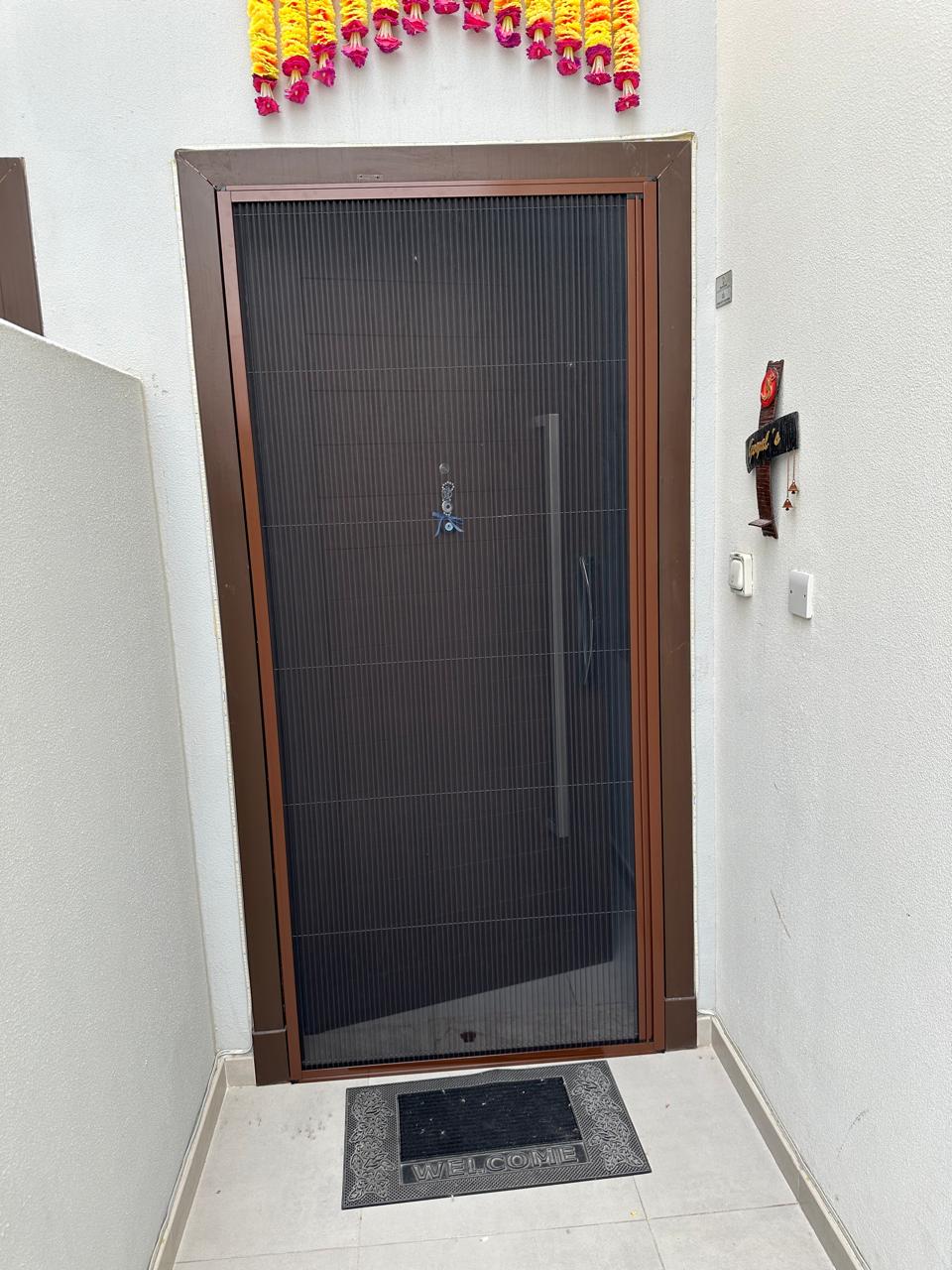
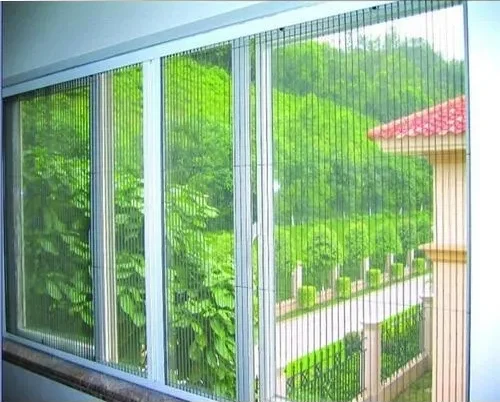
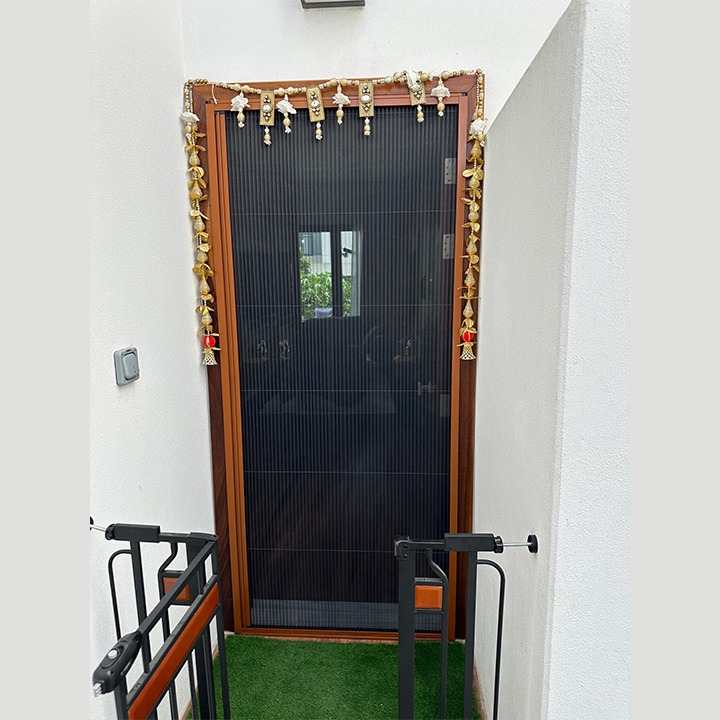
A handful of roller jobs from around the city. We add genuine project photos here as more get finished.
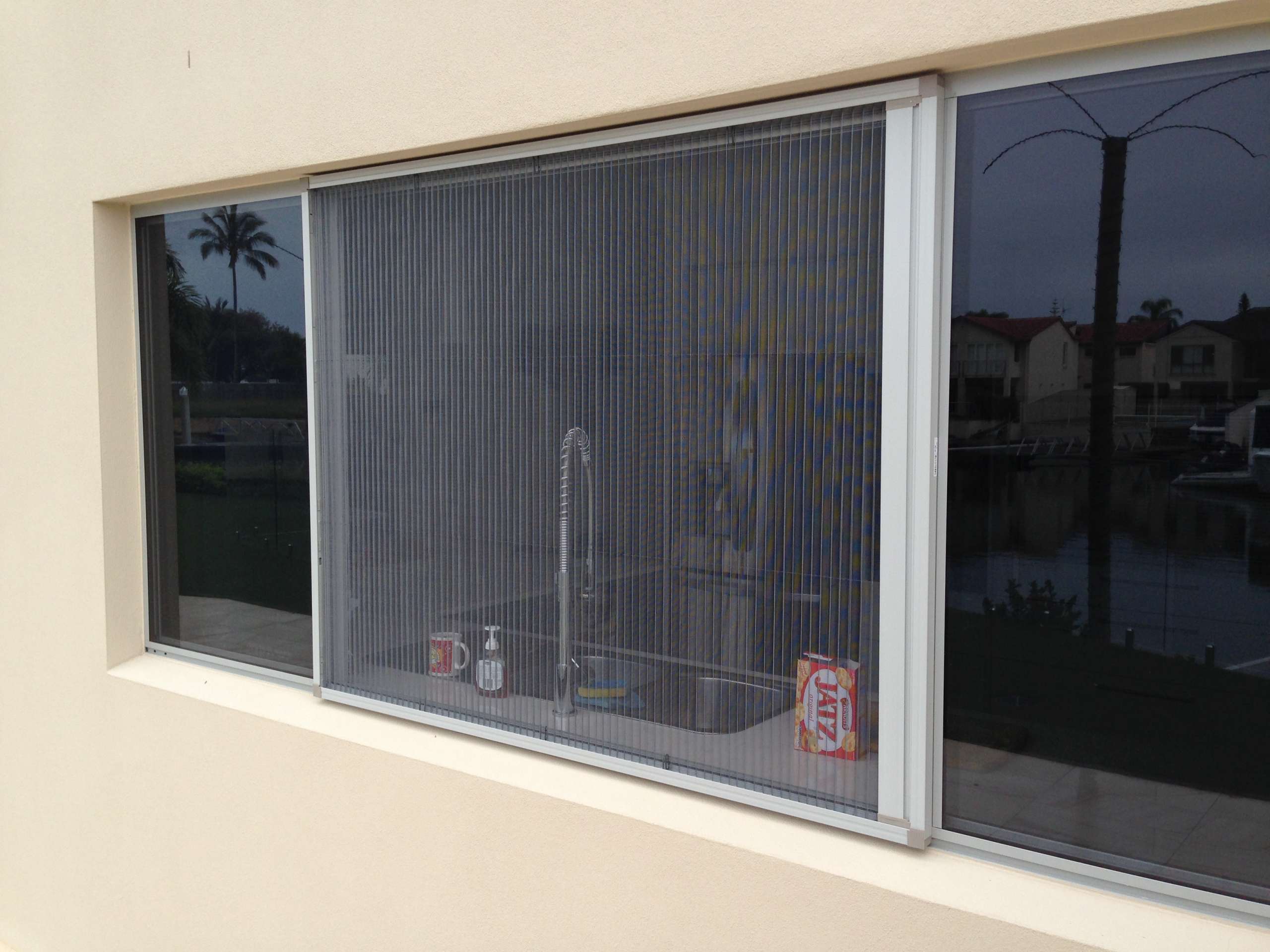
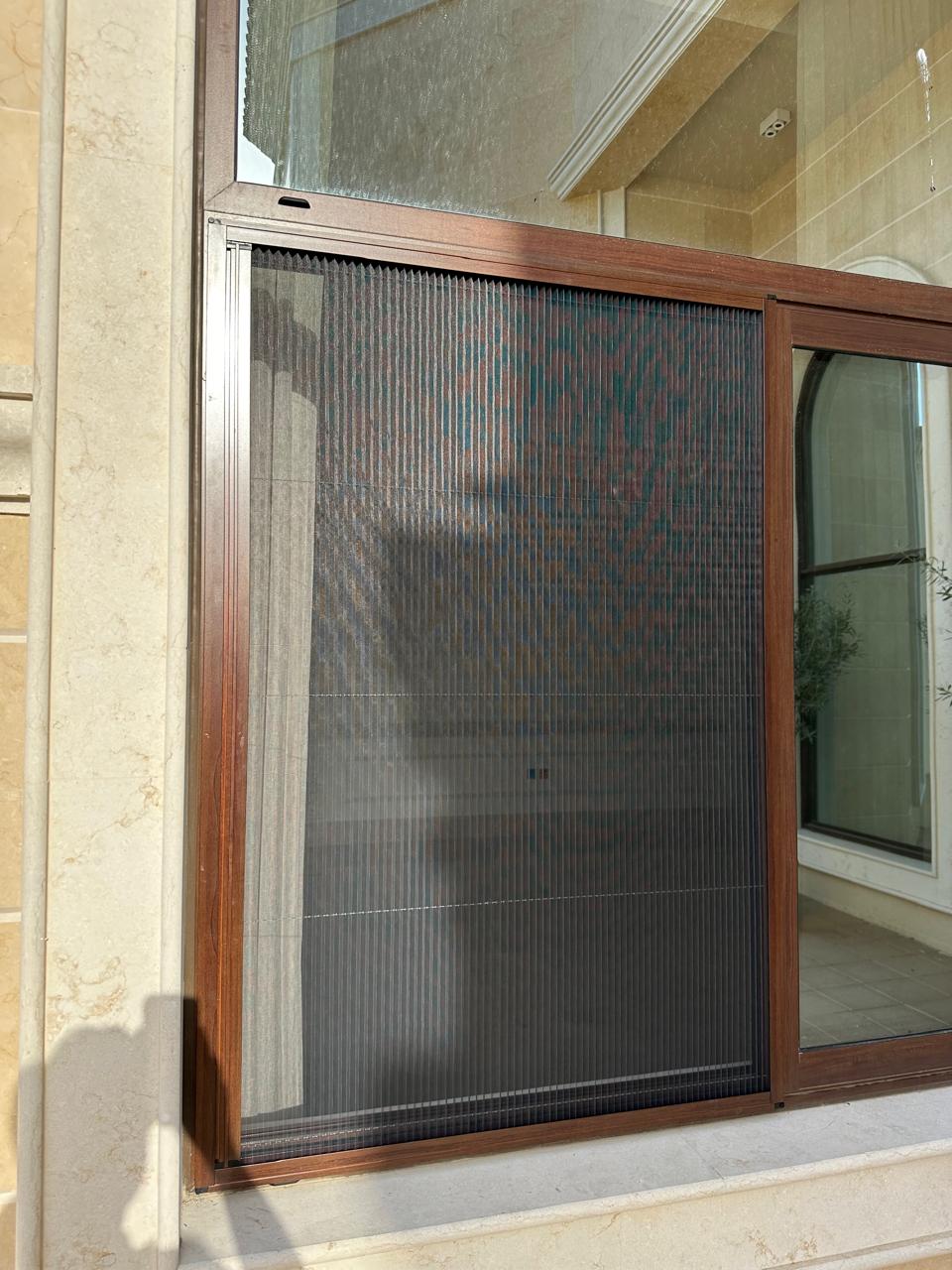
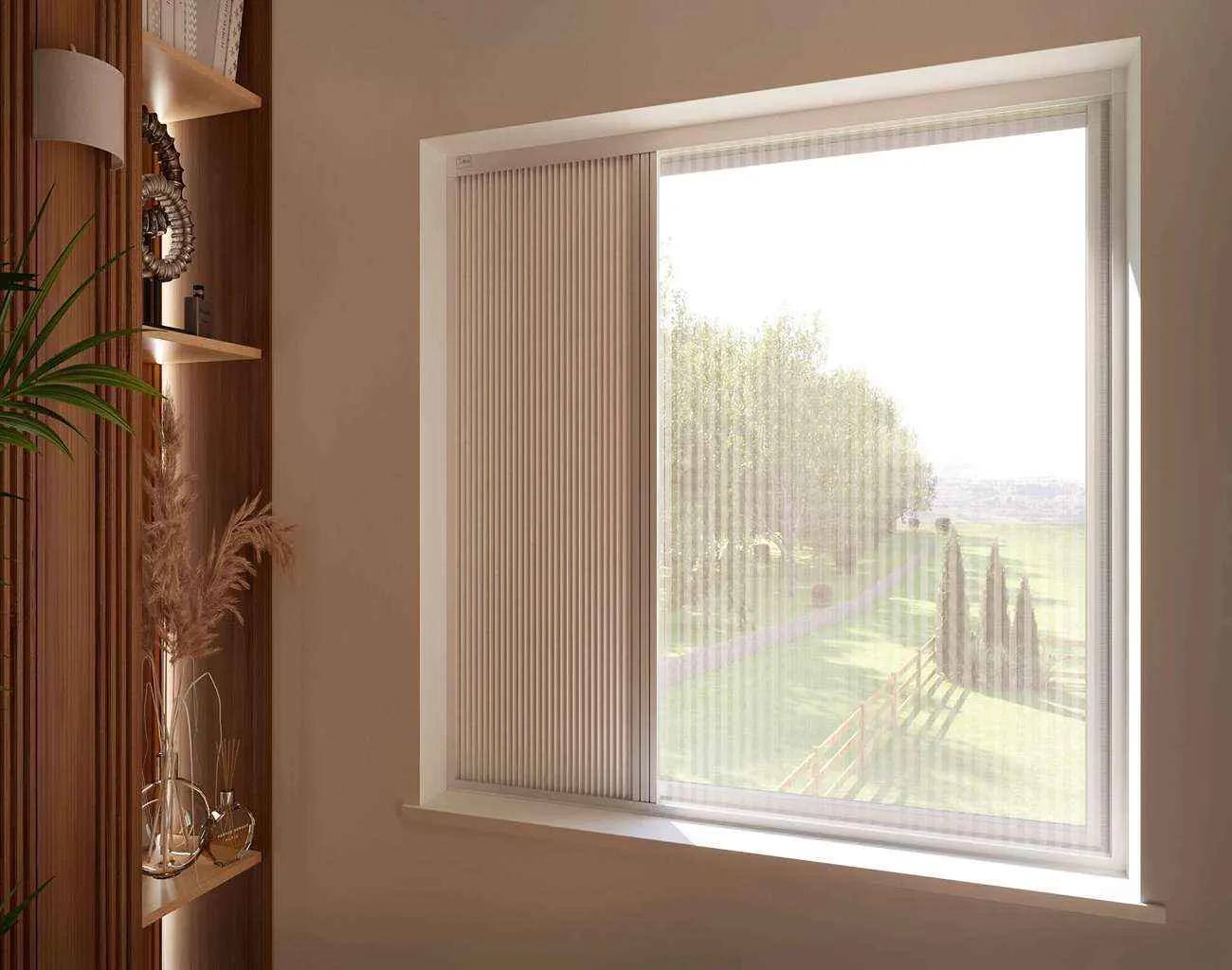
Honest, practical answers to the questions we hear most about rollers. Tap any section to open it.
A roller screen keeps its mesh wound onto a tube inside a slim cassette, and that tube holds a spring under light tension. When you take hold of the handle bar and draw the screen out, you unwind the mesh across or down the opening, and a thin guide track on each side keeps it straight. Let the handle go, and the spring gently winds the mesh back onto the tube and into the cassette.
It's the same principle as a roller blind, just built for fine insect mesh and an outdoor life. Because the mesh disappears completely when it's wound up, a roller leaves you with a clear, uncluttered frame whenever the screen isn't in use, which is the main reason people choose one over a screen that stays in view. There's no folding, no loose mesh and nothing to store.
This is one of the nice things about a roller, and it comes down to the opening. For a window, a pull-down roller sits along the top and the mesh draws straight down over the glass, which feels natural and keeps everything above head height. For a door or a wide window you walk up to, a side roller works better, with the cassette on the left or the right and the mesh pulling across.
Which side a horizontal roller lives on is usually decided by the way you come and go, and by where a wall or a handle sits, so the mesh ends up parking on the side that's least in your way. You don't need to work this out yourself. We look at the opening at the measurement, ask how you use it, and set the roller to roll the way that suits you best.
The pull-down roller is the one most people picture for a window. The cassette runs along the top of the frame, and you simply draw the mesh down by its handle to cover the glass, then let it spring back up when you're finished. It's quick, it's one-handed, and when it's up the window looks exactly as it did before, with just a slim box at the top.
That makes it a go-to for bedrooms, kitchens and living-room windows, where you want a breeze or the cool of the night without bugs, yet you'd rather not look at mesh all day. There's a health angle as well, because the mosquitoes a screen shuts out can spread disease, which the World Health Organization sets out in its guidance on dengue. A pull-down roller gives you that cover only for the hours you need it.
This is the detail that separates a good roller from a cheap one. A bargain spring roller pulls the mesh back as fast as the spring will go, which means it snaps up with a bang, stresses the mesh, and can catch a finger. The rollers we fit have a brake built into the tube, so when you release the handle the mesh travels back at a slow, steady pace and settles quietly into the cassette.
That controlled rewind is gentler on the mesh and the mechanism, which is a big part of why a quality roller still works smoothly years later while a cheap one starts to jam or judder. It's also simply nicer to use, and safer around children. When you try a braked roller next to a snapping one, the difference is immediately obvious, and it's the kind of thing worth paying a little more for.
A roller and a pleated screen both tuck away, but they do it differently. A roller winds the mesh onto a tube and leaves a completely clear frame, while a pleated screen folds to one side in a slim concertina stack that's always there, though barely. A roller tends to suit windows and single doors, and a pleated screen comes into its own on a wide run you use a lot.
A magnetic screen is a different idea again, a fixed mesh you push straight through that closes behind you with magnets, which is great for a busy door when your hands are full but always on view. So the rule of thumb is simple: choose a roller when you want the mesh gone between uses, a pleated screen for a wide opening, and a magnetic screen for a door you walk through constantly.
Rollers are at their best on standard windows and single doors, the openings where one panel of mesh comfortably covers the gap and you value a clear frame the rest of the time. Pull-down window rollers are popular in bedrooms and kitchens, and side rollers suit a single garden or balcony door you pass through now and then.
For a very wide door or a glass wall, a single roller can be a stretch, and a retractable or pleated screen, or a pair of rollers, will usually serve better. We'll tell you honestly if your opening is one where a roller is the right call or where another type would work harder for you. The aim is the screen that fits your opening, not just the one you first asked about.
A roller needs the opening measured properly so the cassette and the side tracks sit square and the mesh runs true. We measure the width and the height, check the frame is level and square, and look at where the handle will fall so it's easy to reach for a pull-down, and which side suits a horizontal roller. On older windows that have shifted a little, we note it and allow for it.
All you have to do is show us the window or door. Getting the measurement right is what lets the mesh glide without binding and rewind cleanly, with no gaps at the edges for insects to slip through. It's a quick job for us and it's free, and it's the difference between a roller that feels effortless for years and one that never quite runs right, which is why we always measure ourselves.
A roller asks very little of you. What matters most is keeping the side tracks clear of sand and grit, as that's what lets the mesh run and rewind cleanly, and a brush or a wipe along them sorts it, with a vacuum nozzle for the stubborn bits. When dust gathers, clean the mesh and cassette with a soft cloth and a little mild soapy water, doing it more often if you're close to a busy road or building work.
Let the screen rewind under its own brake rather than shoving it, and don't force it if something feels caught, just clear the track. There's nothing to oil and no springs for you to adjust. If the spring tension or the rewind ever feels off, or the mesh picks up a snag, give us a call and we'll set it right or re-mesh it under the warranty rather than you wrestling with it.
A roller is one of several ways to screen a window or door. If it isn't quite the fit, these are the closest alternatives we make.
The wider pull-across family that tucks into a cassette out of view, a common pick for doors and larger windows.
Gathers to one side in a concertina stack, light to move and neat on a wider run you open a lot.
Mesh you walk straight through that snaps shut on magnets behind you, handy at a busy door when your arms are full.
Travels on a separate track next to a sliding door, a one-handed push to open as you step out.
Quick answers to what people ask before booking a free measurement in Dubai.
A roller fly screen has its mesh wound onto a spring-loaded tube inside a slim cassette, the same idea as a roller blind but in insect mesh. You pull the screen out by a handle to cover the opening, and when you let go the spring rolls it neatly back into the cassette out of the way. You can have it pull down from the top or draw across from the left or right. It also shuts out the insects behind illnesses that the World Health Organization describes in its guidance on vector-borne diseases.
All three. We set the roller to suit your opening. A pull-down roller sits at the top and the mesh draws down over a window, which is popular for windows. A side roller has the cassette on the left or the right, and you pull the mesh across to cover a door or a wide window. We recommend the direction at the free measurement based on how you use the opening.
Yes, and it's one of the most popular ways to use a roller. A vertical roller sits in a cassette along the top of the window, and you draw the mesh down over the glass when you want air in, then let it spring back up into the cassette when you're done. It keeps the window looking clear when the screen isn't in use, and suits almost any room.
The rewind is controlled. The rollers we fit have a brake in the tube that lets the mesh rewind at a gentle, steady pace rather than snapping back, so it's quiet and safe and the mesh isn't stressed. Cheap rollers that snap back tend to wear and can catch fingers. A smooth, braked rewind is part of what makes a quality roller worth having.
A roller winds the mesh onto a spring tube and rolls it fully away, leaving a clear frame. A pleated screen folds to one side like a concertina and stays in a slim stack, while a magnetic screen is a fixed mesh you push through and it closes behind you with magnets. A roller suits windows and single doors where you want the mesh to disappear, a pleated screen suits a wide run, and a magnetic one suits a busy door with hands full.
No. We mount the cassette and side tracks on heavy-duty double-sided tape, so nothing is drilled and there's no hole or mark on your frame or wall. The finish stays clean and it holds on aluminium and uPVC alike. Take the screen off later and the surface comes away just as it started.
A roller screen for a window, pull-down or side, starts from AED 400, and a roller screen for a door from around AED 700, with bigger or wider openings adding a little. What you pay reflects the size, the direction it rolls and the mesh you pick. Everything is quoted plus 5 percent VAT, and a free measurement settles the exact figure with nothing owed.
Yes. Roller fitting runs right across Dubai, plus Abu Dhabi, Sharjah and Ajman, for apartments and villas alike. The visit and the measuring are free and commit you to nothing. Send your area and a photo of the opening over WhatsApp and we'll slot you in at a time that works.
Want the mesh to roll away when you're not using it? Tell us the window or door and we'll set up a free home visit. A WhatsApp photo gets you a quick price.
Pop your details in and we'll reply on WhatsApp.
The measurement is free with no obligation. We reply within working hours, Monday to Saturday.