

A motor in the headbox
A quiet tubular motor sits inside the top cassette and turns the roller, drawing the mesh down or across at the press of a button.
A motorized fly screen opens and closes at the touch of a button. A quiet motor does the work, so there's no pulling or reaching, which makes it the easy choice for large, high or hard-to-reach openings. Run it from a switch, a remote, or your phone.
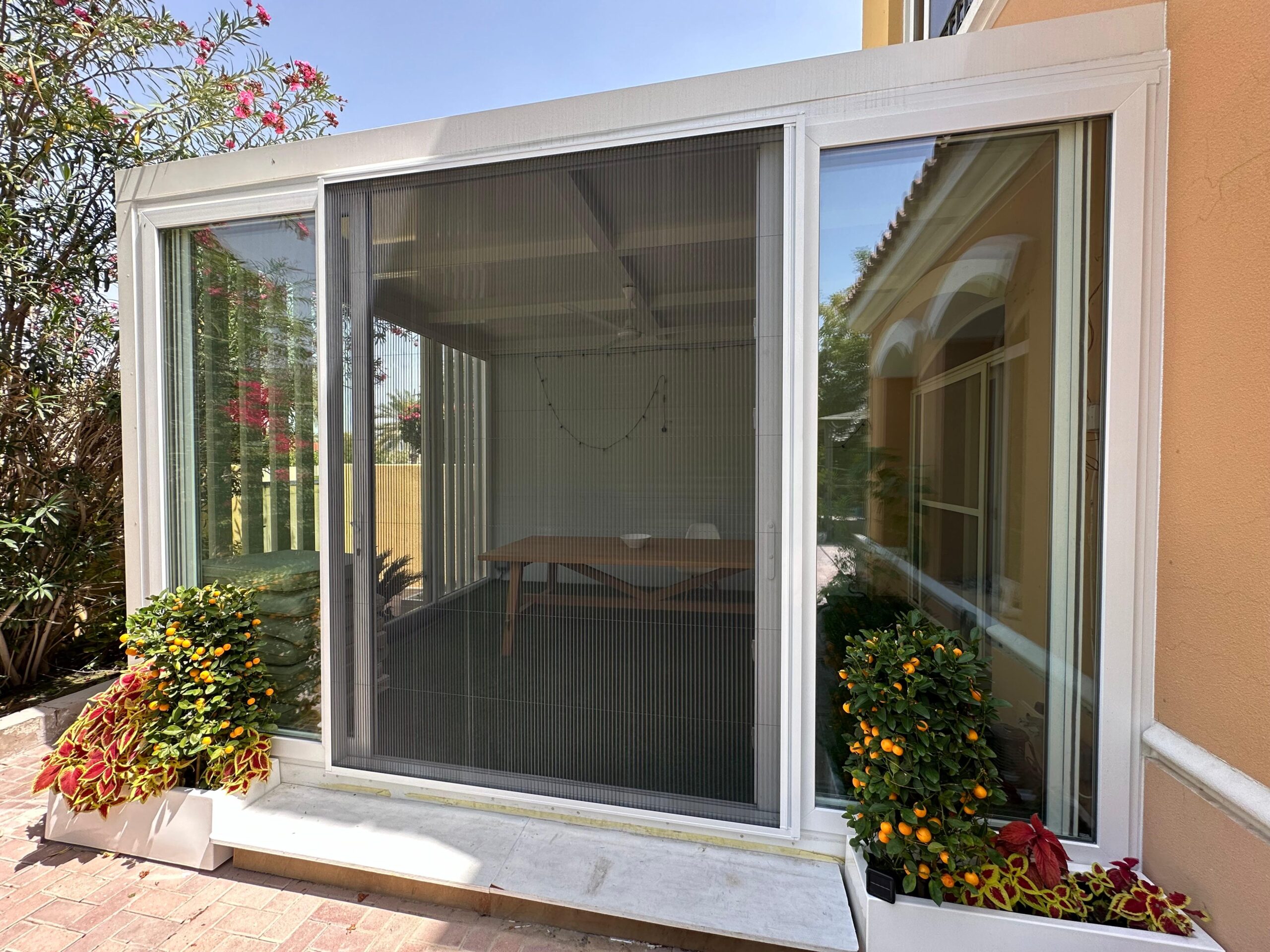 One button · Switch, remote or app
A quick look at a motorized screen closing on a button, running from a remote, and a wind sensor lifting it on a gust. Tap a video to play.
A motorized screen is the same quality mesh and aluminium as our manual ones, with a small motor added to do the moving. Here's what that motor brings to the opening.
A quiet tubular motor sits inside the top cassette and turns the roller, drawing the mesh down or across at the press of a button.
Open and close it from a wall switch or a handheld remote, with no pulling, reaching or bending needed at all.
The motor runs the screen at a steady, gentle pace, so there's no slamming and barely any sound in a normal room.
The mesh runs in tracks down each side, which keep it straight and stop it billowing as the motor moves it.
Add a wind sensor that retracts an outdoor screen in a gust, or a sun sensor that closes it as the light changes.
Link it to your home app and voice assistant, or set a timer, so the screen can open and close itself.
Half the appeal of a motorized screen is choosing how it runs. You can have a plain switch, or a screen that looks after itself. These are the options we set up.
A neat switch on the wall, wired in like a light switch. Simple, always to hand, and nothing to misplace.
A wireless remote you keep on the side table. One remote can run several screens on different channels.
Link the screen to your home app, Alexa or Google, and open or close it from your phone or with your voice.
A wind sensor protects an outdoor screen, a sun sensor reacts to the light, and a timer runs it on a schedule.
You can start with a switch and add a remote or sensors later, as long as the motor supports it. We'll spec the right motor for what you have in mind at the measurement.
A motor isn't needed on every screen, but on the right opening it turns a chore into a button press. These are the cases where it pays off.
On a big opening the screen is heavy to move by hand. A motor does it smoothly and effortlessly, every single time.
A window over a stairwell or up near a high ceiling is awkward to reach. A button brings the screen down to you.
Drop a screen down the side of a pergola in the evening, and let a wind sensor lift it again if a gust picks up.
For anyone who finds pulling a screen difficult, a switch or remote takes the effort away and keeps things easy.
Open or close a whole run of screens together on one remote, instead of working each one by hand in turn.
No handles or pull bars on show, just the screen and a discreet switch, which suits a contemporary home.
A motorized screen is part screen and part electrics, and both need to be right. We've made and fitted screens across the UAE since 2017, and we set up the screen, the motor and the controls, then point your electrician to the power. Browse the full range on our services page.
We fit dependable tubular motors that run quietly and smoothly, sized to the screen so they last and don't strain.
We make and fit the screen and set up the controls. The mains point is connected by a qualified electrician, which we help coordinate.
Choose a simple switch or a remote, or link the screen to your phone and voice assistant for fully hands-free control.
We're the only company in the UAE with German, Italian and Turkish systems, so the motor and screen suit your opening.
We measure the opening, talk through the controls, and show you where the power needs to be. There's no charge for the visit.
You get our warranty on the frame and mesh, with motor cover too, plus repairs if anything ever needs attention.
A motorized screen costs more than a manual one because of the motor and the controls, and the figure depends on what you choose. These are guide starting points, with a firm quote at the free measurement.
Prices are plus 5% VAT and depend on the motor, size and controls you choose. The mains connection may need a qualified electrician. The free visit gives you a firm quote, and you can pay by cash or online.
Getting a motorized screen in is straightforward, and we handle the screen side from start to finish.
We visit, measure the opening, and talk through how you want to control it. We also show you where a power point is needed, so your electrician can prepare it. The visit is free.
The screen is built to your opening with the motor and any sensors fitted into the cassette, and your mesh colour chosen. This usually takes a little longer than a manual screen.
We mount the screen and tracks, the electrician connects the power, and we pair the remote or switch and set the open and close points. Then we test it through with you.
We fit motorized screens for villas and apartments right across the city, and out into Abu Dhabi, Sharjah and Ajman. We do a lot of pergola and large-opening motor work in Arabian Ranches, Dubai Hills, Palm Jumeirah and JVC. The measurement is free everywhere we cover.
A few motorized installs from around Dubai. Real project photos are added here as we complete more.
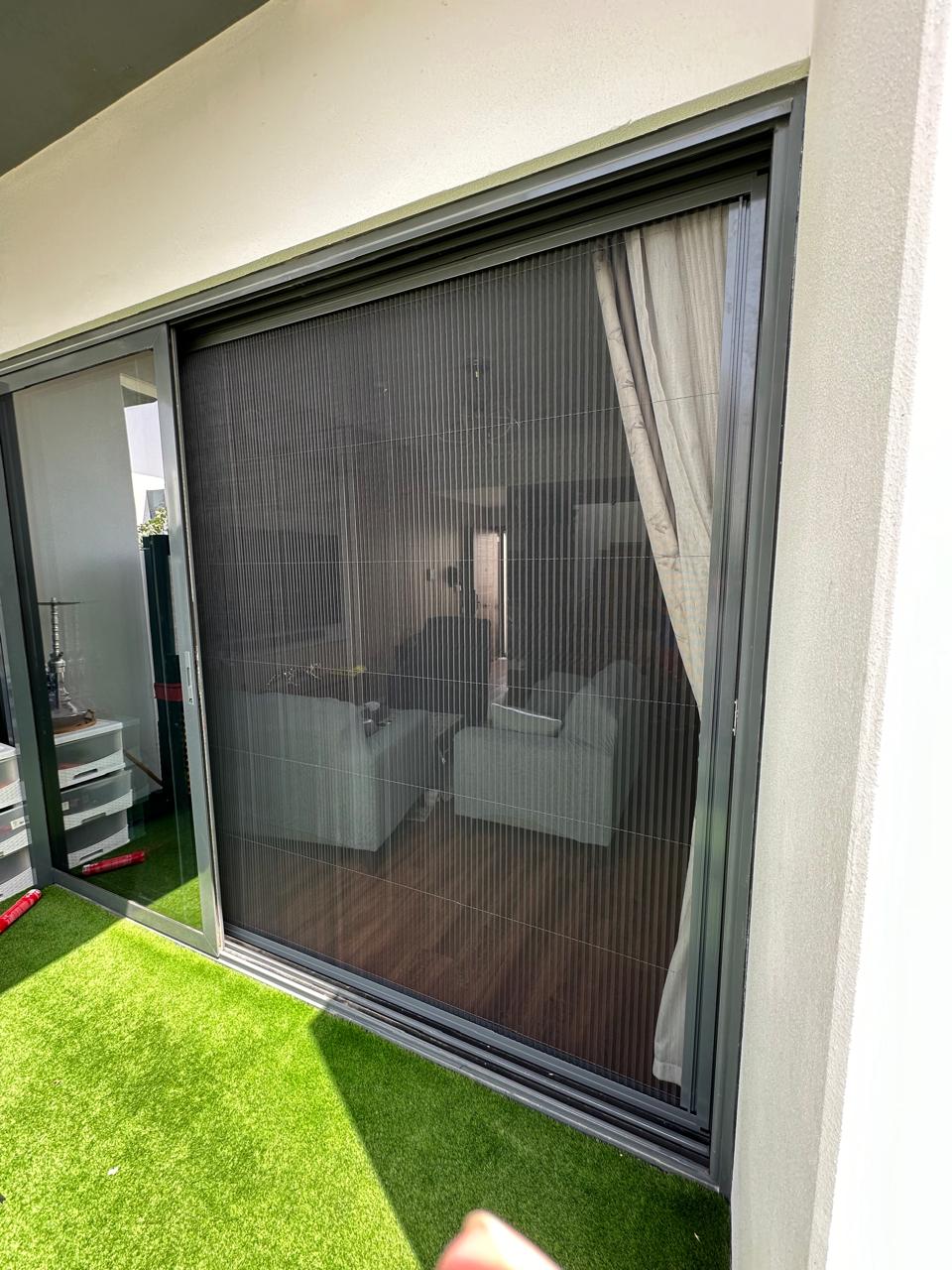
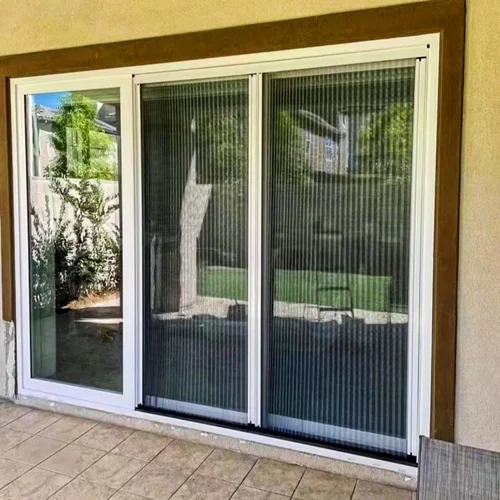
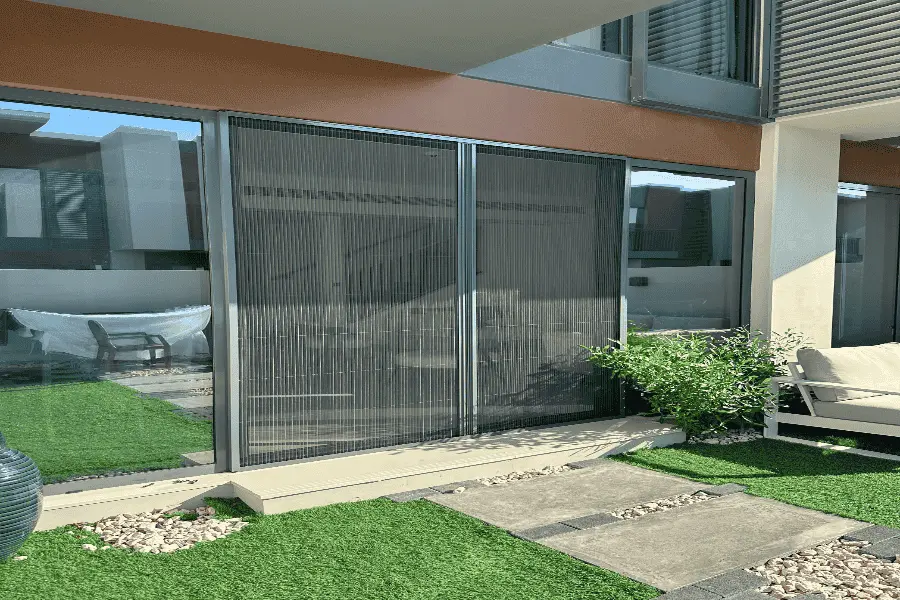
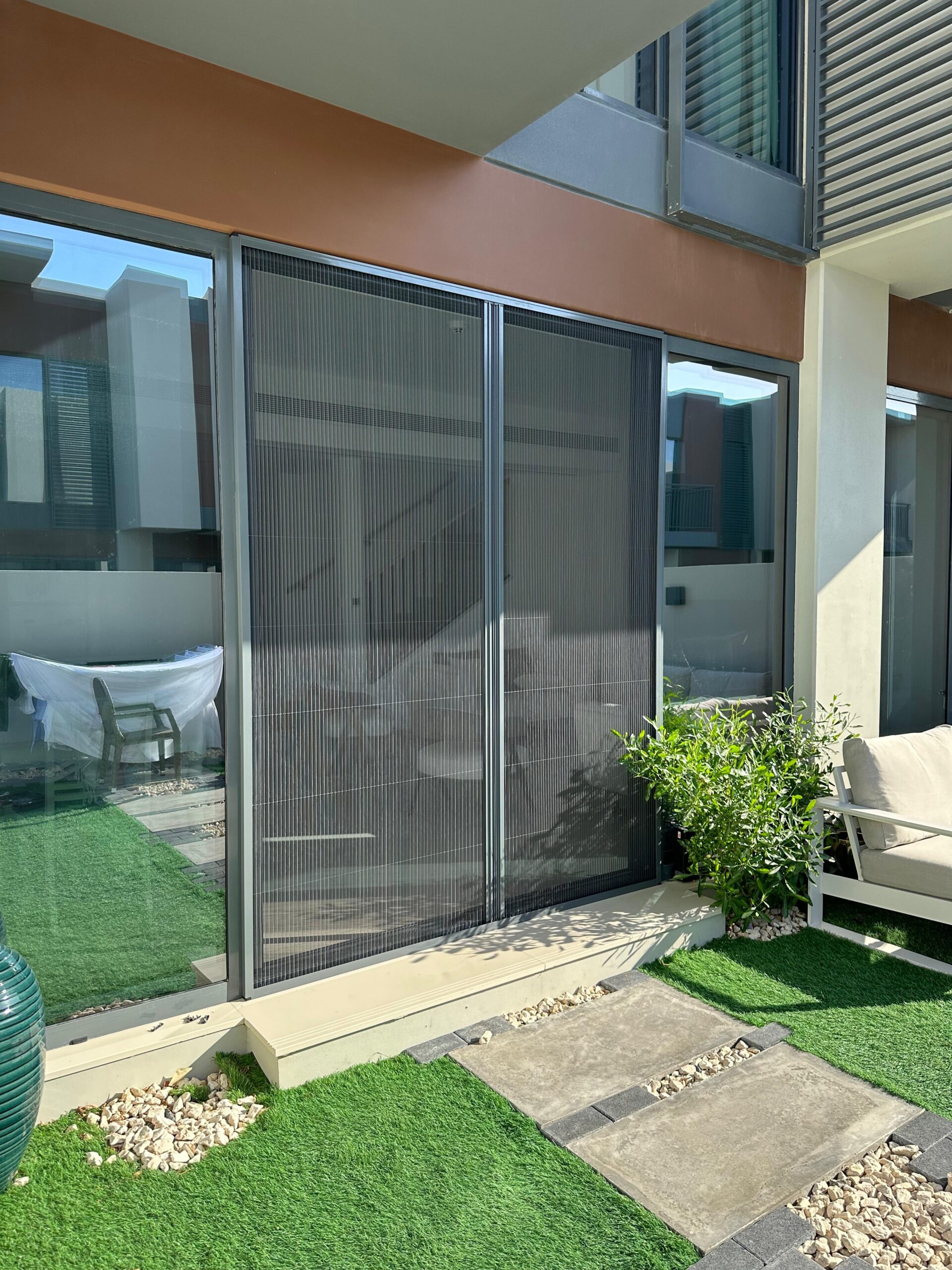

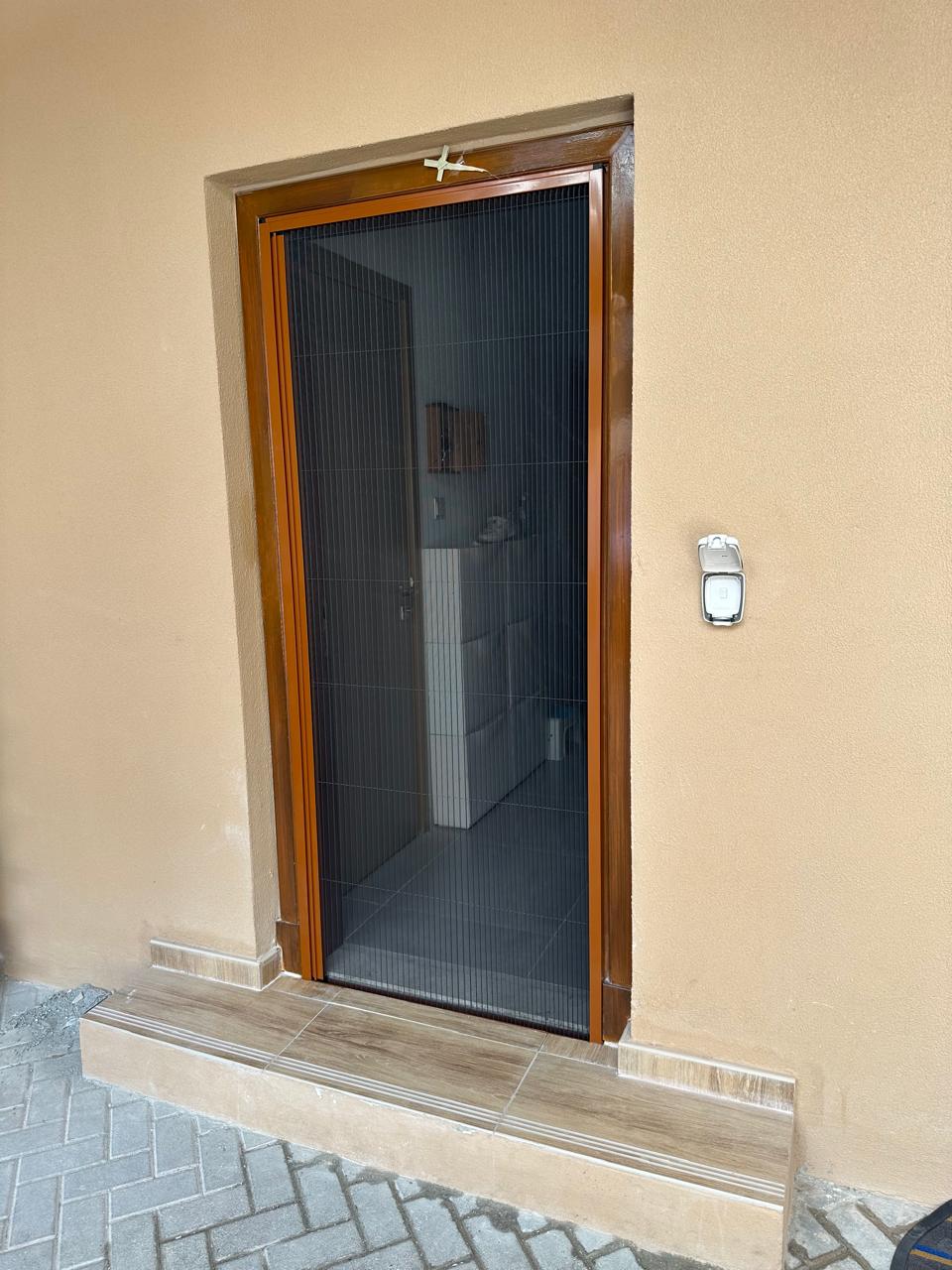
Honest, practical answers about motors, controls, power and the rest. Tap any section to open it.
A motorized screen is built like a roller screen, with the mesh wound on a tube inside a top cassette. The difference is that the tube holds a small electric tubular motor instead of a manual spring. When you press a button, the motor turns the tube, which winds the mesh down to cover the opening or back up to clear it, while tracks down each side keep it straight.
The motor has set limits, so it stops exactly at the closed and open positions every time without you having to watch it. It's the same idea as an electric roller blind or a garage door, applied to insect mesh. Because the motor does the moving, the screen can be far bigger and heavier than anything comfortable to pull by hand, which is the whole point of going motorized.
You've got a few choices, and you can mix them. The simplest is a wall switch, wired in like a light switch, that you press to run the screen up or down. A wireless handheld remote does the same without any wiring on your side, and a single remote can hold several screens on separate channels so you control each one or a whole group.
Beyond that, the screen can join your smart home. With the right motor and a hub it links to your phone app and to Alexa or Google, so you can run it by voice or set it on a schedule. Add a wind or sun sensor and it reacts on its own. You don't have to decide everything up front, as long as the motor you choose supports what you might want later, which is something we'll guide you on.
Most motorized screens run on mains power, so there needs to be a power point near the top of the screen where the motor sits. We make and fit the screen, fit the motor and set up the controls, but the actual mains connection should be done by a qualified electrician for safety, and we're happy to coordinate with yours or point out exactly what's needed. We don't ask you to do any wiring yourself.
The neatest results come when the power point is planned before the screen goes in, which is why we flag it at the measurement. If running a cable to the spot is difficult, for example on a finished wall or an outdoor pergola, there are battery-powered and solar-charged motor options that avoid mains wiring altogether. We'll let you know whether one of those suits your opening.
Sensors are where a motorized screen starts to look after itself. A wind sensor is the most useful one outdoors: if a gust passes a set strength, it automatically lifts a pergola or balcony screen out of harm's way, then you can lower it again once it's calm. A sun sensor reacts to bright light, and a simple timer can close the screen at dusk and open it in the morning on its own.
For an outdoor seating area this is genuinely handy, because keeping mosquitoes off the space matters, and insects can carry illness, as the World Health Organization's notes on dengue explain. Sensors are an optional extra rather than something every screen needs, so we'll only suggest them where they earn their keep, usually on exposed outdoor screens.
Nothing bad. If the power goes off, the screen simply stays exactly where it is, whether open or closed, and a cut does the motor no harm at all. When the power comes back, it works as normal again. For most people that's the end of the matter, since a screen sitting still for a few hours is no problem.
If being able to move the screen during an outage matters to you, many motors can be ordered with a manual override, a discreet crank or release that lets you raise or lower it by hand, and some come with a small rechargeable battery backup. It's worth deciding this when you order, because the override has to be built into the motor. We'll talk you through whether it's worth adding for your situation.
A motor earns its place where moving a screen by hand would be heavy, awkward or out of reach. That means large and wide openings where the mesh is big and heavy, high windows over a stairwell or near a tall ceiling, and pergola or outdoor screens that you want a sensor to manage. It's also a real help for anyone who finds pulling a screen difficult, and a tidy, handle-free look for a modern home.
On a normal door or window that's easy to reach, a manual screen does the same job for less, so a motor isn't always the right spend. A standard retractable screen or a pleated screen pulls across easily by hand and may be all you need. We'll always tell you honestly when a manual screen would serve you just as well.
It depends entirely on the opening. The motor and controls add a fair bit to the price over a manual screen, so the value comes from what that buys you. On a big, heavy or high screen, or an outdoor one you want a sensor to protect, the motor is the difference between a screen you use happily and one you avoid because it's a struggle. There, it's money well spent.
On a small, easy-to-reach window, the same money is better kept in your pocket, because a manual screen gives you the identical insect protection. The honest rule is that a motor is worth it where effort, height or automation is the issue, and not where it's simply a nice-to-have on an opening you can work by hand. We'll give you a straight view at the measurement rather than selling up.
A motorized screen needs very little looking after, and the motor itself is sealed and maintenance-free in normal use. As with any screen on tracks, the main job is to keep the side and bottom tracks free of grit and sand, so the mesh runs smoothly, which a quick brush or wipe handles. Wipe the mesh and cassette with a soft cloth and mild soapy water when they gather dust.
If you have a wind or sun sensor, it's worth a quick check now and then that it's clear and responding, and an outdoor screen appreciates a rinse after a dusty spell. There's nothing to oil and no springs to wear out. If the motor, a sensor or the controls ever play up, don't tinker with the electrics yourself, just call us and we'll sort it under the warranty.
A motor is great where it's needed, but a hand-operated screen is lighter on the pocket and right for most everyday openings. Here are the manual options we make.
Pulls across by hand and rolls away into a slim cassette. The everyday favourite for doors and windows.
Folds to one side like a concertina, light to slide and tidy on a wide run you use often.
Slides on its own track beside a sliding door, easy to push open with one hand as you pass.
A fixed, tensioned mesh that stays put, neat and economical for a wide span you rarely walk through.
Quick answers to what people ask before booking a free measurement in Dubai.
A motor in the top cassette opens and closes the screen, and you control it however you like. The options are a wall switch wired in like a light switch, a handheld wireless remote, or a link to your home app and voice assistant. You can also add a wind or sun sensor, or a timer, so the screen runs on its own. They keep out insects that can carry illness, which the World Health Organization covers in its notes on vector-borne diseases. We set up your chosen control at fitting.
Yes, most motorized screens run on mains power, so a power point is needed near the top of the screen. We fit and set up the screen and the controls, while the mains connection itself is made by a qualified electrician, which we help you coordinate. For openings where running power is difficult, there are battery and solar motor options we can discuss at the measurement.
The screen simply stays where it is until the power returns, and it isn't harmed by a cut. Many motors can be ordered with a manual override, a crank or release that lets you raise or lower the screen by hand if needed, and some come with a small battery backup. We'll talk through the override option for your motor so you're never caught out.
Yes. With the right motor and a hub, the screen links to your home app so you can open or close it from your phone, and to Alexa or Google for voice control. You can group several screens, set schedules, or have them respond to a sensor. If a smart setup matters to you, tell us at the measurement and we'll spec a motor that supports it.
No. The tubular motors we fit are quiet, giving a low, smooth hum rather than a grinding noise, and they run the screen at a steady, gentle pace. In a normal room you'd barely notice it over everyday sounds. A quality motor sized correctly to the screen is part of what keeps it quiet and reliable for years.
Yes. A wind sensor is popular on outdoor and pergola screens, retracting the screen automatically if a gust picks up to protect it. A sun sensor can close the screen as the light changes, and a timer can run it on a schedule. Sensors are an optional extra and we'll explain which ones make sense for your opening.
Motorized screens are priced by the motor, the size and the controls you choose, so they're quoted per project. As a guide they typically start from around AED 1,500 for a motorized window or single screen, with larger and sensor-controlled systems costing more. Prices are plus 5 percent VAT, the mains connection may be extra, and the free measurement gives you a firm quote.
We fit motorized screens across Dubai, and in Abu Dhabi, Sharjah and Ajman, for homes and villas. The measurement is free and there's no obligation to order. Send your location and a photo of the opening on WhatsApp and we'll arrange a visit at a time that suits you.
Thinking about a motorized screen? Tell us the opening and how you'd like to control it, and we'll book a free home visit. A WhatsApp photo is quickest.
Leave your details and we'll get back to you on WhatsApp.
Free measurement, no obligation. We answer Monday to Saturday during working hours.