

Two halves, one opening
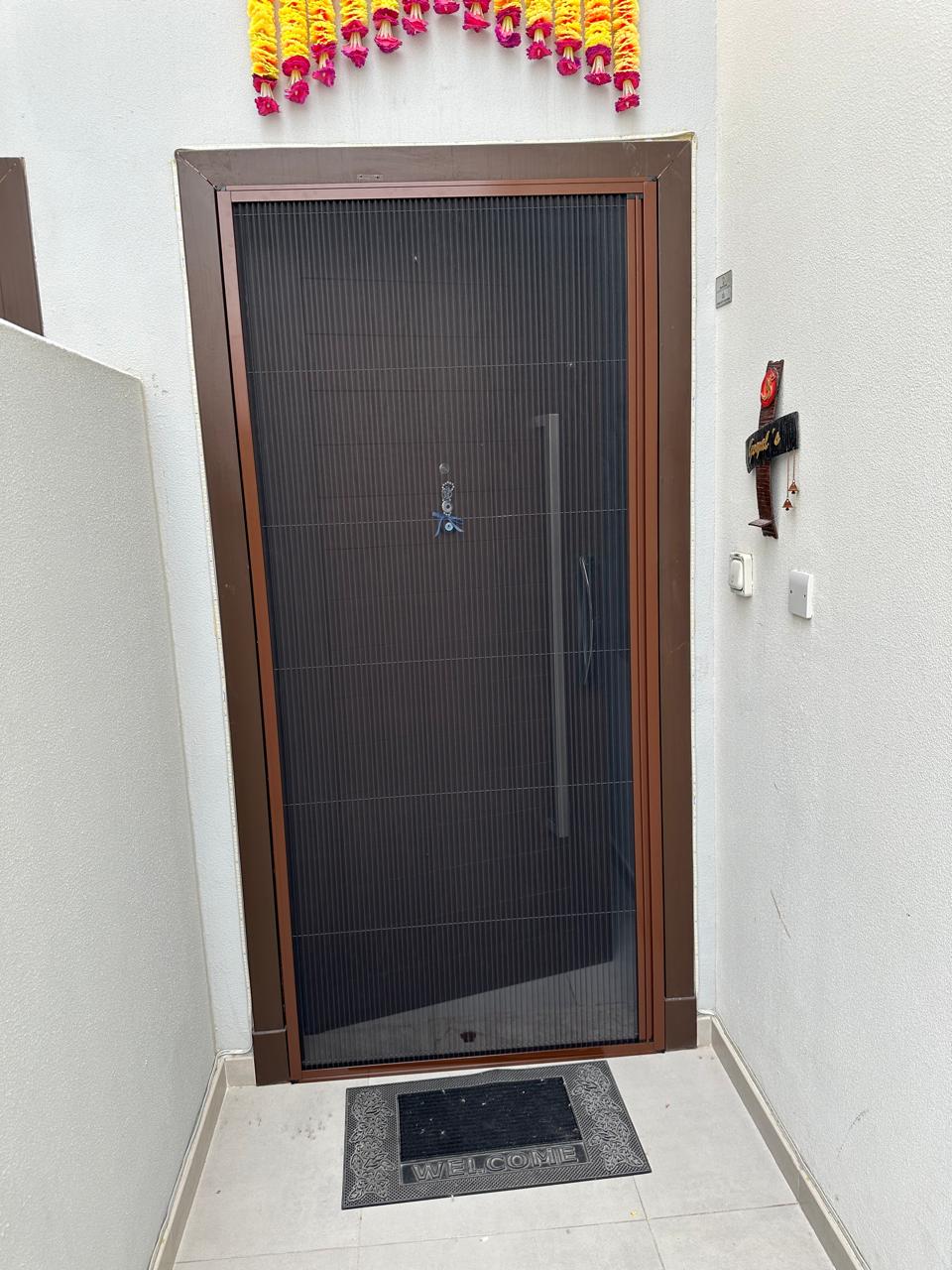
A cassette on each side holds a roll of mesh. Both halves pull toward the centre and join, covering the whole span with no post in the middle of your view.
A double-sided fly screen is built for wide openings. Two retractable halves glide in from each side and meet in the middle, so a full glass wall, a bi-fold or a wide patio door is covered in one clean run. It's the screen for spans a single pull can't reach.
 Meets in the middle · Covers wide spans
A quick look at a double screen closing across a glass wall, meeting in the middle, and parting to walk through. Tap a video to play.
A double screen splits the job across two cassettes. Each half only travels half the width, which is what lets one screen cover an opening far too wide for a single pull. Here's what that gives you.
A cassette on each side holds a roll of mesh. Both halves pull toward the centre and join, covering the whole span with no post in the middle of your view.
Where the two halves come together there's a centre closure that joins them cleanly, so insects can't slip through the join.
On a door, part the two halves at the centre like curtains, step through, and a soft brake glides them back to close behind you.
Because each half covers only half the width, the mesh stays taut and tidy even on a 10 or 12 metre opening. See the wider retractable range.
Guided tracks top and bottom keep both halves straight and moving evenly, so a big screen still feels light to use.
Both cassettes and the tracks go on with strong tape, so there are no holes in your frame across the whole wide opening.
A double screen earns its place on the big openings, the ones a single screen would struggle to cover. These are the spots we fit them most across Dubai villas and apartments.
The wall of glass that opens a living room to the garden. A double screen covers the whole width and still rolls fully away.
When the whole set of bi-folds folds back, a double screen spans the gap so you keep the open-plan feel without the bugs.
Three and four panel sliders are too wide for one pull. Two halves meeting in the middle handle them neatly. See our sliding door screens.
A long terrace opening onto the garden needs the reach of a double, with the mesh held taut from one end to the other.
Open the whole back of the house to the garden in the evening and let the air move through, with a screen across the lot.
A pair of doors that both open is a natural fit, with each half of the screen sitting over each leaf of the opening.
We've made and fitted screens across the UAE since 2017, including the big openings most companies shy away from. Every double screen is measured across the full span and fitted by our own team, so both halves line up and meet cleanly. Browse the full range on our services page.
A wide screen lives or dies on its mesh. Ours is Italian and made to stay taut across a big span through Dubai heat and dust.
We're the only company in the UAE offering German, Italian and Turkish systems, so we match the right one to a wide opening.
Even a 12 metre opening goes on with tape, so there are no holes drilled along the whole frame and nothing to make good later.
We come out, measure the whole width, check the opening is level, and confirm a double is right. There's no charge for the visit.
Even a large double is usually ready in 4 to 8 working days and fitted in around an hour, so a big job is not a long wait.
You get 5 years on the frame and 1 year on the mesh, plus repairs and mesh replacement on either half.
Double screens are priced by the size of the opening, so a wider span costs more. These starting figures are a guide, and the free measurement gives you an exact quote for your opening.
Prices shown are plus 5% VAT. A free home measurement gives you a firm figure for your own opening, and you can settle by cash or online.
From your first message to a finished opening, even a big one is quick and there's no mess left behind.
Send your location on WhatsApp and we visit when it suits you. We measure the full width and height, check the opening is level, and confirm a double is the right call. No charge.
Both halves are cut to the exact span, with the centre closure and the mesh colour you picked. A made-to-size double usually takes 4 to 8 working days.
We mount both cassettes and the tracks with strong tape, set both halves to meet cleanly in the middle, and show you how it works. No drilling, and we tidy up after.
The villas with the widest openings are spread right across the city, and we cover them all, plus Abu Dhabi, Sharjah and Ajman. We fit a lot of double screens on garden-facing glass walls in Arabian Ranches, Dubai Hills, The Springs and Palm Jumeirah. The measurement is free everywhere we cover.
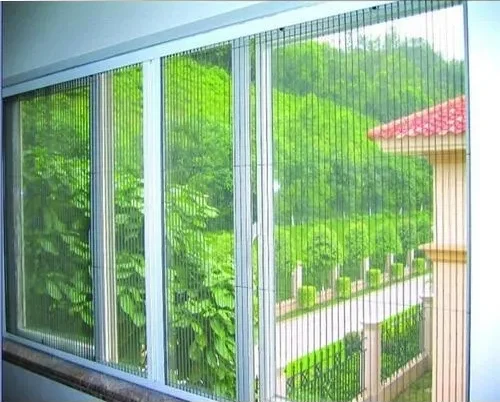
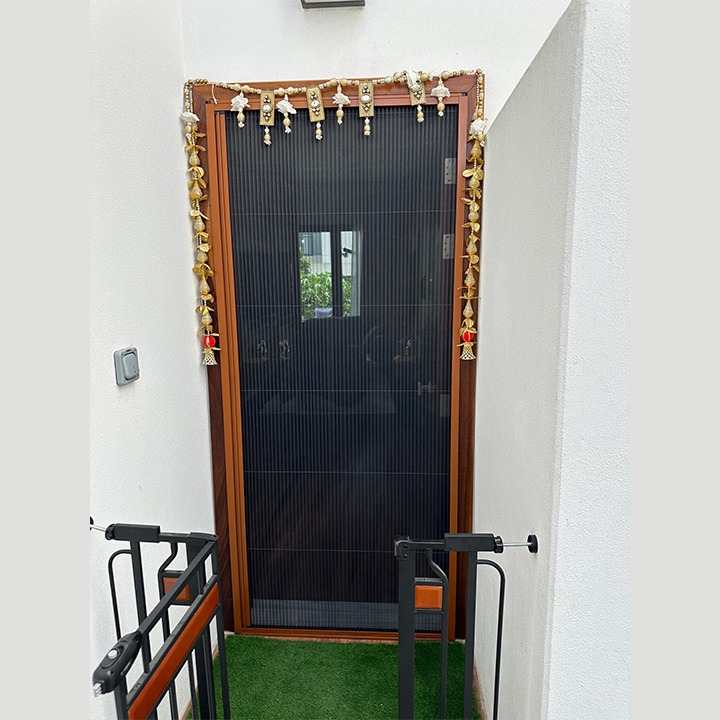
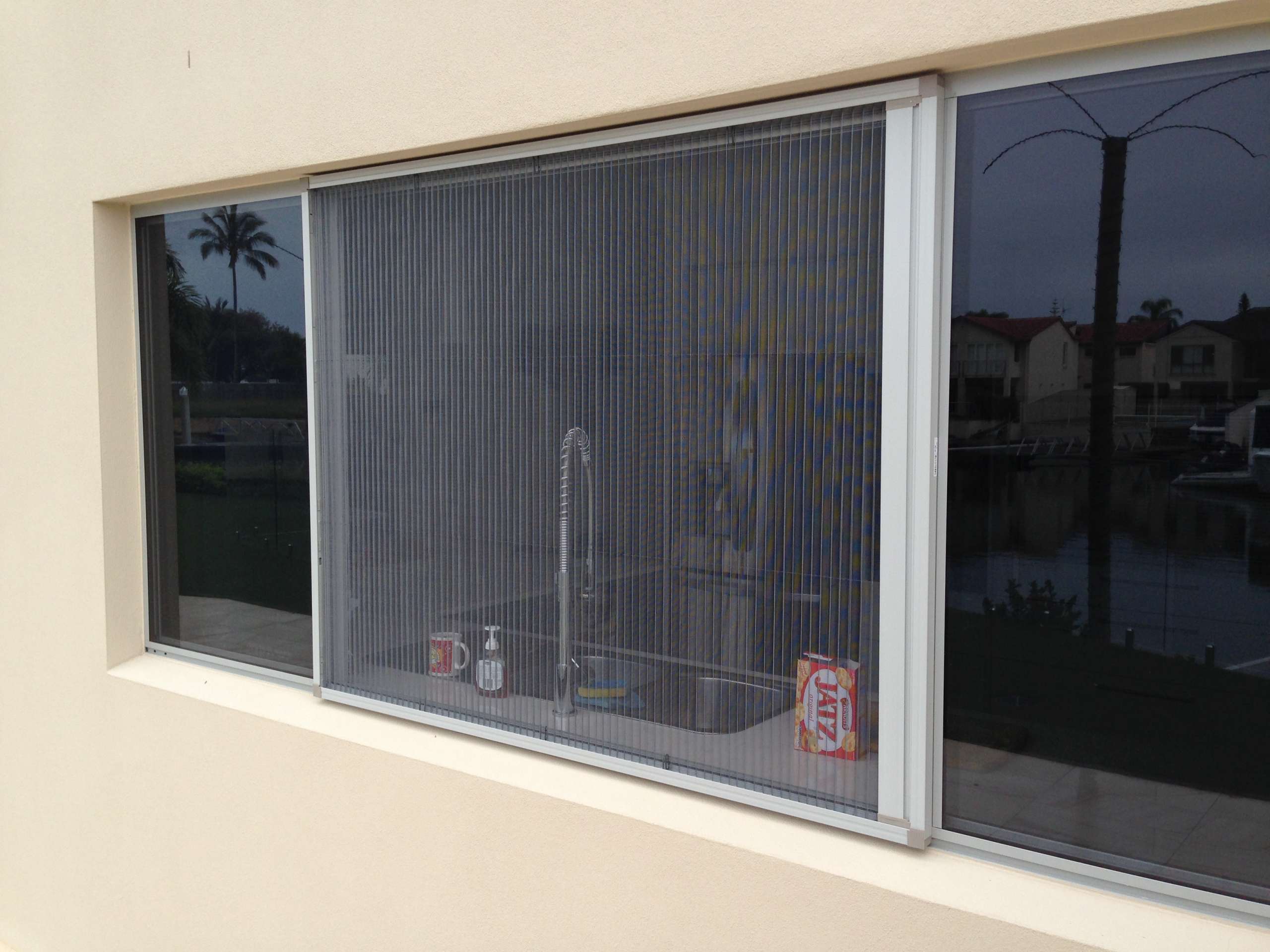
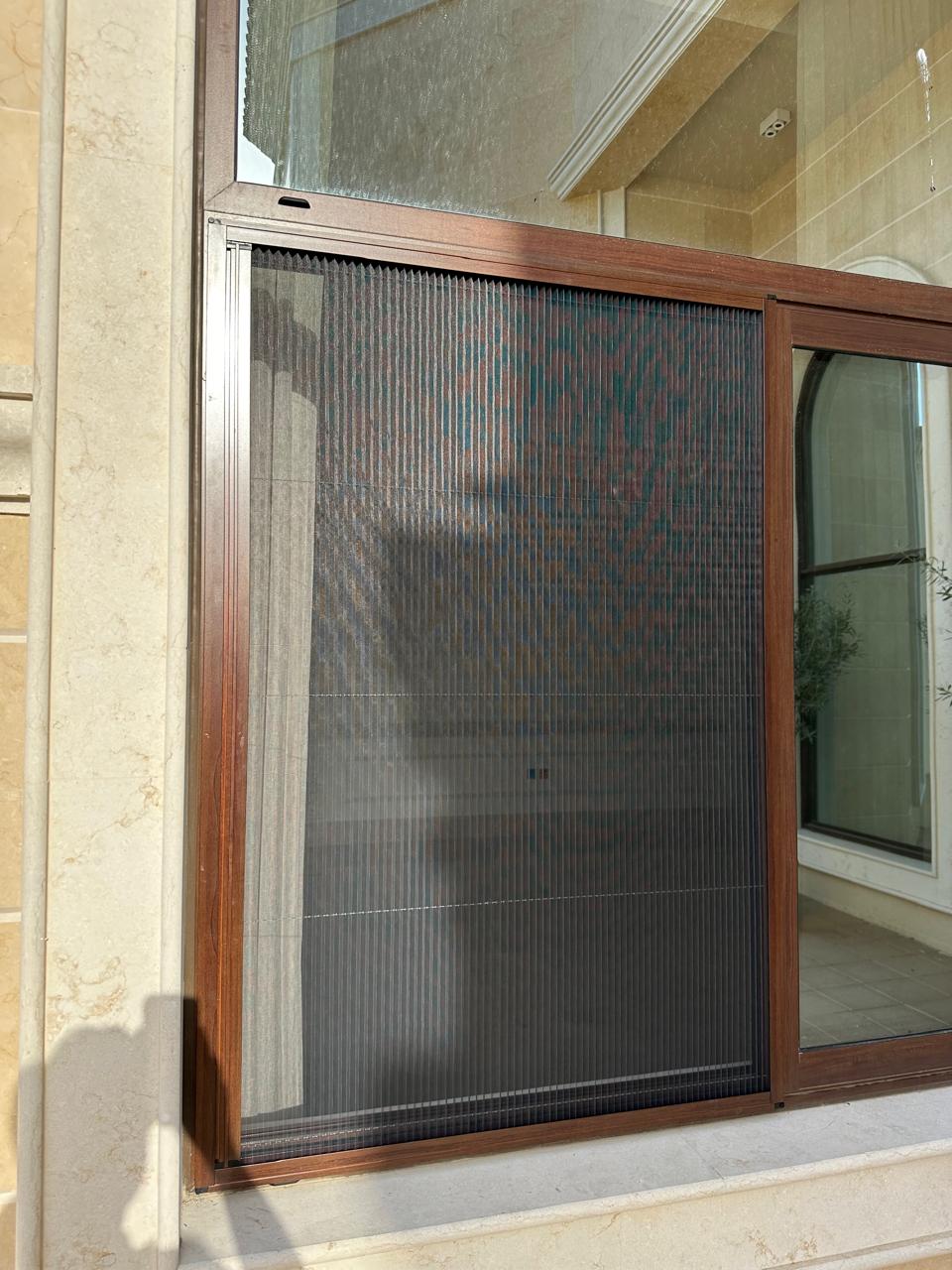
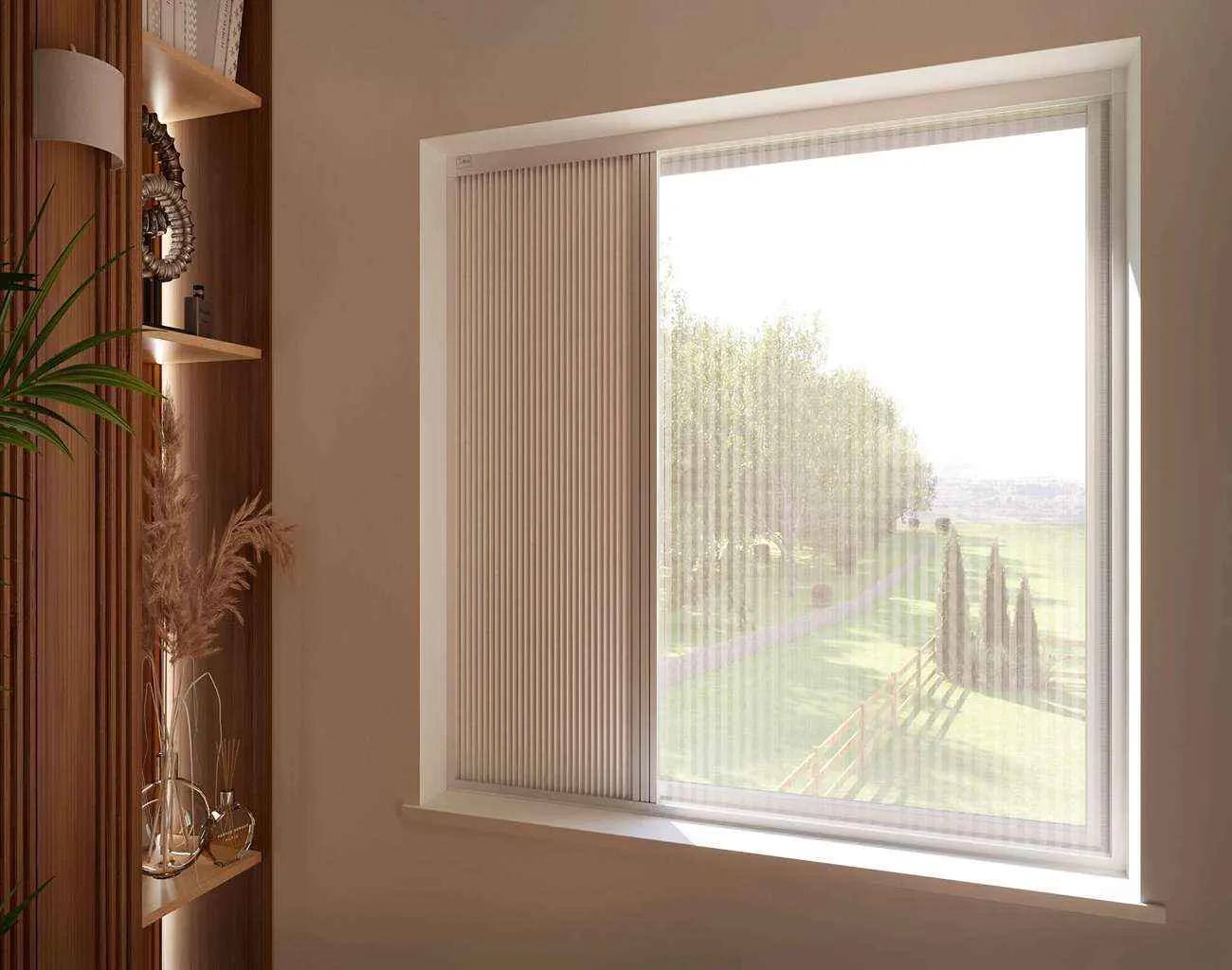
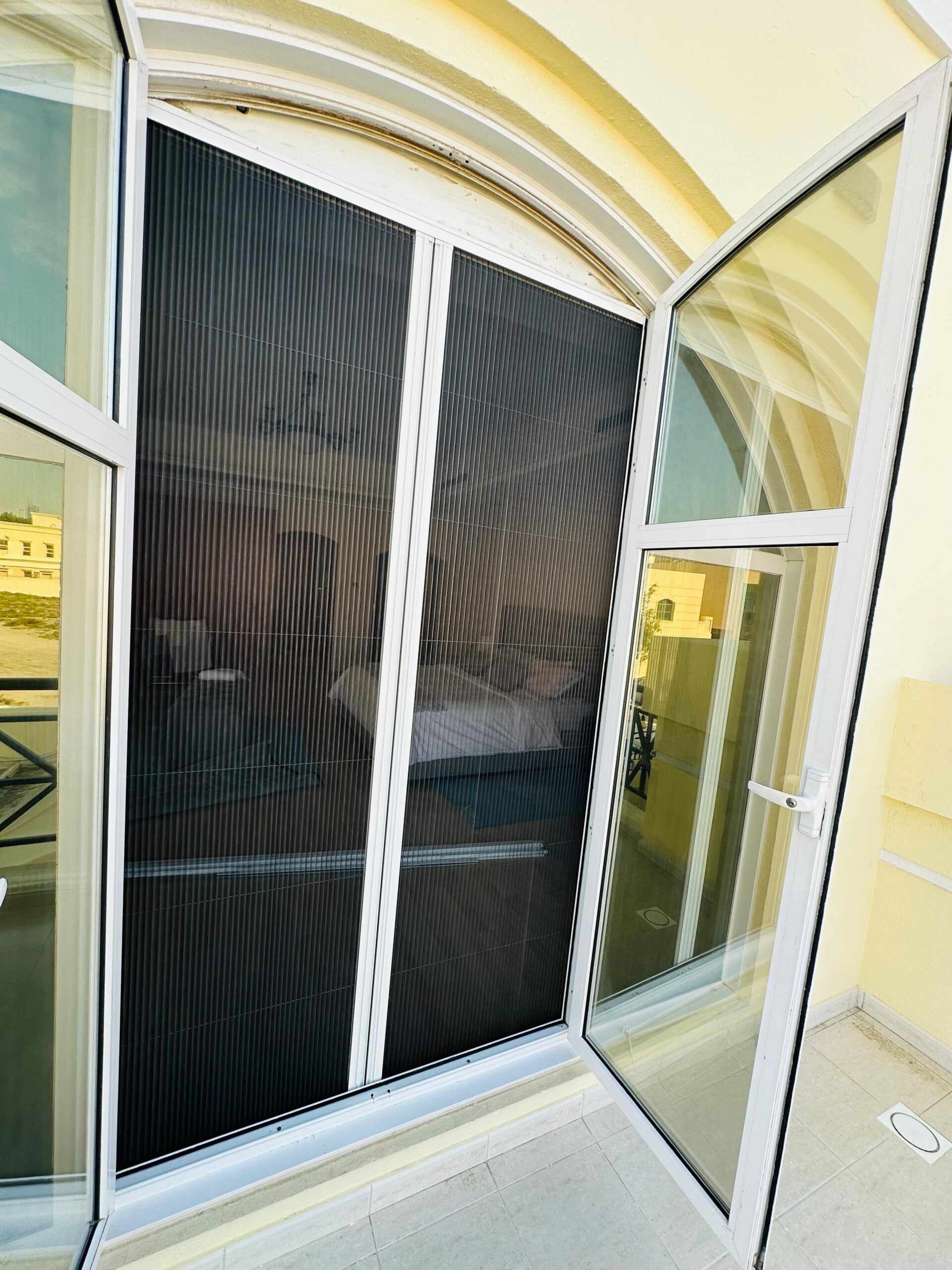
A few wide-opening installs from around Dubai. Real project photos are added here as we complete more.
Honest, practical answers to the questions we hear most on wide-opening jobs. Tap any section to open it.
A double screen has a cassette fixed to each side of the opening, each holding a roll of mesh on a sprung barrel. To close the screen you take the leading edge of each half and draw them toward the middle, where they meet and join at a centre closure. Now the whole width is covered, with no frame or post breaking up the view.
To open it again you release the centre and a soft brake guides each half back into its own cassette at a steady pace. Tracks run along the top and bottom to keep both halves straight and moving evenly, which is what stops a wide screen sagging or billowing. Splitting the span into two shorter pulls is the whole trick, and it's why a double can cover an opening a single screen never could.
It comes down to width. Up to about 5 metres, a single screen pulling across from one side is usually all you need, and it's the simpler, cheaper choice. Once an opening is wider than that, a single pull becomes long enough that the mesh is harder to keep taut and tidy, and that's the point where a double earns its place.
A double splits a wide span into two shorter halves that meet in the middle, so a 7, 10 or 12 metre opening stays neat and easy to use. Both are retractable fly screens, so they roll away the same way. The honest answer is that most normal doors and windows take a single, and a double is for the genuinely wide openings. We measure yours and tell you which one it needs, with no push to the dearer option.
The point where the two halves come together is the part that matters most on a double, and it's designed so there's no gap for an insect. As the halves meet in the middle they join along a centre closure, usually a magnetic strip or a slim centre bar, that holds them together and seals the join. The top and bottom tracks keep both halves aligned, so they come together in the same place every time.
On a door this centre is also how you get through. You part the two halves like a pair of curtains, walk out, and they glide back and rejoin behind you. It feels natural after a day or two, and because the brake controls the speed, the halves close gently rather than snapping. We set and test the centre meeting at fitting so it lines up cleanly from day one.
Wide multi-panel doors are the classic home for a double. When a full set of bi-folds folds right back, or a three or four panel slider opens up, you're left with a very wide gap that a single screen simply can't pull across. A double covers it by meeting in the middle, so you keep the whole open-plan view onto the garden with insects shut out.
The screen sits in front of the door track and works independently, so you still slide or fold the glass as normal. We measure the full opening, not just one leaf, and size the two halves to span it. If your slider is on the narrower side, a single panel screen or our sliding door screens may suit instead, which is something we confirm at the measurement.
The wider the opening, the more the mesh matters, because there's more of it catching any breeze. We use fine fibreglass and polyester see-through mesh that holds its shape and lets air and light through while stopping mosquitoes, flies and dust. Mosquitoes are more than a nuisance in warm climates, and the World Health Organization's guidance on dengue explains why keeping them out matters.
On a big garden-facing opening that gets the wind, the tracks top and bottom hold both halves taut so the mesh doesn't billow, and we pick a tension and system to suit how exposed the spot is. Charcoal, grey and black mesh almost vanish against the daylight and give the clearest view across a wide span, which is why most people choose a darker shade. We bring samples to the measurement so you can see them against your own opening.
A wide opening needs more care to measure than a single door, because small differences add up across a big span. We measure the width and the height at several points, check whether the opening is level and square, and look at where the two cassettes will sit so the halves meet exactly in the centre. On older or uneven openings we account for any lean when we cut the screen.
All you need to do is point us at the opening. Getting the measurement and the centre point right is what gives you two halves that close cleanly together with no gap, and tracks that keep everything gliding for years. It's the part that makes the difference between a wide screen that works beautifully and one that fights you, which is why we always measure a double ourselves.
A double has two tracks and two halves, so there's a little more to keep clear than on a single, but it's still simple. The main thing is to keep the bottom tracks free of grit and sand, because a smooth glide on both sides depends on it. A quick brush or a wipe along the tracks now and then does the job, and a vacuum nozzle clears anything stubborn from the runners.
Let each half return gently rather than letting go from the centre, and wipe the mesh, the cassettes and the centre closure with a soft cloth and mild soapy water when they gather dust. Near a building site or a busy road you'll do it a bit more often. There's nothing to oil and nothing to adjust, and if either half or the centre ever feels off we'll come and set it right under the warranty.
For a wide opening there are really three routes. A double retractable screen rolls fully away when you want the view clear and parts in the middle to walk through, which suits a door or glass wall you use often. A fixed plain mesh, like our plain mesh screens, is a tensioned panel that stays put, which is neat and economical for a very wide opening you don't walk through much. A pleated screen folds to the side and is another tidy option for a wide run.
Glazing the opening in is the other thought people have, but that seals the space off and takes away the open-air feel, and it's a far bigger job. A screen keeps the breeze, the light and the view while shutting out the bugs. For most wide garden openings that you actually open, a double retractable screen is the best balance, and we'll give you a straight recommendation at the measurement.
A double retractable screen suits most wide doors, but it's not the only way to cover a big span. Here are the main alternatives we make.
The full retractable range, single and double, for doors and windows of every size.
A fixed, tensioned mesh that stays put. Neat and economical for a very wide opening you rarely walk through.
Folds away to one side, a tidy choice for a wide run you use often and want kept clear.
Slides on its own track beside the door, a good fit for a narrower sliding opening.
Quick answers to what people ask before booking a free measurement in Dubai.
A double-sided fly screen is a retractable screen with two cassettes, one on each side of the opening. Two mesh halves pull in from the sides and meet in the middle, covering the whole span in one run. It keeps out insects that can carry illness, which the World Health Organization covers in its notes on vector-borne diseases. It's made for wide openings that are too big for a single screen, and both halves roll back into their cassettes when you don't need them.
A double-sided screen covers openings up to about 12 metres wide and around 6 metres tall, because each half only has to travel half the width. That makes it the right choice for full glass walls, bi-fold doors and wide terraces. We measure the span at the free visit and confirm a double is the best fit for your opening.
No. Where the two halves come together in the centre there's a closure that joins them cleanly, usually a magnetic strip or a centre bar, so insects can't slip through the join. The tracks top and bottom keep both halves aligned, so the seal in the middle stays neat every time it closes.
Yes. On a door, you part the two halves at the centre like curtains, step through, and a soft brake glides them back together to close behind you. There's no need to roll the whole screen away each time. For a window version, you simply pull the halves back into their cassettes when you want the opening clear.
Yes, those wide multi-panel openings are exactly what a double-sided screen is built for. When a full set of bi-folds or a three or four panel slider opens up, a single screen would be too wide to pull across, so two halves meeting in the middle keep the whole opening covered and the mesh taut. We size the screen to the full opening at the measurement.
No. Both cassettes and the tracks are fitted with strong double-sided tape, so there's no drilling, no holes and no damage to your door, window or wall, even across a wide opening. It keeps the finish clean and suits rented homes. If you ever remove the screen, the surface is left as it was.
A double-sided window screen starts from AED 450 and a wide double-sided door from around AED 900, with full glass walls and very wide spans quoted on size. The price depends on the width, height and system. All prices are plus 5 percent VAT, and the free measurement gives you an exact quote with no obligation.
Yes, all over Dubai, plus Abu Dhabi, Sharjah and Ajman, for villas and apartments alike. The home visit and measurement cost nothing, with no obligation to go ahead. Send us your location and a photo of the wide opening on WhatsApp, and we'll book a time that works around you.
Tell us about your wide opening and we'll set up a free home visit. The fastest route to a price is a WhatsApp message with a quick photo.
Send this over and we'll come straight back on WhatsApp.
Free measurement, no obligation. We reply during working hours, Monday to Saturday.