

Concertina-folded mesh
The mesh is pleated into even folds, like an accordion, so it opens out flat across the doorway and gathers back into a tight stack.
A pleated screen is mesh pleated like a concertina and guided by thin cords through every fold. Pull it across and it covers the doorway; push it back and the pleats gather into a slim stack at the side. It's the tidy answer for a wide opening, and it stays put wherever you stop it.
 Folds compact · Holds anywhere
A quick look at the mesh gathering into its slim stack, a screen left part-way over a doorway, and two halves meeting at the centre of a wide span. Tap a video to play.
A pleated screen is a clever bit of engineering hiding behind a simple, tidy look. Here's what it's made of and why it folds and holds the way it does.
The mesh is pleated into even folds, like an accordion, so it opens out flat across the doorway and gathers back into a tight stack.
Thin cords thread through every pleat, top to bottom, keeping the screen square and the folds even as you draw it back and forth.
Open it up and the pleats collapse into a slim stack against the frame, so a wide screen tucks away into just a few centimetres.
There's no spring trying to pull it shut, so you slide it to where you want and it stays put, half open or fully across.
It runs on a low-profile bottom track that sits almost flush, so it's easy to step over and kind to anyone with a trolley or wheelchair.
Frame, track and mesh are built to the exact size of your door, with the cords tensioned on fitting so it folds cleanly from day one.
Plenty of screens keep insects out. A pleated one does it while taking up next to no room and behaving exactly as you tell it. Four things make it stand out.
Folded back, even a broad screen shrinks to a slim band at the side, so the open doorway and the view stay clear.
Pull it halfway over a broad doorway and it just stays at that point, with nothing tugging it shut again.
It handles very wide and tall openings, and for a glass wall two halves can meet in the middle to cover it all.
The bottom track is slim and low, so there's no high rail to catch a foot, a trolley or a wheelchair on the way through.
A pleated screen really shows its worth on the large openings that other screens find awkward. These are the spots we install them most in Dubai homes.
On a broad patio run or a sliding glass wall, a pleated screen covers the lot and then folds back to a slim stack out of the view.
Bi-fold doors that open the whole wall to the garden pair well with a pleated screen, which folds away just as compactly beside them.
A pair of French doors out to a terrace takes a pleated screen neatly, covering both leaves and tucking aside when you want them open.
On a wide apartment balcony door, a pleated screen lets the breeze in across the whole opening and barely shows when it's folded back.
Tall glass doors from floor to ceiling take a full-drop screen sized to the exact height, so nothing is left uncovered up top.
Where an older relative, a young child or a wheelchair uses the door, the low track lets everyone through without a rail to lift over.
A pleated screen is only as good as its cords and track, so the tension and the fit have to be right or it leans and catches. Since 2017 we've designed and installed screens for homes right across the Emirates, all fitted by our own team. You'll find the complete range on the services page.
We tension the cords carefully on fitting so the pleats stay square and even, which is the difference between a screen that folds sweetly and one that sags.
Every screen is cut to the exact width and height of your doorway, so it reaches right across and folds into a tidy stack with no gaps left.
No one else in the UAE carries German, Italian and Turkish pleated systems side by side, so the cords, track and mesh on your screen are properly matched, never a generic kit.
On most doors the slim track is bonded to the existing frame with strong tape, which means no holes go into your aluminium and the doorway is left just as it was.
We call round, measure up, run through the mesh, the frame colour and the track with you, and quote you a price on the day for free.
What a pleated screen costs depends on how wide and tall the opening is, and on a single or bi-parting build. Each line below is a starting point, and your firm price comes at the free visit.
These are start-from figures before 5% VAT; a wide, tall or bi-parting opening is priced at the free visit. Cash or online payment, as you prefer.
Three simple steps take you from a bare opening to a pleated screen that folds away neatly and keeps the insects out.
We come to you, measure the opening, work out if a single screen fits or a bi-parting pair is better, and settle on the mesh, the colour and the track type. Free, and with no obligation.
The screen is made to the exact size of your opening, with the pleats and cords set for a clean fold. Built to order, it usually takes 4 to 8 working days to be ready.
We fix the track, fit the screen, tension the cords, then draw it across and fold it back with you to check it runs smooth and holds where you stop it.
We put pleated screens into houses and apartments right across Dubai, and we'll head over to Abu Dhabi, Sharjah and Ajman too. Wide patio and bi-fold openings come up often in Dubai Hills, Arabian Ranches, Palm Jumeirah and JVC. The measure is free in every area we serve.
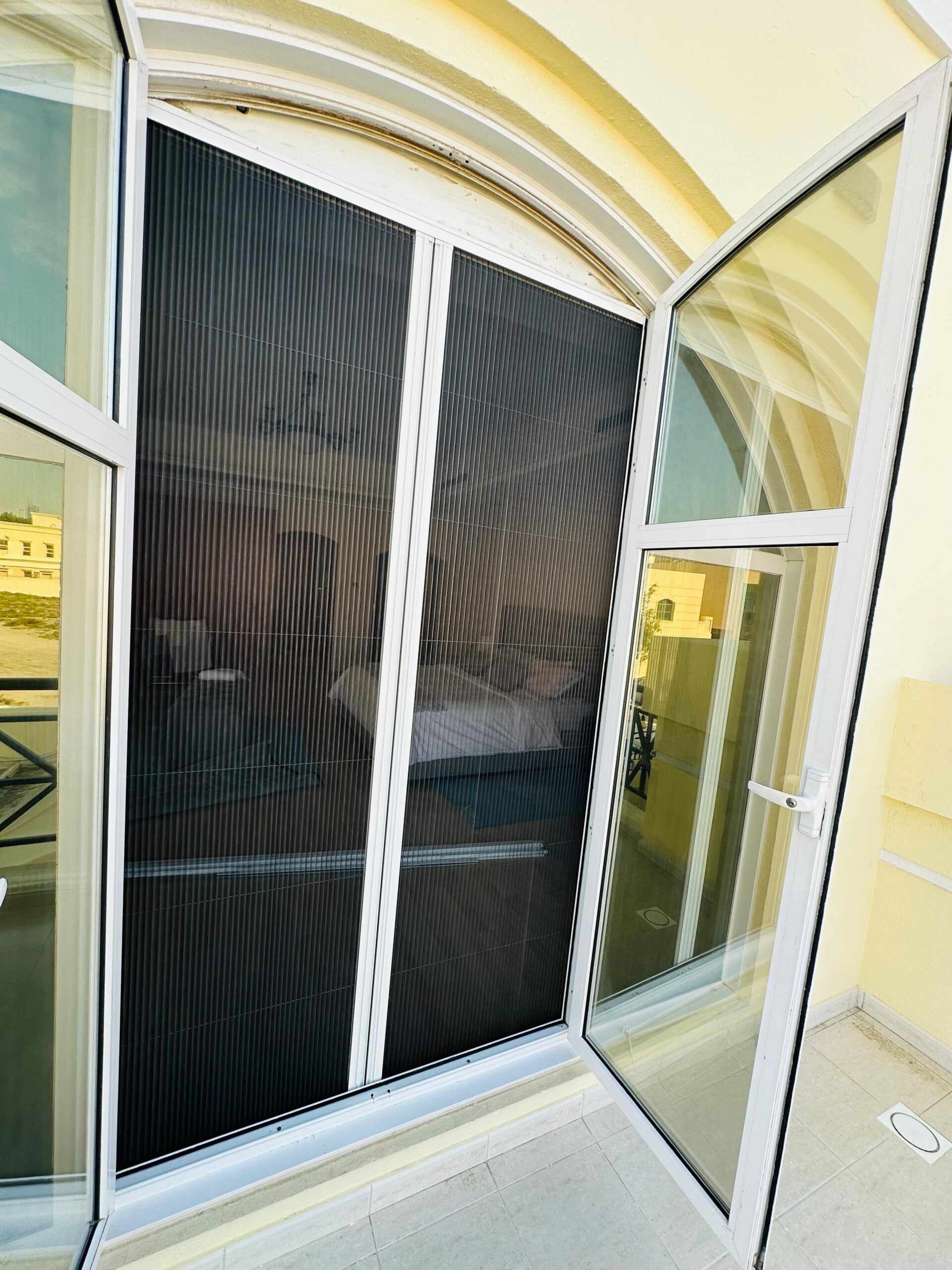
A few pleated screens we've fitted to wide doors and patios around Dubai. We'll swap in real project photos here soon.
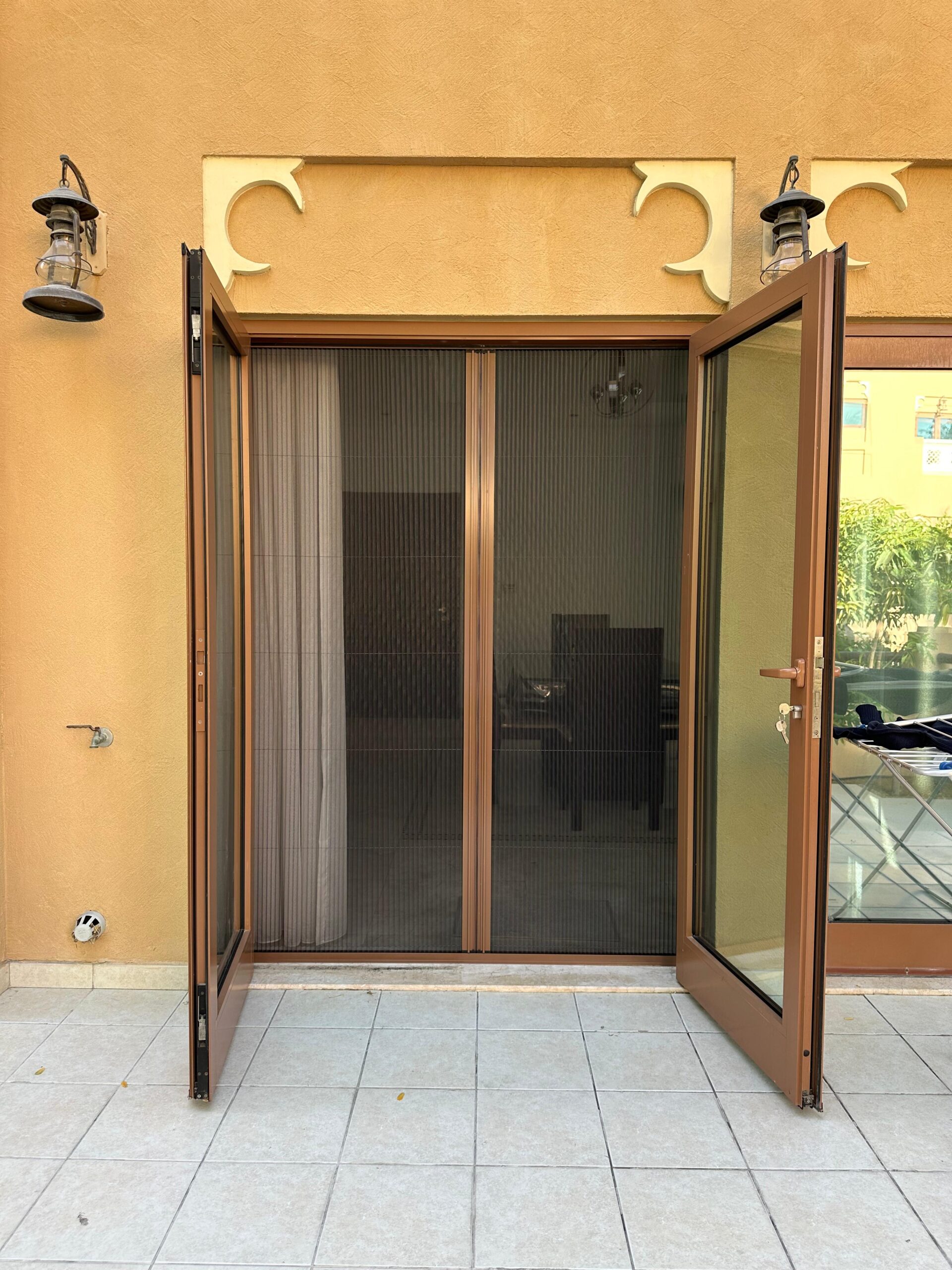
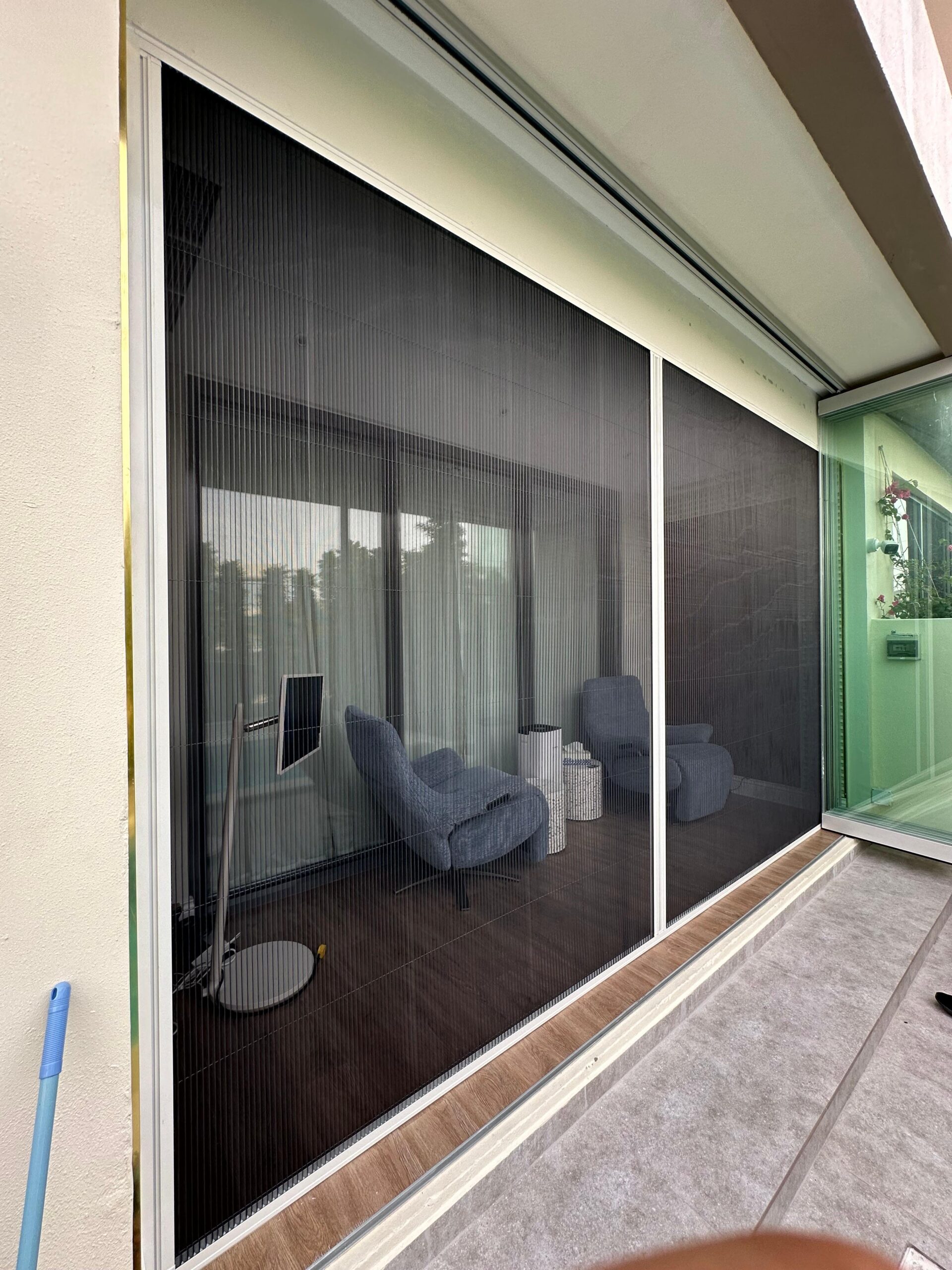
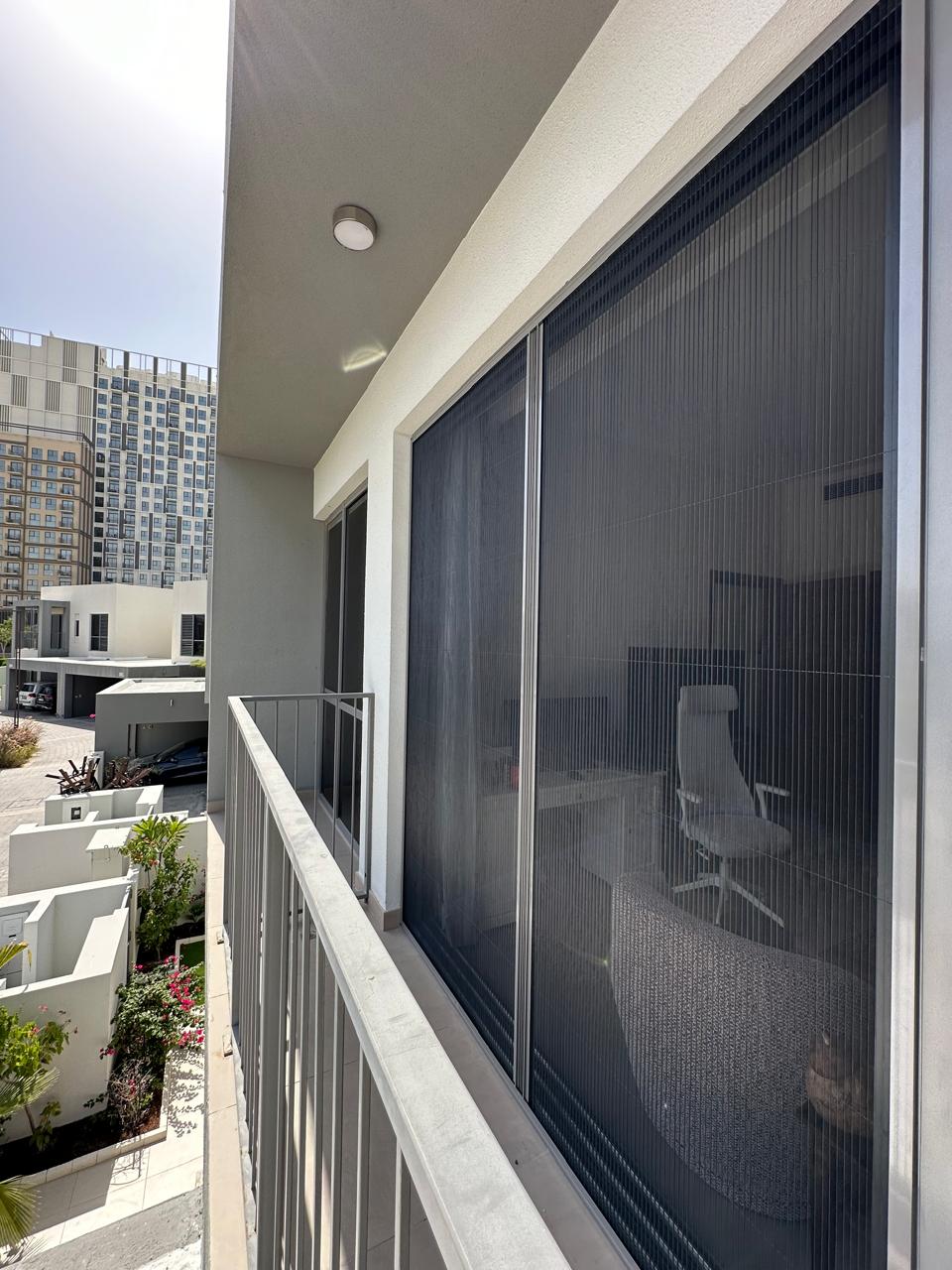
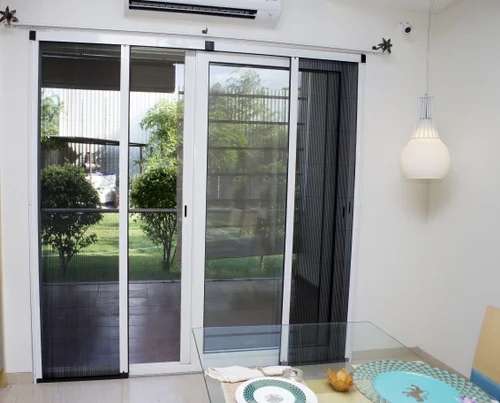
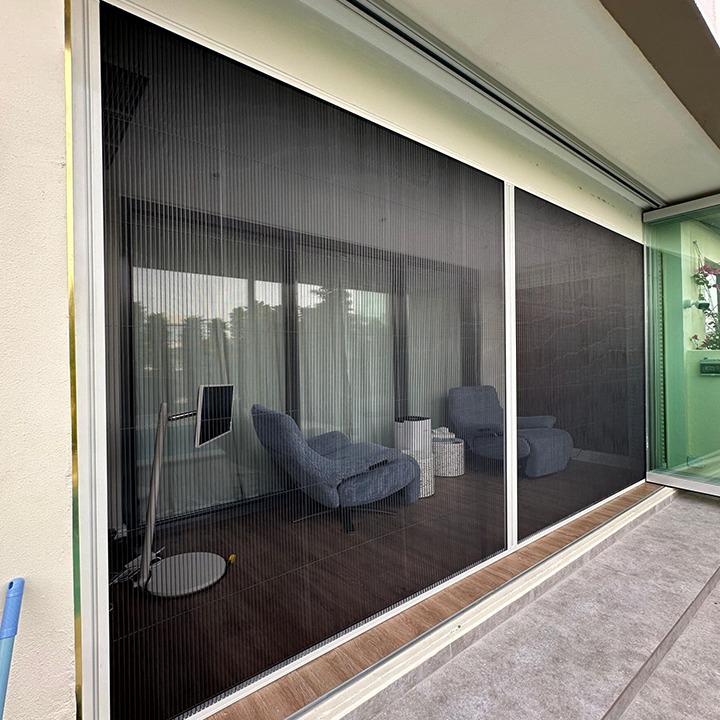
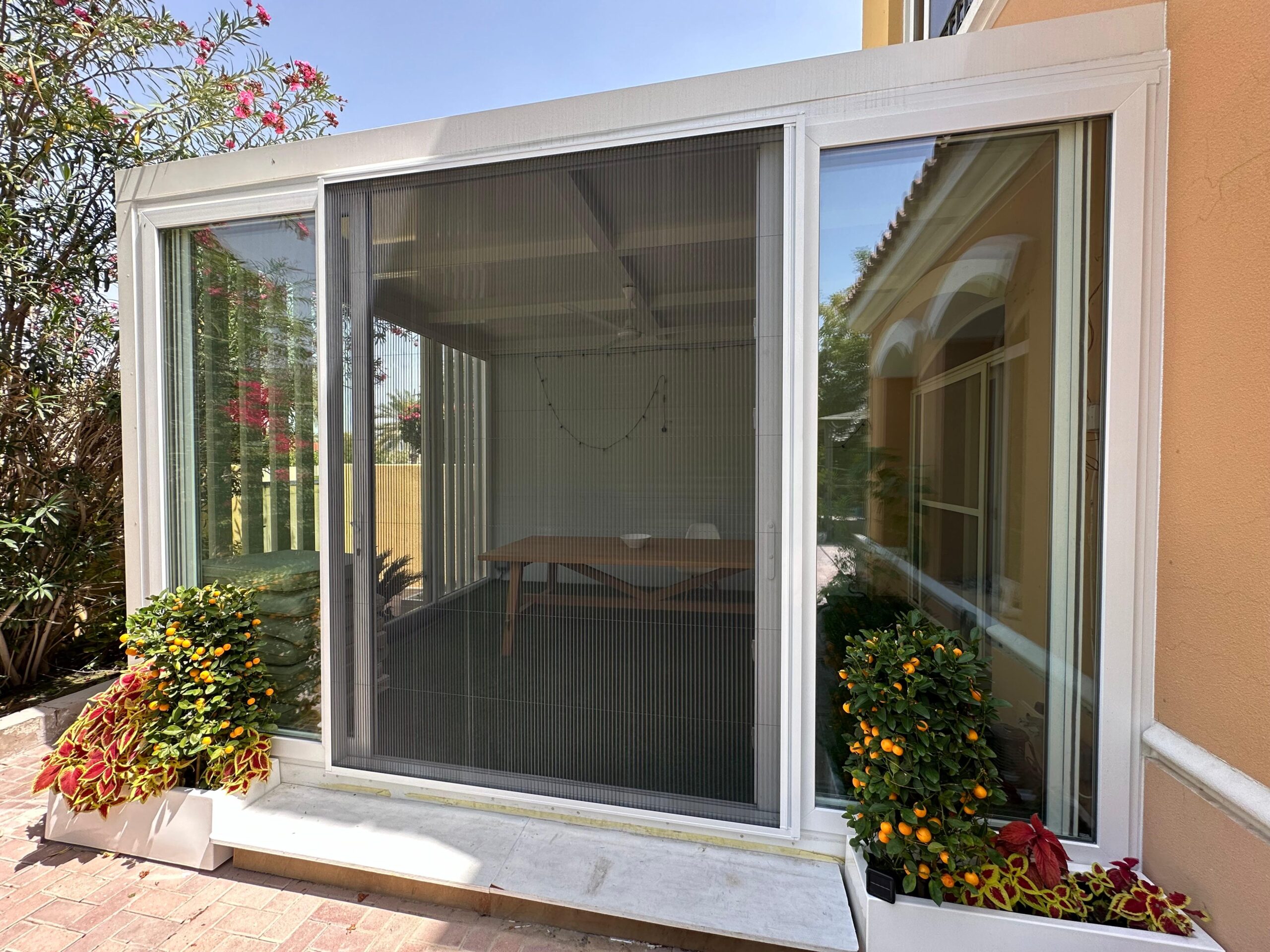
Honest, useful detail on how pleated screens work and what to expect. Tap a section to open it.
A pleated screen borrows its idea from an accordion. The mesh is folded into a run of even pleats, and it runs in a slim track along the top and the bottom of the opening. To close it you draw the leading edge across and the pleats open out flat to cover the doorway. To open up you push it back and the pleats collapse into a tight stack against the frame. Thin cords threaded through the folds guide the whole thing and keep it square as it moves.
The clever part is that the screen takes up almost no room when it's folded, which is why it suits a wide doorway where you don't want a bulky screen across the view. That counts for a lot in the warm months, with the doors thrown wide for the cooler evening air. Left open, a doorway invites in the mosquitoes that carry illnesses like the one the World Health Organization covers in its dengue fact sheet, so mesh over that gap pays its way once the season turns hot.
The cords are the heart of a pleated screen. Fine threads run through every pleat from top to bottom, and they do two jobs at once: they keep the folds even and upright, and they stop the mesh leaning or bowing as you slide it. When the screen is fitted, those cords are set under the right tension, which is the single thing separating a pleated screen that folds sweetly for years from one that starts to sag and catch within months.
Tension is also why fitting matters more on a pleated screen than on most. Set it properly and the pleats sit square and the screen glides; set it loose and the folds lean and bunch. We tension the cords by hand on every fit, and if they ever slacken over the years they can be tightened again rather than the screen being replaced. Treated to that, a pleated screen keeps its clean, even fold long term.
Two things make a pleated screen behave differently from a rolling one. First, it folds down to almost nothing. Because the mesh stacks into a concertina rather than coiling onto a roller, even a very wide screen gathers into a slim band at the side, just a few centimetres deep, so the open doorway and the view are left clear. That compact stack is the main reason people pick pleated for a big opening.
Second, it stays exactly where you leave it. There's no spring inside trying to pull it back, so you can draw it halfway across to cover part of a wide opening and it simply holds there. Want it a third of the way, or right across? Slide it there and let go. Nothing snaps back and there's no catch to hold, which makes a pleated screen easy and natural to use day to day on a doorway you only partly cover.
One of the quiet advantages of a pleated screen is its bottom track. It's slim and low-profile, sitting almost flush with the floor, so there's no raised rail to step up and over on the way through the door. That makes a real difference on a doorway used all day, where a tall bottom rail quickly becomes a nuisance and a thing to trip on.
It also makes the pleated screen a sensible choice where access matters. An older family member, a young child finding their feet, or anyone moving a trolley, a pram or a wheelchair can pass through without lifting over a threshold. If a low, step-free crossing is important for your doorway, mention it at the measurement and we'll set the track up to keep the way through as flat as possible.
For a wide door there are three good options, and they behave differently. A pleated screen folds into the most compact stack of the three and holds at any position, so it's the pick when you want the screen almost invisible when it's open and you often leave a wide opening only partly covered. It also takes the widest spans through a bi-parting design.
If you'd rather the mesh disappeared on its own, a retractable screen rolls it back onto a spring inside a cassette. If you want something solid and door-like that matches a sliding patio door, a sliding screen runs as a rigid framed panel on its own track. All three keep insects out equally well, so it really comes down to the look you want and how you'll use it. We'll lay out the trade-offs honestly at the measurement.
When an opening is too wide for one screen to cover comfortably, a pleated system can be split into a bi-parting pair. Two screens, one from each side, close together at the centre, so an entire wall of sliding or bi-fold glass is covered in a single sweep. Each half stacks back to its own side, leaving the middle of the opening open, which is just what a big garden-facing wall calls for.
Tall openings are handled the same made-to-measure way. A floor-to-ceiling glass door is screened with a full-height pleated screen built to the exact drop, so the mesh reaches top to bottom with nothing left open. Width, height or both, the screen is built around your opening instead of forcing a standard size onto a door it doesn't fit. Openings that are especially large or oddly shaped are best seen in person, and that's what the free measurement is there for.
The pleated mesh is woven from fine fibreglass or polyester, tight enough to keep mosquitoes and small flies out yet open enough to pass air and light through the folds. A deeper tone of grey or charcoal looks clearest from inside and seems to melt into the glass, which is why it's the usual choice over a lighter mesh that stands out more.
The frame and track are slim aluminium, kept narrow so the screen sits discreetly at the edge of the opening when it's folded away. They come in any colour, including custom shades, so the screen can be matched to the door it sits beside or to the window frames around it. Between a near-invisible mesh and a slim, colour-matched frame, a folded pleated screen is easy to overlook, which is rather the point.
A pleated screen asks for very little, and the part to keep an eye on is the bottom track. Now and then, run a vacuum nozzle or a soft brush through it to lift out dust and grit, because that build-up is what sets the folds dragging or sitting crooked. Give the mesh a gentle going-over with a touch of mild soapy water when needed, leave it to dry, and the pleats stay clean and the fold stays easy.
From time to time, check the screen still folds square and the cords feel firm. Should the mesh tear, a cord work loose, or the pleats lose their shape down the years, just call us and we'll re-mesh, re-tension or mend it on the warranty instead of you buying a whole new screen. Given that small bit of attention, a pleated screen keeps its clean fold and seals the doorway for many summers.
A pleated screen is the compact pick for a wide door, though a different type may suit a different door. Here are the nearest ones we make. Where the opening is a balcony rather than a doorway, balcony fly screens is the page to read.
A solid framed panel that glides sideways on a track beside the glass, suited to a patio sliding door.
Spring-loaded mesh that rolls back into a slim cassette and tucks out of sight when you open up.
A split mesh curtain that magnets pull closed behind you, so you stroll through with your hands full.
See the full set of door screens we fit, from concertina and sliding to spring and magnetic.
Quick answers to the questions that come up most before a free measurement in Dubai.
A pleated fly screen is a screen whose mesh is folded into a concertina, like an accordion, and guided by thin cords running through every pleat. You draw it across the opening to close it and let it fold back to one side to open up, where it stacks away to almost nothing. It runs on a slim track and holds at any position. It shuts out the biting insects linked to the vector-borne illnesses the World Health Organization sets out in its health guidance.
Fine cords run through the pleats from top to bottom and keep the whole screen square and evenly folded as it moves. They're set under the right tension when the screen is fitted, which is what stops the pleats sagging, leaning or bunching, so the mesh folds and unfolds cleanly every time. The cords don't tangle in normal use, and if they ever loosen over the years they can be re-tensioned rather than the screen being replaced.
Yes. Unlike a spring screen that wants to pull itself back, a pleated screen stays exactly where you leave it. You can pull it halfway across, or any part of the way, and it holds that position, which is handy when you only want part of a wide opening covered. There's nothing to snap back and nothing to hold open, so you simply slide it to where you want it and leave it there.
No. The bottom track on a pleated screen is deliberately slim and low-profile, so it sits almost flush and is easy to step over. That low threshold is one reason people choose pleated for a doorway used by older family members, young children or anyone with a trolley or wheelchair, since there's no high bottom rail to lift over. We can talk through the track options at the measurement to suit how the doorway is used.
Both suit a wide door, and it comes down to how you want it to behave. A pleated screen folds into a very compact stack and holds at any position, so you can leave it part-open, which suits a very wide patio or bi-fold opening. A retractable screen rolls the mesh onto a spring inside a slim cassette and springs back out of the way on its own. We're happy to show you both at the measurement and point to whichever fits your opening and how you use it.
Pleated screens cover some of the widest openings we do. For a very wide span we make a bi-parting screen, where two halves meet in the middle, so a whole glass wall or a run of bi-fold doors can be screened in one go. Tall, floor-to-ceiling openings are covered with a full-height screen built to the exact drop. Every pleated screen is made to your measurements, which is what lets it span a large opening while still folding and holding cleanly.
A standard pleated door screen starts from around AED 700, a wide or tall pleated screen from about AED 1,100, and a large or bi-parting glass wall from around AED 1,700, going up with the size and the span. Take these as opening figures; the real cost rests on the opening itself. The 5 percent VAT comes on top, and the free measurement turns the guide into a firm, no-obligation quote.
Yes. We install pleated screens across the whole of Dubai, and we'll happily drive to Abu Dhabi, Sharjah or Ajman as well, for houses and flats alike. There's no cost to measure and no commitment afterwards. Drop your area plus a photo of the opening to us on WhatsApp, and we'll arrange a visit.
Got a wide doorway crying out for a screen? Send the rough sizes, or just a photo of the opening, and we'll set up a free measurement. WhatsApp is the quickest.
Add your details and we'll reply on WhatsApp.
Measuring is free and there's nothing to sign up for, and we're around Monday to Saturday in working hours.