

Mosquitoes
The main reason most people screen up. They bite at dusk and through the night, and a fine mesh stops them reaching you while you sleep with the window open.
An insect screen is the fine mesh stretched over your windows and doors that keeps the bugs out and lets the air in. It is the catch-all name for every screen we make, mosquito, fly or otherwise, and it does the job without a single spray or coil. Sized to each opening and put up without drilling, it lets you fling the house open and leave the insects stuck outside the glass.
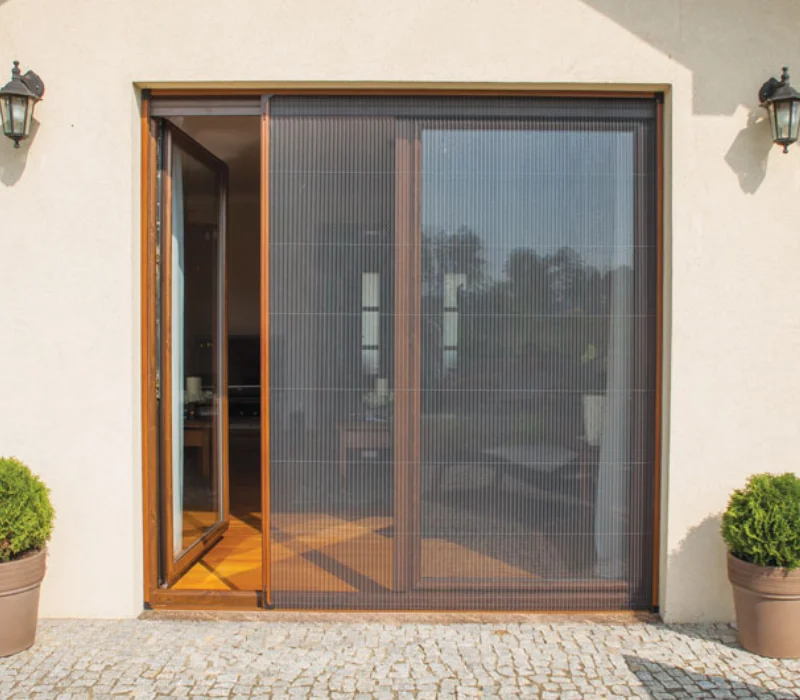 Bugs out · Air in
People think of mosquitoes first, and rightly so, but a good screen holds back a whole list of pests that find their way in around a Dubai home. Here is what stays outside once the mesh is up.
The main reason most people screen up. They bite at dusk and through the night, and a fine mesh stops them reaching you while you sleep with the window open.
Drawn to kitchens, food and bins, flies are a daytime pest in the heat. A screen keeps them off the worktops and out of the cooking.
Tiny biters that gather near water, greenery and damp ground, often worse after rain. The close weave is fine enough to shut them out too.
A wasp loose indoors is no fun, and near a garden or pool they wander in often. A screen keeps the doors and windows open without the worry.
Drawn to indoor lights at night, moths slip in through any open window. The mesh keeps them out so the lights can stay on with the air flowing.
Ground-floor villas near gardens see ants and small crawling bugs at the threshold. A door screen with a tight bottom seal helps hold them back.
Some homes get far more insects than others, and it usually comes down to what is nearby. If any of these sound like your place, screens are well worth it.
A green garden and a lawn are exactly what draws mosquitoes and flies. Ground-floor doors and windows onto the garden are where they get in.
A pool, a lake or a canal close by means more mosquitoes and midges, especially in the evening. Screens keep them off the terrace and out of the rooms.
A home next to a park or open landscaping sees plenty of bugs drift over at dusk. A screened window lets you open up without inviting them in.
Even high up, a warm night brings insects to a balcony. Screen the balcony door and you can sit out and leave the door open behind you.
Food, cooking and a bin outside pull flies in fast. A screen on the kitchen window lets the heat and steam out and keeps the flies off everything.
If you would rather open the windows than run the air conditioning on a mild evening, screens let you do it without the bugs coming with the breeze.
Insect screen is the family name. Within it there are a few styles, each one suiting a different opening and the way you use it. The mesh is the same; the way it moves is what changes.
The screen winds onto a spring in a slim cassette and rolls away when it is not wanted. Our most asked-for style for windows and doors.
A soft mesh curtain for a doorway, split in the middle with magnets that let you push through and close on their own behind you.
A solid framed screen that slides along its own track beside a patio or balcony door, full height and built for everyday use.
A folding screen that gathers like a concertina to one side, made for wide doors where you want it kept clear when open.
A screen only works if the mesh is good and the fit is tight; a loose, cheap one lets insects past the edges within a season. Getting both right is the whole job, and it is one we have done across UAE homes since 2017. You can see the full range on our services page.
We fit a fine, tight mesh that holds back mosquitoes and midges, not the wide-hole netting that only catches the bigger flies and lets the small biters through.
Each screen is cut to its opening and set to seal at every edge, so no gap is left at the side or the bottom for an insect to creep around.
We are alone in the UAE in carrying German, Italian and Turkish systems all at once, so every screen rests on a system picked to fit the job rather than a generic import.
On most windows and doors the frame is held on by strong tape alone, no drill needed, so nothing is screwed in, no hole is bored and the aluminium is left unmarked.
We come out, walk the home, note every opening that needs screening, and quote you on the spot at no charge and with no pressure to book.
The frame holds a five-year guarantee, the mesh a one-year one, and a holed or torn mesh is no drama: our re-mesh service drops new netting into the frame you already own.
What an insect screen costs depends on the opening and the type of screen you choose for it. The figures below show where each kind begins, and your own quote is free at the visit.
Each figure is where that kind begins, with the 5 percent VAT on top; the size and the chosen style decide the real price, free to get at the visit. Pay by cash or card, as you like.
Three steps carry you from open, unguarded windows to insect screens that shut the bugs out, and we leave no mess behind.
We come round, go window by window and door by door, suggest the best screen for each, and take the measurements. Free, with nothing to commit to.
Each screen is made to its own opening, the mesh pulled tight in the frame to seal all round. Built to order, it is normally ready inside 4 to 8 working days.
We fix the frames on with tape and no drill, check every screen seals right round its edges, and clear up before we go.
We fit insect screens for homes and apartments the length of Dubai, and we will travel to Abu Dhabi, Sharjah and Ajman as well. Garden villas and balcony flats keep us busy in Arabian Ranches, The Springs, JVC and Palm Jumeirah. The measurement is free wherever you are.
A few insect screen jobs from windows, doors and balconies around Dubai. We will put real project photos in here before long.
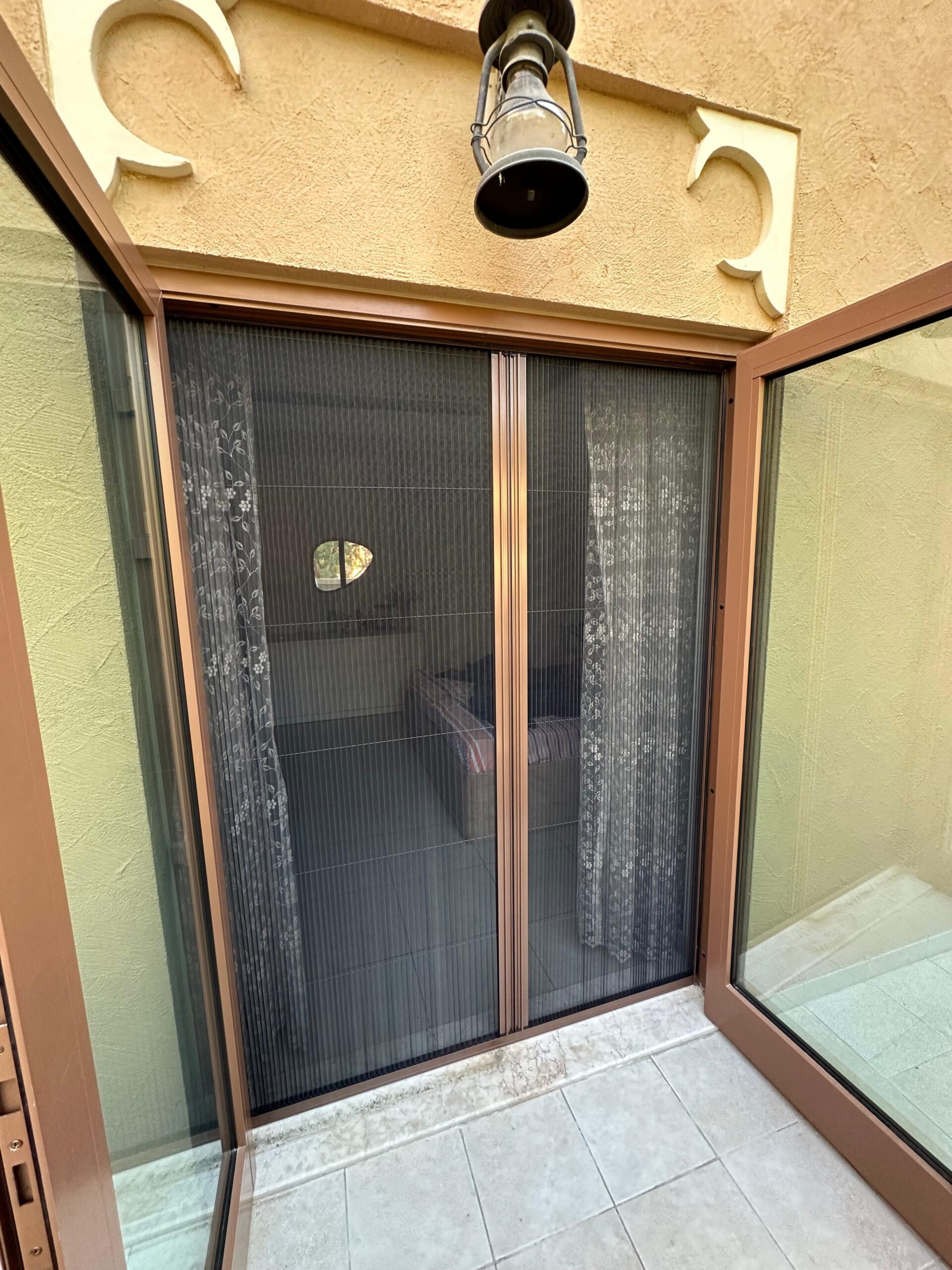
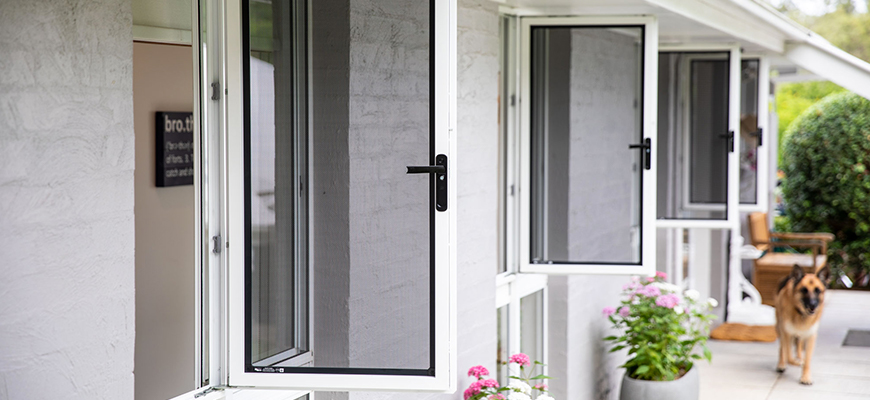
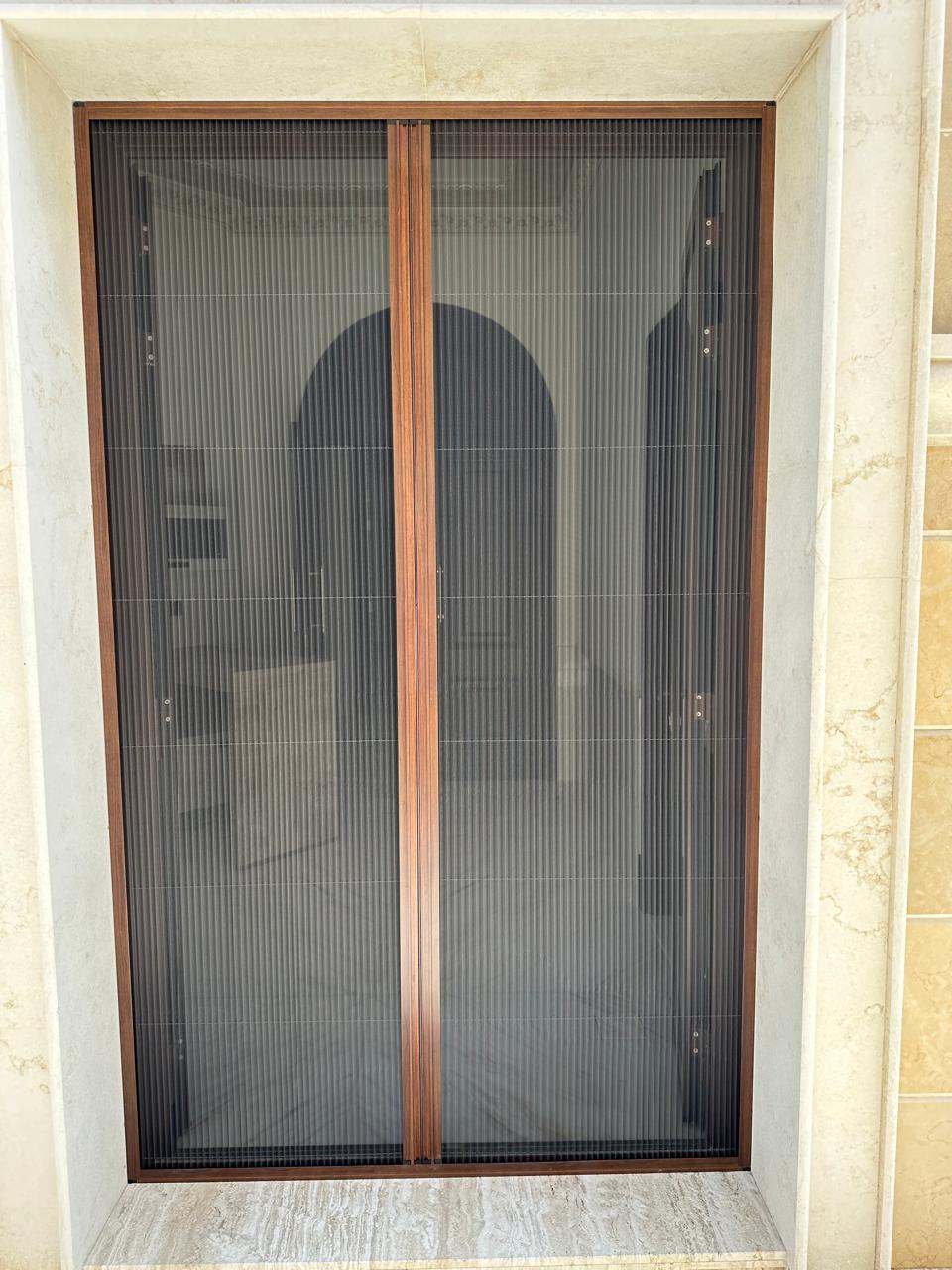
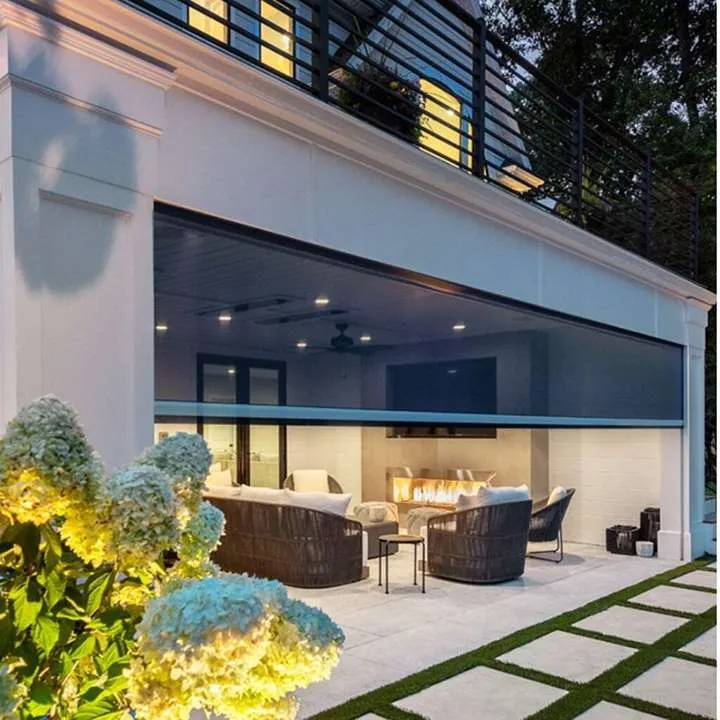
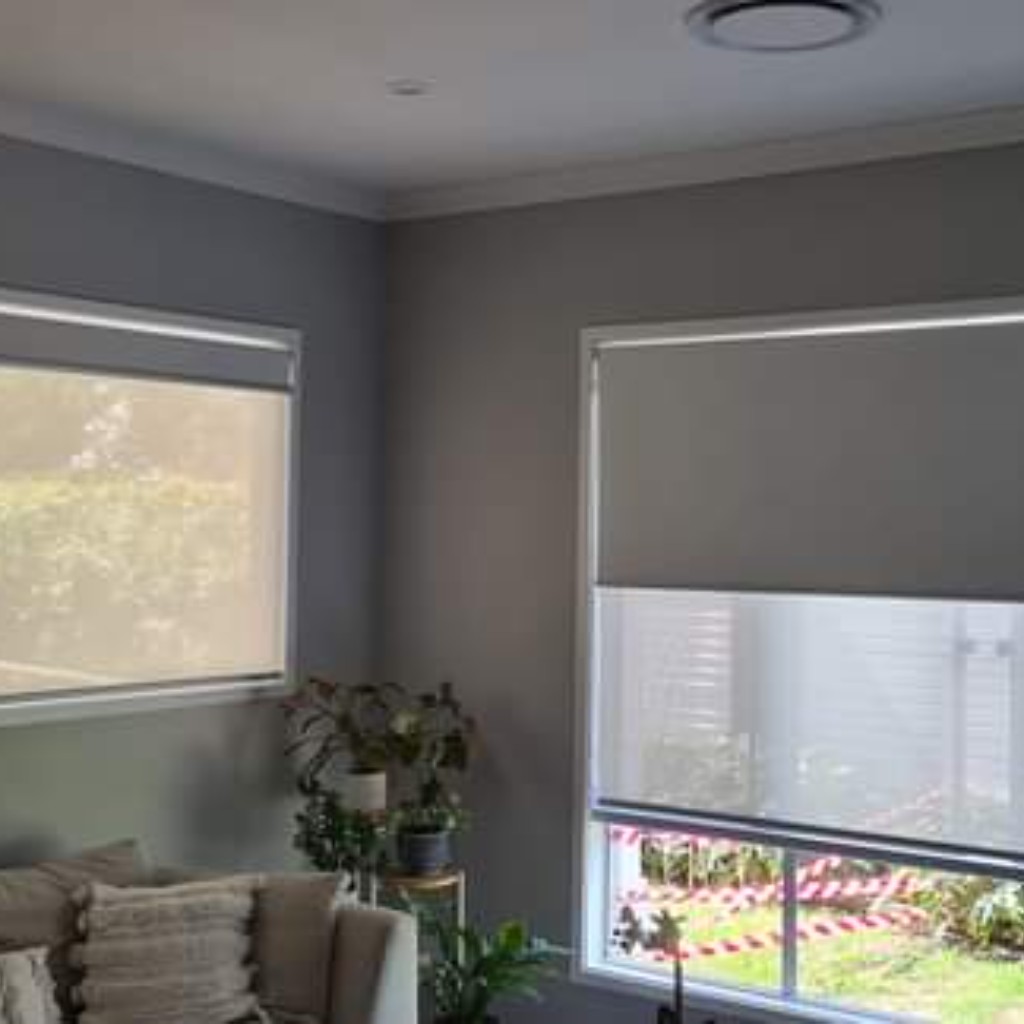
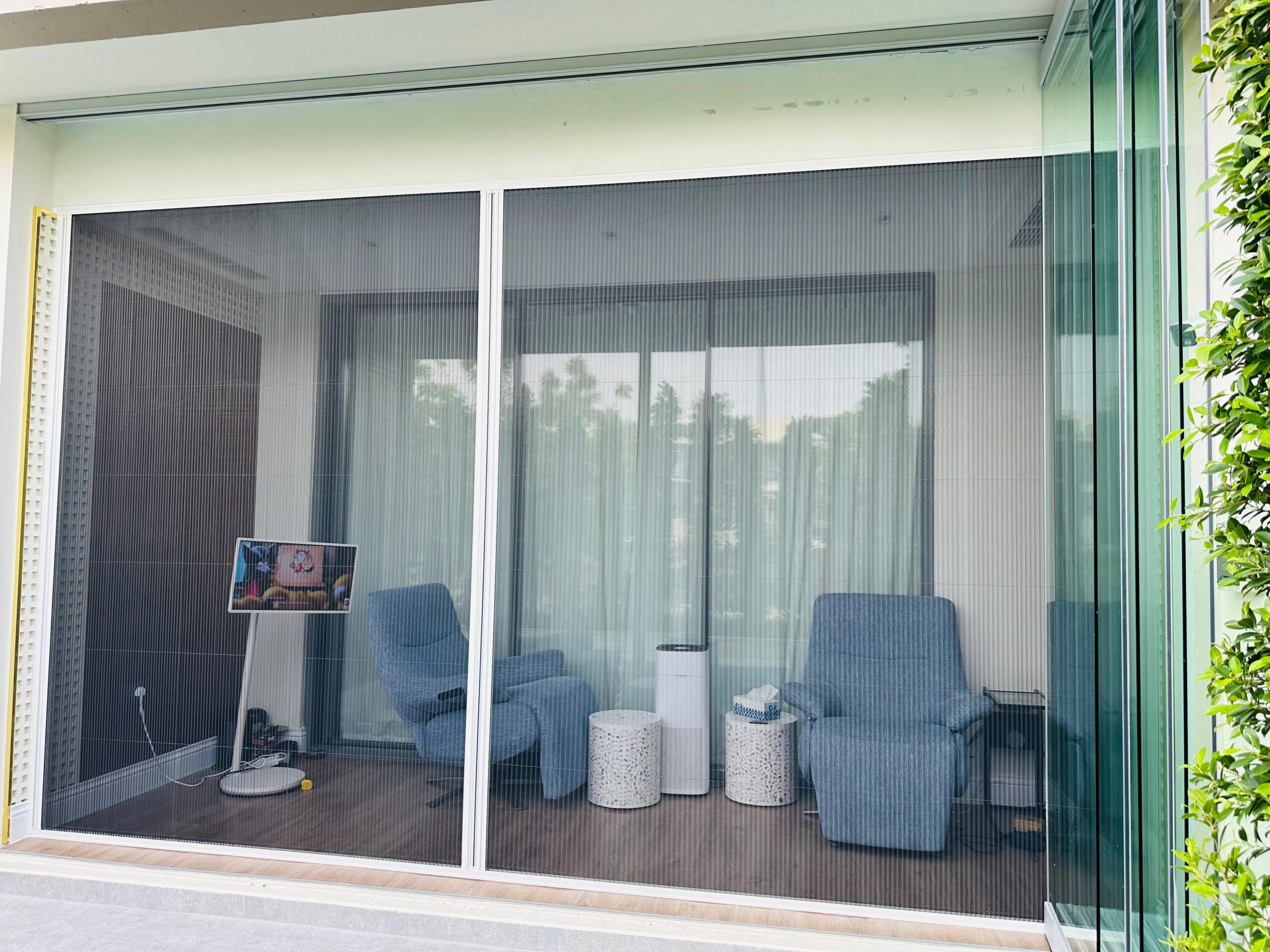
The pests, the choices and the fitting, set out plainly so you know what you are getting. Open any section to read more.
Insect screen is the broad name for a mesh barrier fitted over an opening to keep bugs out. It covers everything from a fixed panel on a window to a roller screen, a sliding door screen or a magnetic curtain. People reach for different words, fly screen, bug screen, mosquito screen or just netting, but they are all describing the same idea: a fine, see-through mesh in a frame that lets air and light pass while holding insects back.
It earns its place in Dubai because the climate is good to insects for much of the year. Warm, humid spells bring mosquitoes out in force, and an open window after dark is an open door to them. Mosquitoes are more than an itch, they carry disease, which is why the World Health Organization keeps guidance on illnesses like dengue. A screen lets you keep the home open to the air and shut to the bugs at the same time.
Mosquitoes top the list, and they are worst in the humid months and in the days after rain, when standing water lets them breed. But they are far from the only pest. Houseflies come for kitchens, food and bins and are busiest in the daytime heat. Midges and sand flies, tiny biters that are easy to miss, gather near water, damp ground and greenery. Wasps and bees drift in from gardens and pools, and moths head straight for an indoor light at night.
Where you live changes which of these you get. A ground-floor villa beside a lawn or a garden sees mosquitoes, flies and the odd wasp. A home near a lake, a canal or the sea gets more midges in the evening. An apartment over a park catches whatever drifts up at dusk. The handy thing about an insect screen is that it does not care which bug it is; as a flat barrier the mesh holds back the whole lot at once.
Sprays, coils and plug-in repellents all try to deal with insects once they are already inside, or to put them off coming close. They work after a fashion, but they have to be bought again and again, they fill the room with scent or smoke, and most people would rather not have them going near children, pets or food night after night. They treat the symptom, not the way in.
An insect screen does the opposite. It stops the bugs getting in at all, so there is nothing to kill indoors and nothing to refill. Once it is fitted there is no smell, no smoke and no running cost, and it works every night without you thinking about it. A screen is a one-time fix where chemicals are a repeating chore, and over a couple of seasons it usually works out cheaper as well as cleaner and safer.
Windows are the first place to screen, because an open window at night is how most insects get into a bedroom or a living room. With a screen on it you can sleep with the window open and the cool night air coming through, which in a Dubai summer saves running the air conditioning from dusk to dawn. The screen sits in its own slim frame, so the window, the handles and the glass all work as they did underneath.
Which style fits comes down to how often the window is opened. A fixed panel is the easy choice for one you want screened all season; a roller or sliding screen suits one you are forever opening and shutting. We match the screen to the window at the measurement, and you can see the full window range on our fly screens for windows page.
On a door, the screen has to let you walk through while keeping the gap shut behind you. A magnetic mesh curtain parts as you step through and snaps closed on its own. A sliding panel travels on a track set beside a patio door. A retractable one draws across when wanted and winds away when not. Each suits a different door and a different level of traffic, and they sit side by side on our fly screens for doors page.
For an apartment especially, a balcony is one of the best spots of all to screen. Put a screen on the balcony door and the balcony turns into somewhere you can really sit of a warm evening, the door open and nothing biting. High floors are not safe from insects, they still come up on the breeze, so the screen earns its keep well above the ground. We fit the door style to suit the balcony, the wind and the look you are after.
The two parts of any insect screen are the mesh and the frame that holds it. The mesh is a close fibreglass or polyester weave, tight enough to halt even the small biting insects yet still open to air and light. A darker grey or charcoal tends to win out, since it is the easiest of the shades to see through from inside. We go into the material in more detail on our mosquito mesh page if you want to read up on the weaves and colours.
The frame is slim aluminium, cut to the exact size of the opening and finished in any colour to match the window or door. Getting the frame right matters as much as the mesh, because it is what holds the mesh tight and seals the edges. A well-made frame keeps the mesh flat and gap-free for years, where a loose or cheap one lets it sag and lets insects slip past the side.
Insects are a year-round fact here, but they peak with the heat and the damp. The humid stretch of the year is the busiest for mosquitoes, and numbers jump in the days after any rain, when pooled water gives them somewhere to breed. Evenings and the hours around dusk are when mosquitoes and midges are most active, which is exactly when you want the windows open to cool the house down.
That is the case for screening before the season rather than during it. With screens already up, you can open the house through the worst weeks without a second thought, instead of choosing between fresh air and bites. It is worth booking the measurement ahead of the hot, humid months, so the screens are up and ready before the insects arrive.
Insect screens ask for very little. Every so often, brush or vacuum the mesh to lift off the dust and sand that settle on it, and wipe it over with a sponge and some mild soapy water if it needs more. A clean mesh keeps its holes clear and the air flowing, and on a roller or sliding screen the odd brush of the track keeps it running smoothly.
The frame outlasts the mesh by years, so a torn or worn-thin mesh does not mean a whole new screen. Our re-mesh service takes out the tired netting and tensions fresh insect mesh into the frame you already own, which comes in under the cost of a new screen and is quick to do. It is worth sorting a tear quickly, because even a small hole gives a mosquito a way in, and a re-mesh puts the screen back to as good as new.
Insect screens touch every part of the home. These pages go a step deeper, depending on what you need screened.
Screens framed to fit every window, in the style each one calls for.
Screens for every door, from magnetic curtains to sliding and retractable.
A deeper look at the mesh, the weaves and the colours behind every screen.
The most popular fit, where the mesh rolls away out of sight when you are done.
Straight answers to the things people check before they book a free measurement in Dubai.
An insect screen is a fine mesh barrier fitted over a window, door or balcony to hold insects back while air and light still pass. It is the umbrella name for the whole family of screens, which some people call fly screens, bug screens or mosquito screens. They all do the one job: a tight, see-through mesh in a slim frame, sized to the opening. The insects it shuts out include the ones the World Health Organization ties to vector-borne disease.
A good insect screen keeps out far more than mosquitoes. The fine weave stops flies, midges, sand flies, wasps, bees, moths and the small crawling insects that come in around windows and doors. In Dubai the worst culprits are mosquitoes and houseflies, especially in the humid months and after rain, but the same mesh blocks anything bigger just as well. Because it is a solid physical barrier rather than a chemical, it works on every kind of insect at once, day and night.
They solve a different and more permanent problem. Sprays, coils and plug-ins kill or repel insects that are already inside, and they need topping up, give off smoke or scent, and are not ideal around children, pets or food. An insect screen stops the insects getting in at all, with nothing to refill and nothing in the air. Fit a screen once and the opening is protected every day for years, which is why most people end up preferring a screen to the constant cost and bother of chemicals.
Yes to both. The weave is fine, and a darker grey or charcoal reads clearly from inside, so the outlook barely changes. It is open enough for air to pass freely, so a screened window still feels the breeze on a warm night. There is a small drop in airflow next to a bare opening, but much less than people fear, and the swap for shutting every insect out is one nobody regrets once it is fitted.
Almost anywhere insects get in. We fit insect screens to windows of every kind, to patio, balcony and main doors, across wide sliding glass walls, and over awkward spots like kitchen windows and vents. In a villa that often means screening the whole house; in an apartment it is usually the windows and the balcony door. We look at every opening on the free visit and recommend the right type of screen for each one, so nothing is left as a way in.
On most windows and doors, yes. The screen frame is taped onto your existing one with strong double-sided adhesive, which leaves no screws, no bored holes and no harm to the aluminium. It is clean and quick, and a good match for apartments where drilling is often off the table. A few openings, an open balcony, a pergola or a timber structure, call for a different fixing, and where they do we work it out on the visit and run through it with you before starting.
A fixed insect screen panel starts from around AED 300, an insect screen for a window from about AED 400, and an insect screen made up as a door from around AED 700, with the final figure resting on the size and the type of screen. Treat these as opening figures. VAT of 5 percent goes on top, and a free measurement is what turns the guide into a firm quote for your own openings, with no need to commit.
Yes. We put insect screens into homes the length and breadth of Dubai, and we will drive out to Abu Dhabi, Sharjah or Ajman too, for houses and flats alike. Measuring costs nothing and carries no obligation. Send us your area with a photo of the openings on WhatsApp, and we will set up a time that works for you.
Ready to keep the bugs out for good? Let us know how many windows and doors and where you are, and we will arrange a free measurement. The fastest way to reach us is WhatsApp.
Pop in your details and we will reply over WhatsApp.
There is no charge for the measurement and no commitment, and we are out and about Monday to Saturday through the day.