

Out of sight when idle
The mesh disappears into its cassette when you're not using it, so the window or door looks clear and uncluttered.
The retractable is the screen our customers pick most, and it's easy to see why. The mesh stays hidden in a slim cassette until you draw it across the opening, then rolls straight back out of the way, so the window or doorway looks open and clear again. One family covers almost any opening, from a small window to a wide patio door.
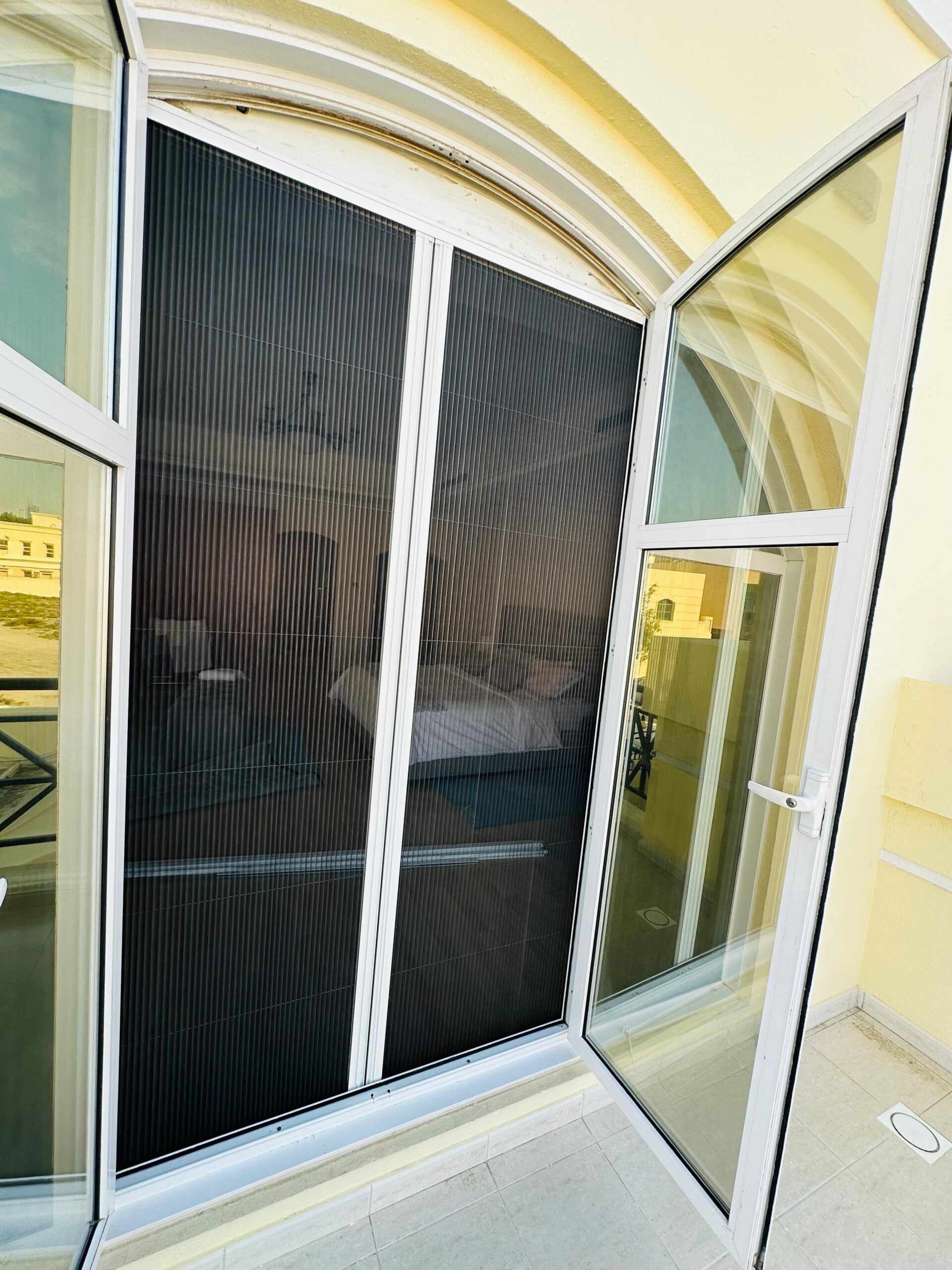 Most popular · Glides away out of sight
A quick look at a retractable on a window, on a single door, and on a wide patio opening, each one gliding out and rolling away. Tap a video to play.
We fit more retractable screens than any other type, and it comes down to a handful of things people value once they live with one. Here's what wins them over.
The mesh disappears into its cassette when you're not using it, so the window or door looks clear and uncluttered.
Window or door, narrow or wide, single or double sided, there's a retractable setup to match nearly every opening in the home.
Take the handle, draw the mesh across or down, and let it glide back. There's nothing to lift, fold or store away.
A narrow cassette and fine guides sit quietly at the edge of the frame, suiting a contemporary home far better than a bulky screen.
Tucked inside the cassette between uses, the mesh stays clean and shaded, which helps it last longer than mesh left on show.
A slowed return draws the mesh back gently rather than snapping it, so it's quiet, safe around children, and kinder on the mesh.
Most of the choice with a retractable is matching the configuration to your opening. Here are the main ways we set one up, and we'll point you to the right one at the measurement.
One cassette, one pull. The mesh draws in from a single side, the simplest setup and the right one for most windows and standard doors.
Two cassettes that meet in the middle, mesh pulling in from both sides. Built for wide doors and big openings one panel can't span.
Configured to drop down from the top of a window or draw in from the side, then clear away so the glass looks bare when it's not wanted.
A pull-across panel beside a single or patio door, there when you want air and gone into its cassette when you don't.
Add a motor and run the screen from a switch, remote or your phone, handy on a large or high opening where a hand pull is awkward.
Fibreglass or polyester mesh in black, grey or charcoal, in an aluminium frame finished to match your window or door.
Because the family stretches from a single window to a wide patio run, a retractable lands well almost anywhere you want air without insects. These are the openings we fit them on most.
A retractable suits almost any window, pulling down or across for air and rolling away so the view stays clear the rest of the time.
On a single garden or side door, a pull-across panel gives a bug-free doorway that disappears the moment the door is shut.
For a broad sliding or bi-fold run, a double-sided retractable spans the gap a single panel can't, meeting neatly in the centre.
Out on a balcony or terrace it keeps the evening clear of insects and tucks away, so it never gets in the way of the view.
A pair of retractables, one each side, screens French doors while still letting both leaves open the way they're meant to.
In the rooms you air most, the mesh is there while the window's open and gone the moment you close up, with nothing on show.
With so many ways to configure a retractable, the value lies in picking the right one and hanging it properly, and that starts with a careful measure. We've been building and installing screens in the UAE since 2017, and our own fitters handle every job. You can browse the whole range on our services page.
We match single or double, side or pull-down, manual or motorised to your opening, so the screen suits the way you use it.
We fit quality cassettes with a smooth, slowed return, so the mesh keeps gliding cleanly years on rather than snapping and wearing.
No other UAE company stocks German, Italian and Turkish systems side by side, which is how we pair the right retractable with your opening.
Cassette and guides are bonded on with strong tape, so your frame keeps every bit of its finish and there's nothing to make good later.
Our team visits, takes the sizes, suggests the configuration, and gives you a price there and then, all free of charge.
A retractable is priced by the opening size, the configuration you choose and the mesh. The figures below are where each starts, and the free visit turns them into an exact quote.
Every price here is before 5% VAT. The final figure tracks the opening size, the configuration and the mesh, and the no-cost visit pins it down exactly. Pay however suits, cash or online.
There are just three steps to a fitted retractable, and we clean up after ourselves.
We come round, size up the window or door, and suggest the configuration that fits the opening and how you use it. There's no charge for the visit and no commitment.
Your screen is made to the precise size in the setup, mesh and frame colour you picked. Built to order, it's typically ready within 4 to 8 working days.
We tape the cassette and guides into place, set the spring tension and the glide, and draw it out and back with you to be sure it runs cleanly before leaving.
We install retractable screens for apartments and villas right across Dubai, and head out to Abu Dhabi, Sharjah and Ajman. They top our job list in communities such as Arabian Ranches, Dubai Hills, JVC and Palm Jumeirah. Measuring is free wherever we work.
A few retractable installs from across the city. Genuine project photos will go up here as more wrap up.
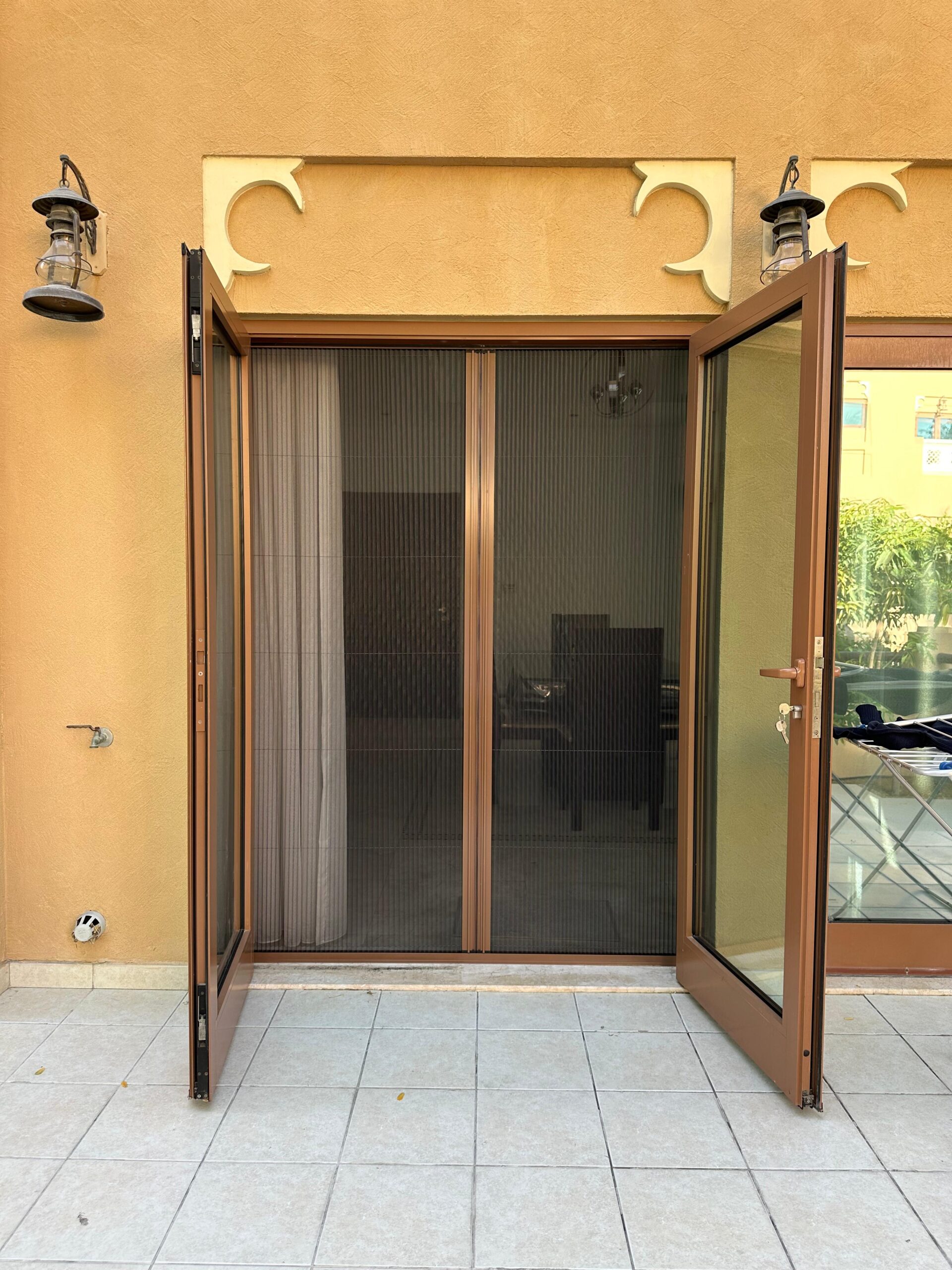
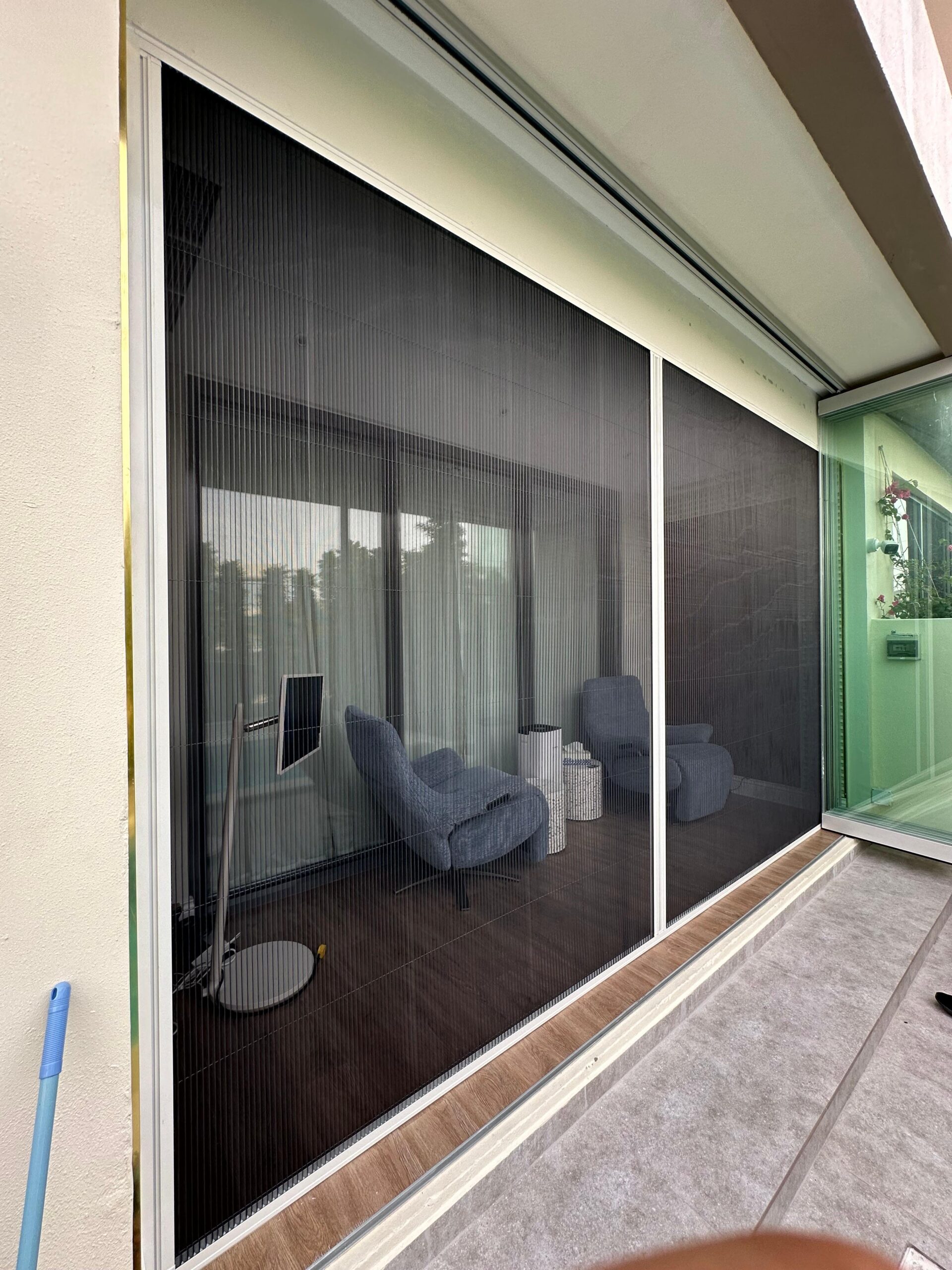
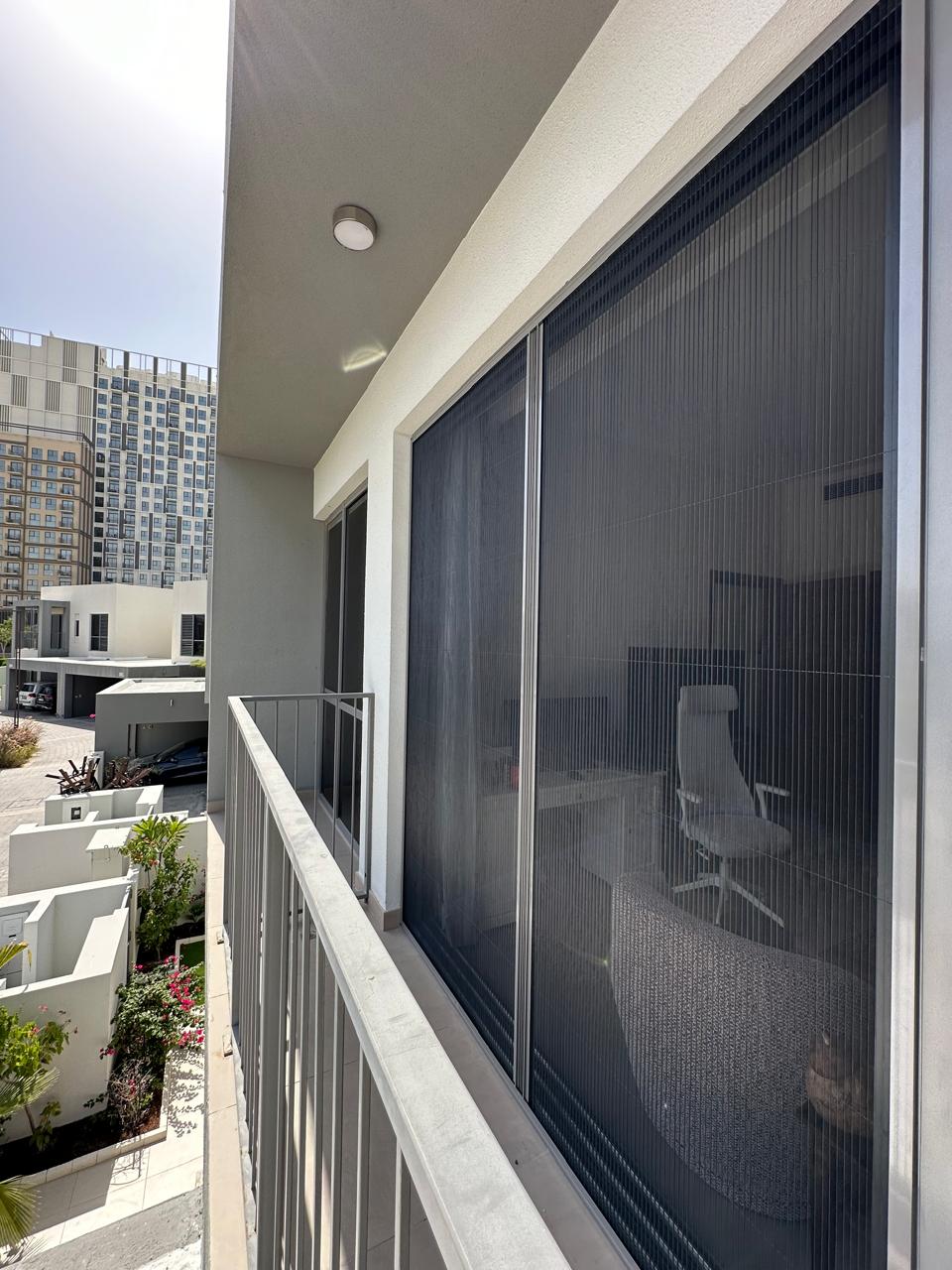
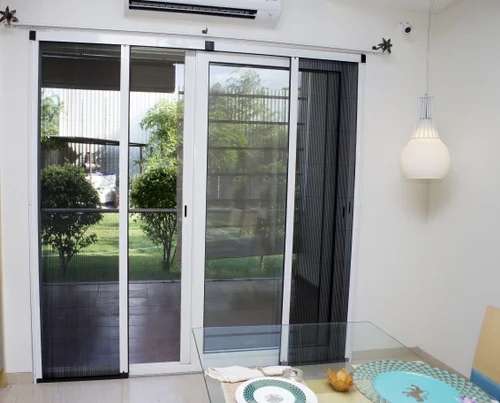
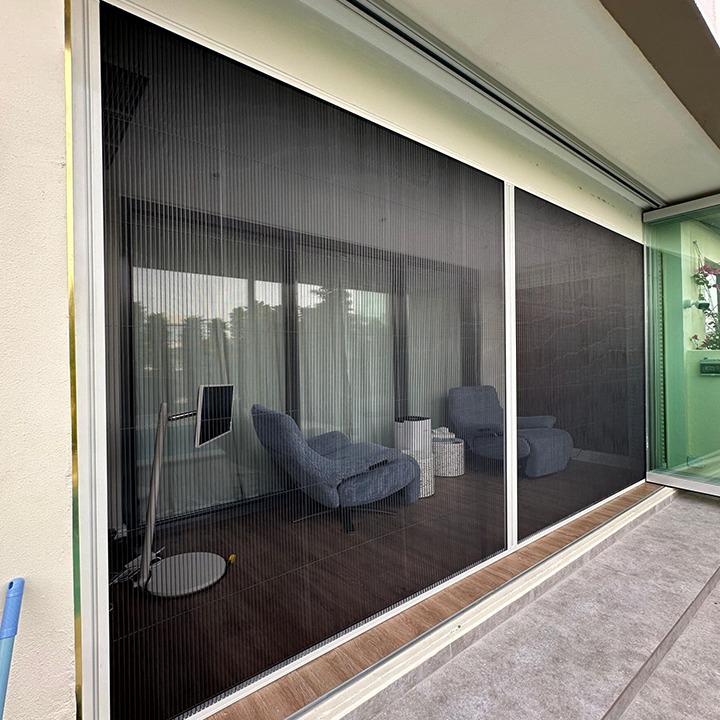
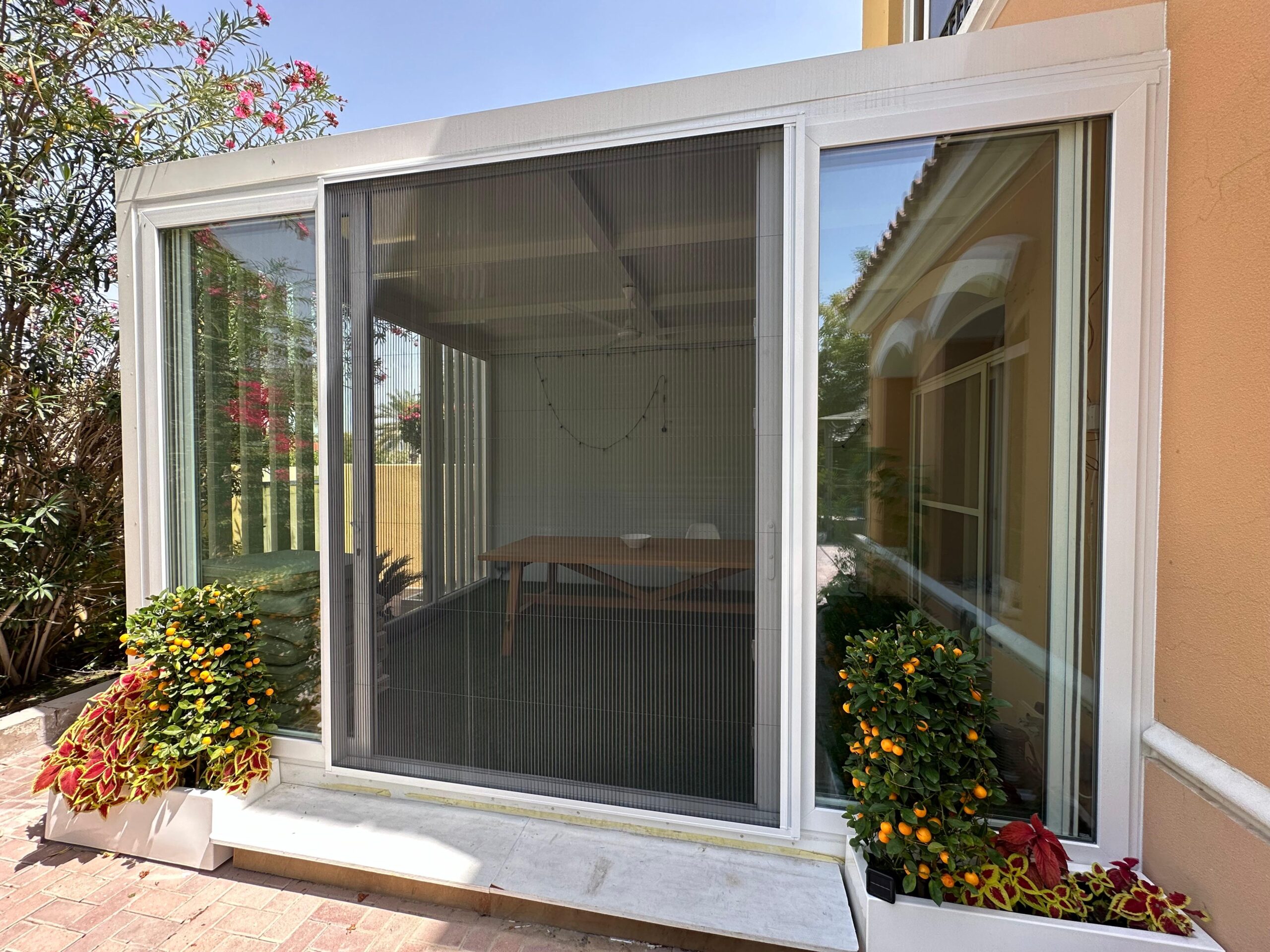
Honest, practical help with picking and living with a retractable. Tap any section to open it.
Retractable simply means the mesh can be drawn out when you want it and put away when you don't, instead of sitting permanently across the opening. The mesh lives in a slim cassette at the edge of the frame, and a handle lets you pull it over the window or door and glide it back again. When it's away, the opening looks the same as it did before the screen went in.
That one quality, mesh on demand, is why it's the type we fit most. You get bug protection on the evenings the window's open, which counts for a lot given the diseases mosquitoes can carry, as the World Health Organization explains in its guidance on dengue, and a clear, screen-free view for all the hours you don't. Add the fact that it fits so many openings, and it's the natural first choice for most homes.
This is the first fork in the road, and it's decided by the width of the opening. A single-sided retractable runs one cassette, drawing its mesh in from just one side. It's the simpler, tidier option and the right answer for the great majority of windows and standard single doors, where one panel of mesh comfortably reaches across.
A double-sided has a cassette at each side, and the two halves of mesh meet in the middle with a light catch. It exists for openings too wide for a single pull, typically big sliding doors, bi-folds and broad patio runs. The trade-off is simply that you draw two halves instead of one. As a rule we fit single-sided wherever it reaches and step up to double-sided only when the width calls for it, and we'll tell you which line your opening falls on.
A retractable can run horizontally or vertically, and which one suits comes down to one thing: door or window. On a door you nearly always want a horizontal pull, the mesh drawing across from a side cassette so you can step up and pull it over like a light curtain, then send it back as you go through.
On a window, either can work, but a pull-down from a cassette along the top often feels the most natural, dropping the mesh over the glass and springing back up out of the way. Some windows suit a side pull instead, especially tall narrow ones. None of this needs deciding in advance. We look at each opening and set the direction that's easiest to reach and use, which is part of what the measurement is for.
The vast majority of retractables are manual, and for good reason: a hand pull is quick, needs no power, and costs less, and on a normal window or door it's all you'll ever want. You take the handle, draw the mesh, and let the controlled glide take it back. There's nothing to charge, wire or maintain beyond the screen itself.
A motor earns its place only on the openings where a manual pull is genuinely awkward, a very large or heavy screen, or a high window you can't easily reach. There, the same retractable can be motorised to run from a switch, a remote or your phone. It adds cost and needs a power supply, so it earns its place where height or size is the real issue, not as a simple luxury. We'll give you a straight, honest read on what your opening actually needs.
Two choices affect how the screen looks and performs: the mesh and the frame. For the mesh, a darker colour like charcoal or grey actually gives the clearest view out, because the eye looks past it, while letting plenty of air through. We use fine fibreglass or polyester mesh that holds its shape and resists the sun, in black, grey or charcoal to suit the room.
The aluminium frame and cassette can be finished in a wide range of colours, including custom shades, so the screen blends with your window or door rather than standing out against it. White, black, grey and metallics are the usual picks. Getting these two right is what makes a retractable almost vanish when it's in place, which is exactly the look most people are after. We'll show you the options at the measurement.
A retractable wins wherever you want the mesh gone between uses and the flexibility to suit almost any opening, which is most of the home. Against a pleated screen it rolls fully away rather than sitting in a slim stack, and against a fixed or plain mesh panel it gives you a clear opening on demand rather than a screen that's always there.
It isn't the only answer, though. A sliding screen can suit a wide patio door, and a magnetic screen is handy on a busy door when your hands are full. The honest position is that a retractable is the best all-rounder and the right pick for most openings, but we'll point you to another type where it genuinely fits your door or window better.
A retractable needs the opening measured accurately so the cassette and guides sit square and the mesh runs true with no gaps for insects. We measure the width and height, check the frame is level, and look at which side and direction suit the pull. On openings that have shifted over the years we note it and allow for it, which is why we measure ourselves rather than work from a number over the phone.
Price follows a few things: the size of the opening, the setup you go for, single or double-sided and manual or motorised, and the mesh you pick. A standard window screen sits at the lower end and a wide double-sided door at the higher end, with a motor adding to either. Since every screen is cut to size, a proper measure is the only route to a firm figure, and that visit costs nothing with no commitment to proceed.
A retractable is easy to live with, and the main job is keeping the guides clear. Run a brush or a vacuum nozzle along the side and bottom tracks now and then to clear sand and grit, since that's what lets the mesh glide and return cleanly. Let the controlled return carry the mesh home rather than forcing it, and if something feels caught don't tug it, just clear the track.
Freshen the mesh and cassette using a soft, damp cloth with a hint of mild detergent when dust shows, and more so if you're beside a busy road or site work. Nothing needs oiling and there's nothing for you to adjust. If the glide turns rough, the mesh tears, or a guide loosens, a quick call brings us out to set it right or re-mesh it on the warranty, rather than leaving you to wrestle with it.
A retractable is the strongest all-rounder, though some openings call for a different type. Here are the nearest options we build. On a high floor, see balcony fly screens — wind load changes which cassette we fit.
Glides sideways along a separate track by a sliding door, well suited to a broad patio opening.
Gathers to one side as a concertina, a neat pick for a broad run that gets opened often.
A soft mesh curtain you step through that pulls shut on magnets, useful on a door in constant use.
A fixed, tensioned panel that stays in place, tidy and low-cost for a span you seldom pass through.
Short, clear answers to the things people check before they book a free Dubai measurement.
A retractable fly screen keeps its mesh in a slim cassette and lets you pull it out only when you want it. You draw the mesh across or down to cover the opening, and slide it back into the cassette when you're done, leaving a clear window or doorway the rest of the time. It's our most popular type because it fits almost any opening and stays out of sight when not in use. It also blocks the insects responsible for the diseases the World Health Organization details under vector-borne illness.
A single-sided retractable has one cassette and pulls the mesh in from a single side, which is the common setup for windows and standard doors. A double-sided has two cassettes that meet in the middle, with mesh pulling in from both sides, which is made for wide doors and large openings that one panel can't cover. We recommend which suits your opening at the free measurement.
Yes. Retractable screens are the most versatile type and fit both. On a window they can pull down from the top or across the side, and on a door they pull across as a panel beside the door. Wide patio and sliding doors take a double-sided version. Because the same family covers so many openings, it's the type we fit most across Dubai homes.
Most retractable screens are manual, which means you simply pull the mesh out by its handle and glide it back, and that's all most openings need. For a large or high opening where a manual pull is awkward, the same screen can be motorised so it opens and closes from a switch, remote or your phone. We'll advise on the right choice between manual and motorised for your opening.
It's controlled. The retractable screens we fit use a smooth, dampened return, so the mesh eases back into the cassette steadily instead of snapping, which is quieter, kinder around children, and easier on the mesh. That controlled glide is part of what marks out a quality retractable from a cheap one that snaps and wears out fast.
No. The cassette and side guides bond on with heavy-duty double-sided tape, so nothing gets drilled and your window or door frame ends up with no hole or mark. The finish stays untouched and the tape grips aluminium and uPVC equally well. Take the screen off down the line and the surface looks just as it did.
A retractable screen for a window starts from AED 400, for a door from around AED 700, and a wide or double-sided version from AED 900, with the exact figure set by the size, the configuration and the mesh. Everything is quoted before 5 percent VAT, and the free measurement settles the precise price with no obligation to order.
Yes. We cover the whole of Dubai for retractable screens, and reach Abu Dhabi, Sharjah and Ajman too, in both apartments and villas. The measure costs nothing and ties you to nothing. Drop your area and a photo of the opening into WhatsApp and we'll fix a visit for a time that works for you.
After the screen most of our customers choose? Let us know the window or door and we'll book a free measurement. A quick WhatsApp photo is the easiest way in.
Add your details and we'll reply on WhatsApp.
The measurement is free and you're never tied in. We answer through working hours, Monday to Saturday.