

A flat sheet of mesh
It's a single plain sheet of mesh, not folds or panels, pulled tight across the opening so the view stays clear and unbroken.
An ordinary screen flaps and pulls out the moment the wind picks up. A zipline screen doesn't. The mesh has a zipped edge that runs inside a channel on either side, so it stays flat and tight even on a gusty terrace or up a tall balcony. It's the screen for big, open spots where the wind normally wins.
 Zip-locked edges · Wind-stable
A quick look at a screen coming down with its edges feeding into the side channels, the mesh pulled flat and tight, and a terrace screen not budging when the wind gets up. Tap a video to play.
The whole idea of a zipline screen is in the edges. Here's what it's built from and why a locked edge changes everything on a windy opening.
It's a single plain sheet of mesh, not folds or panels, pulled tight across the opening so the view stays clear and unbroken.
Each side of the mesh has a thickened, zip-style edge that runs inside a channel on the frame, so the edges are held and can't pull free.
The mesh lives on a roller in a neat box at the top, and rolls down into the channels to close or back up into the box to clear the opening.
With the edges locked in the channels and a bar weighting the bottom, the mesh is gripped all the way round, so there are no gaps for insects.
Because the edges can't lift out, the mesh holds flat and tight when the wind gets up, instead of flapping or bowing inward like a loose screen.
A smaller screen winds up and down by hand, while a large or high one takes a motor, dropping and lifting at the push of a button.
Most screens give up on a big, exposed opening. A zipline screen is built for exactly that. Four things make it the one that copes where others fail.
The zipped edges stay locked in the side channels, so a gust can't lift the mesh free or push it inward.
The mesh is held taut across the whole opening, with no sag or flap, so it looks neat and seals properly.
A single sheet covers a wide pergola or a long terrace in one go, where folds or panels would get in the way.
Gripped on both sides, along the top and at the weighted bottom bar, it leaves no gap for insects to find.
A zipline screen shines on the open, breezy spots where you'd love to sit out without the bugs. These are the openings we screen most for Dubai homes.
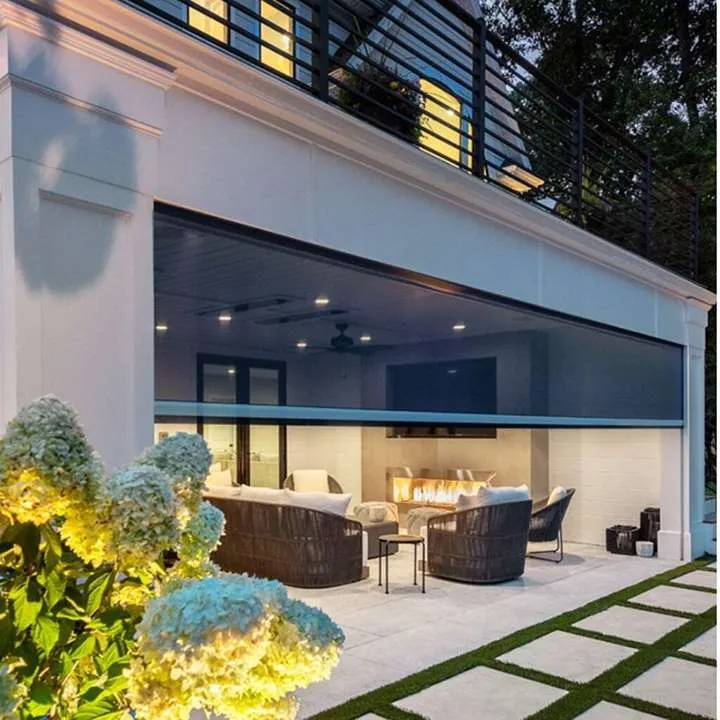
An open pergola or a garden gazebo turns into a usable evening room once zip screens close the sides and keep the mosquitoes outside.
A long terrace facing the garden takes one flat sheet across the opening, so you can dine and sit out there even on a breezy night.
Up on a tall apartment balcony the wind is stronger, which is just where a zipline screen earns its place by staying put and sealed.
An outdoor majlis or a shaded seating area stays cool and bug-free behind zip screens, so guests linger without swatting at flies.
A garden room or a covered area by the pool opens to the outside through a zip screen, letting the air in while keeping insects out.
Anywhere the wind defeats a normal screen, a zipline one holds firm, so an opening that always seemed too breezy can finally be screened.
A zip screen lives outdoors and takes the wind, so the tracks, the housing and the mesh all have to be up to it, and the fit has to be spot on. Since 2017 we've made and fitted screens for UAE homes, big outdoor ones included, and our own crew runs every install. See the whole line-up on our services page.
We measure the opening and build the mesh, the box and the channels to fit it, so the edges run true and the sheet pulls tight with no gaps.
We use tracks, rollers and a top box made to sit outside in sun and wind, so the screen keeps rolling cleanly season after season.
No one else in the UAE keeps German, Italian and Turkish zip systems side by side, so the tracks, the box and the mesh are matched to your opening, never a one-size kit.
We fit both, and help you pick, so a small screen stays simple by hand while a big or high one runs easily on a quiet motor and remote.
We come out, study the opening and the structure, run through the mesh, colour and motor options, and quote you a price on the day for free.
Because it's a bigger, outdoor unit, the price of a zip screen tracks the size of the opening and the hardware on it. Each figure below is a starting point, and your exact quote comes from the free visit.
Start-from prices, before 5% VAT, set by the opening and the hardware; a pergola or motorised screen is priced on the visit. Cash or online, whichever suits you.
Three steps take you from an open, breezy spot to a sealed screen that stays taut whatever the weather does.
We come out, measure up, check the structure and the fixings, and settle the mesh, the colour and the manual or motorised choice. Free, with no obligation.
The mesh, the box and the side channels are made to the exact opening, with the right mechanism for the size. Made to order, it's usually ready in 4 to 8 working days.
We mount the box and the channels, set the mesh running true, then roll it down and check it pulls tight, seals all round and holds steady.
We put zipline screens into homes and apartments throughout Dubai, and reach Abu Dhabi, Sharjah and Ajman too. Pergolas, terraces and big balconies are regular work for us around Palm Jumeirah, Dubai Hills, Arabian Ranches and The Springs. The site visit is free in every area we serve.
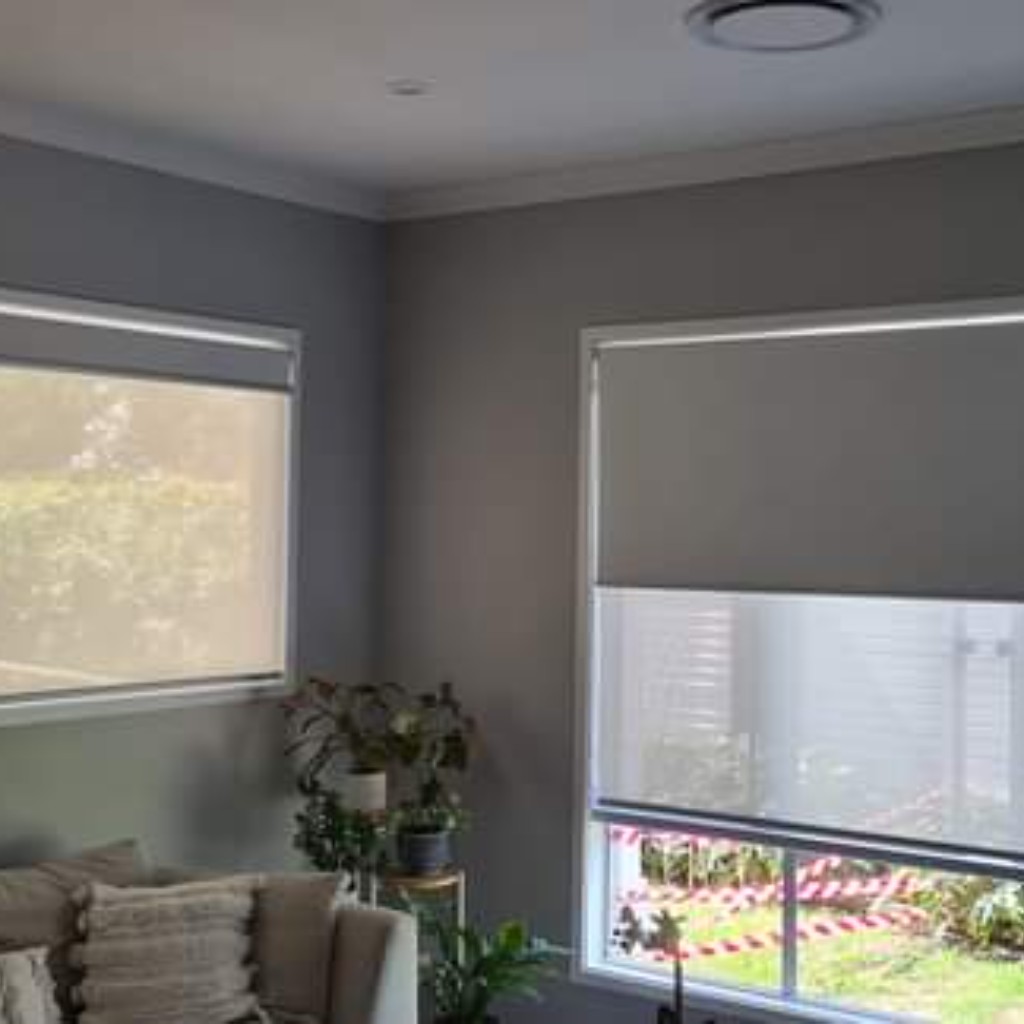
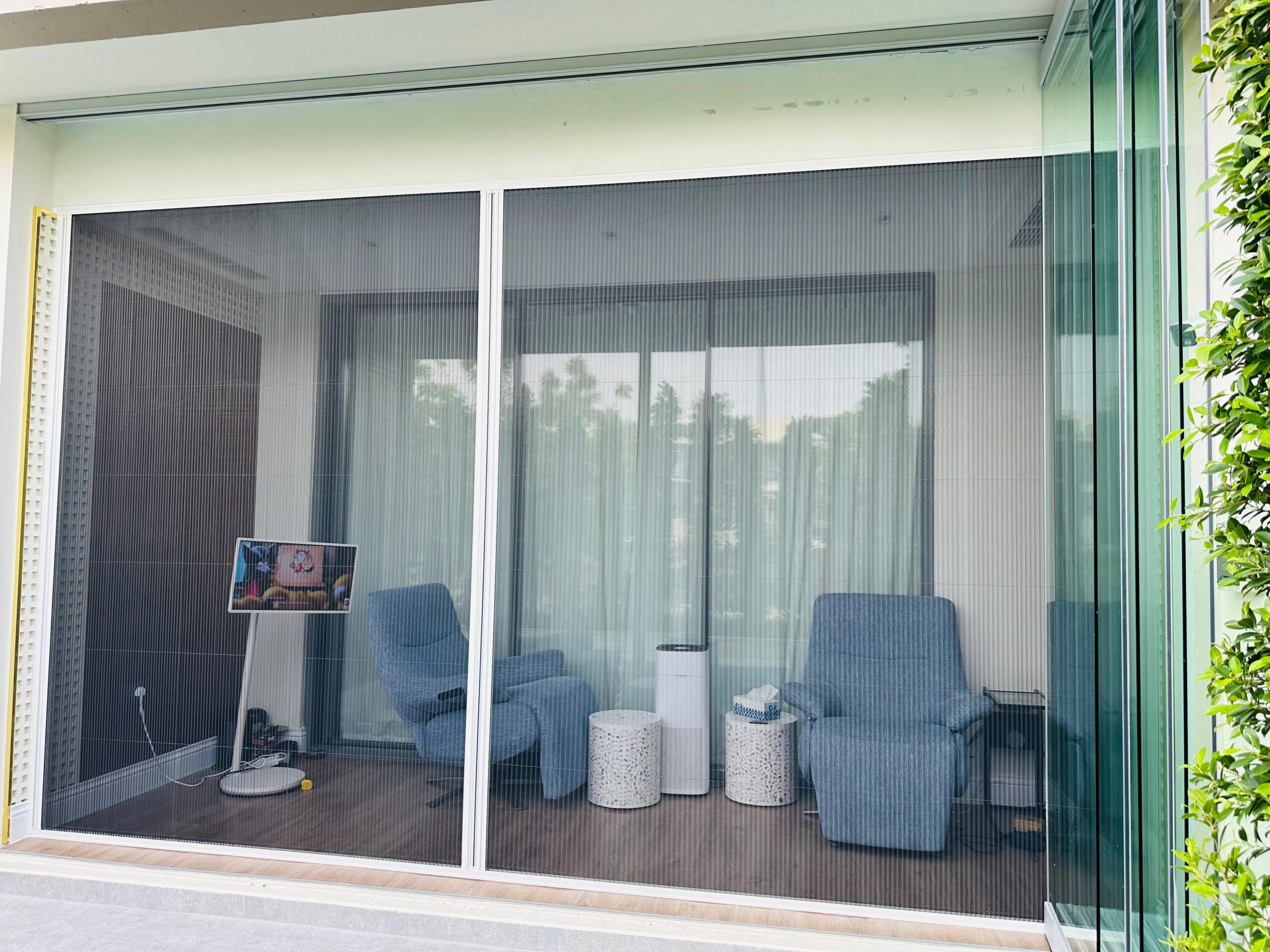
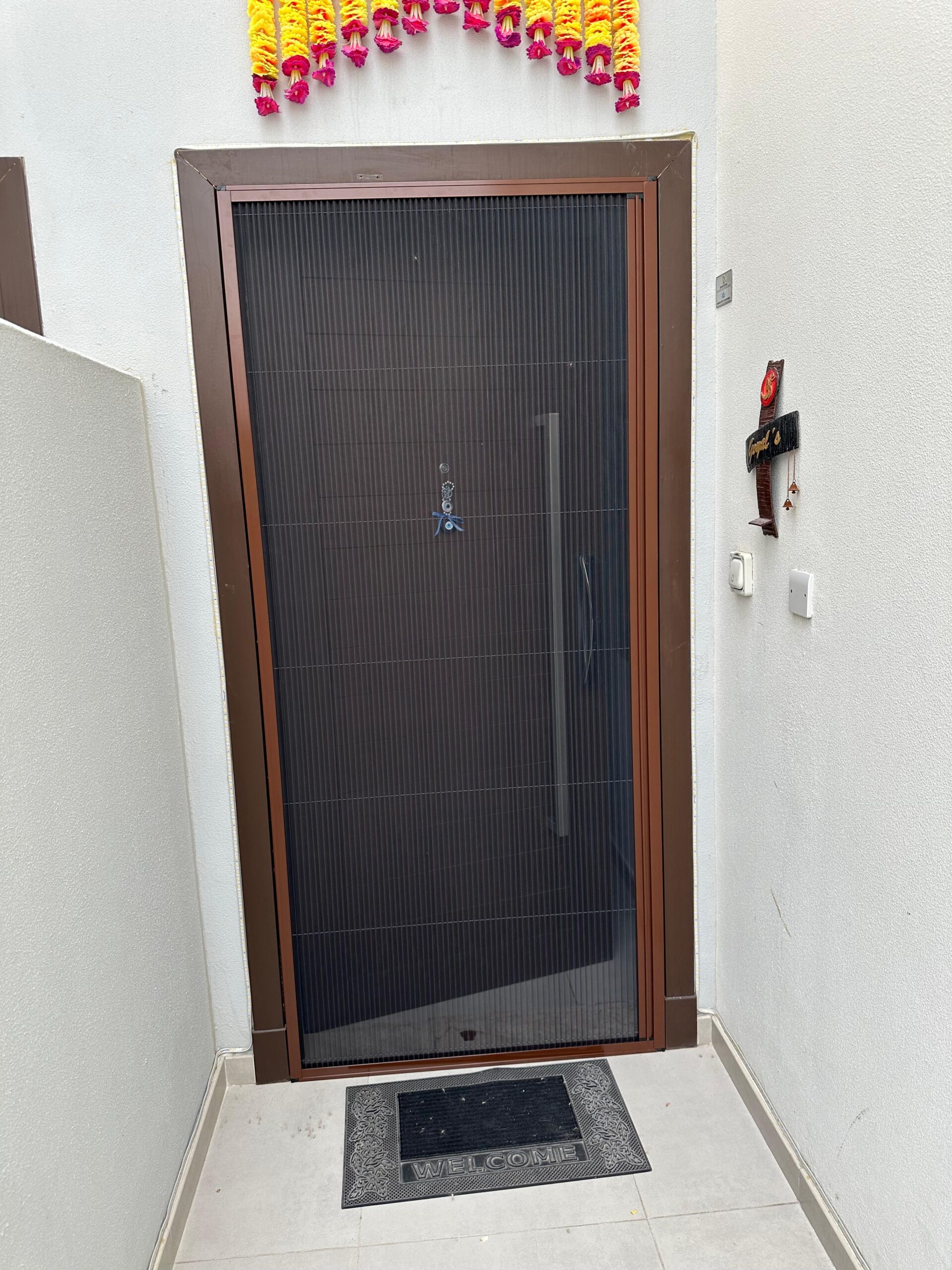
A few zip screens we've fitted to pergolas, terraces and balconies around Dubai. We'll put real project photos in here soon.
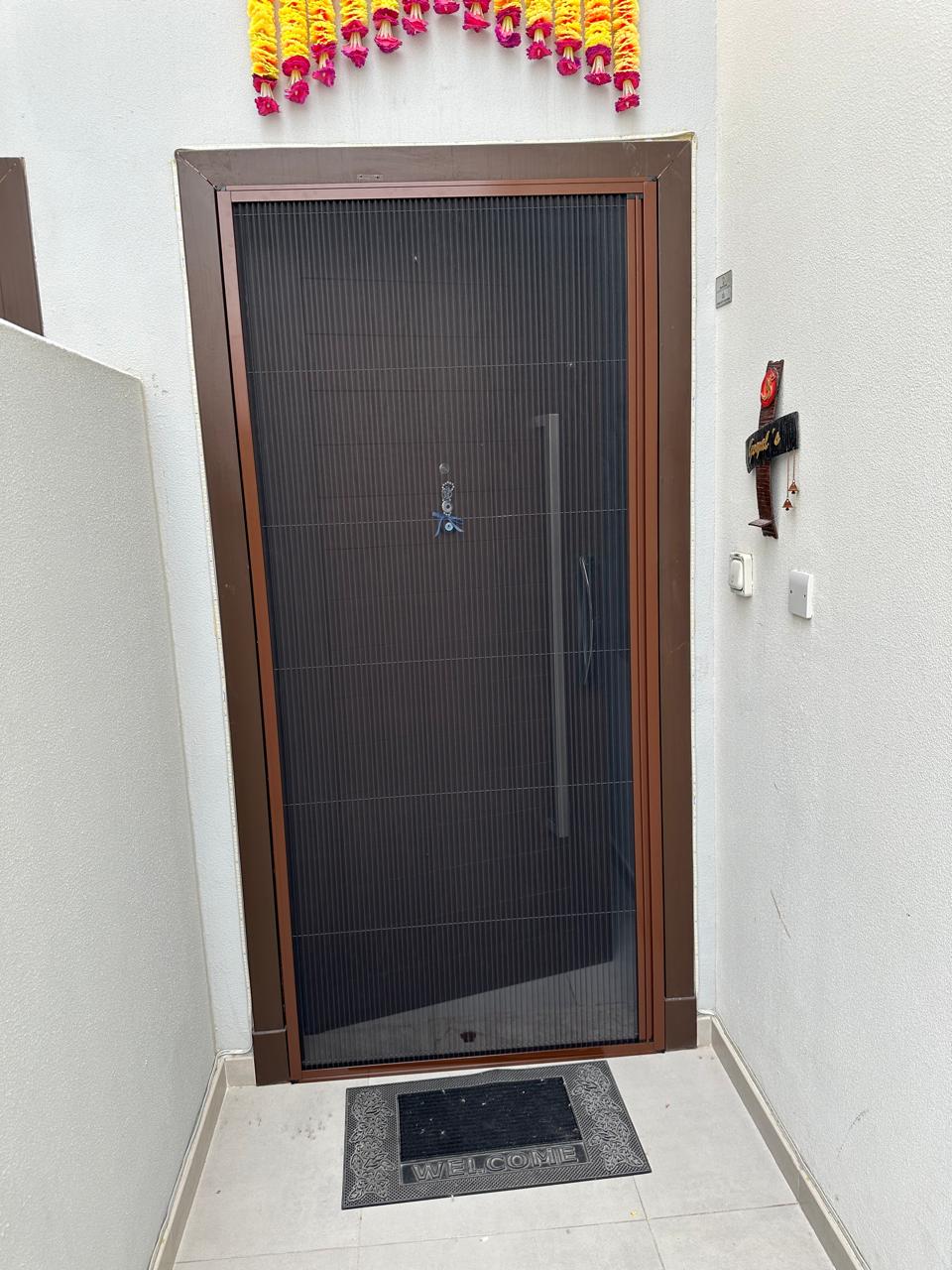
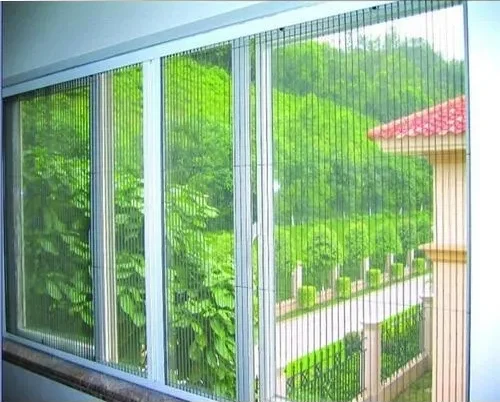
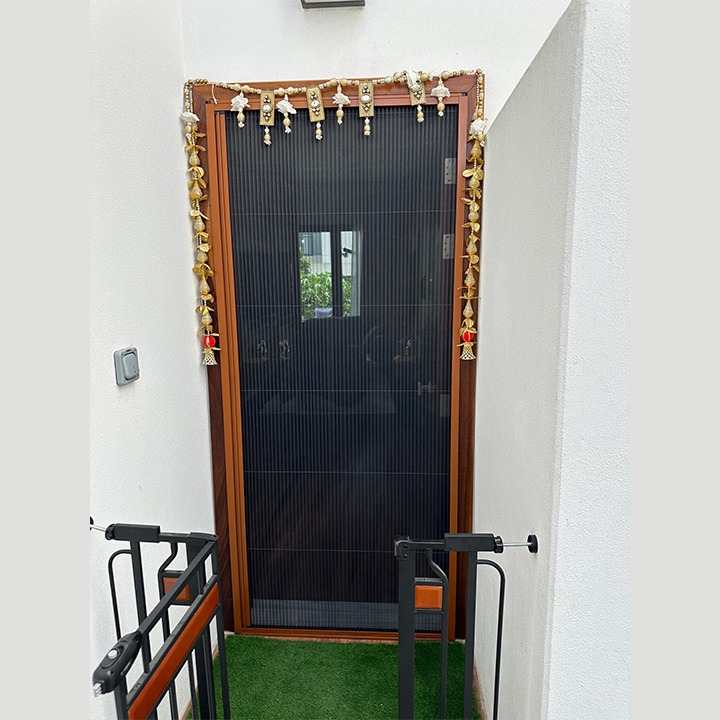
Straight, practical detail on how zip screens work and where they earn their place. Open a section to read it.
A zipline screen is a flat sheet of mesh on a roller inside a box at the top of the opening. Down each side runs a channel fixed to the frame, and the side edges of the mesh carry a thickened, zip-like bead. Bring the screen down and those beaded edges feed into the channels and lock there, while a weighted bar holds the bottom straight. Roll it up and the sheet winds back into the box, clearing the opening.
The locked edge is the whole point: it grips the mesh on every side, so it stays flat and sealed rather than flapping or lifting. Outdoors that pays off twice: it holds steady in the wind and shuts insects out of a space you want to enjoy on warm evenings. Open spots draw mosquitoes, which can spread the kind of illness the World Health Organization details in its dengue fact sheet, so sealing a terrace or pergola is well worth it once the heat sets in.
An ordinary screen leaves its side edges more or less free, fine in still air but a problem outdoors. The first decent gust lifts the edge, pushes the mesh inward, and either lets insects round the side or pops the screen out of its run. A zipline screen fixes that with a firm, zip-style edge that sits down inside a channel, so the wind has nothing loose to grab.
Held in that channel, the sheet stays flat and tight whichever way the breeze blows, and it springs back to shape after a strong gust. That's what people mean by calling a zip screen wind-stable, and it's the single biggest reason people pick one for windy outdoor spots like terraces, tall balconies and open pergolas. Where a loose screen would rattle, bow or blow out, the zipline one just holds.
A zipline screen can be worked by hand or run on a motor, and the right one depends on the size and the spot. A smaller screen on a single opening is happy wound up and down by hand, which keeps it simple and cheaper. As it gets wider, taller or higher up, a hand wind becomes a chore and a motor makes far more sense.
With a motor, the screen drops and lifts at the press of a button or a remote, and several screens around a terrace can be set to move together. It's the easy answer for a big span, a screen used every day, or one mounted high where a handle is out of reach. On the visit we'll say honestly if manual or motorised suits you better, not push the dearer option.
Zipline screens come into their own on the big outdoor openings other screens can't manage. Because the mesh is one flat sheet held in side channels, it can close a pergola side, span a long terrace or cover a tall balcony in a single piece, with nothing to fold or stack in the way.
These openings vary hugely, from a small covered nook to a wide garden pergola, so the screen is built around the exact space rather than a standard size. On the visit we study the structure, work out where the box and channels fix, and if one screen or a few suit the space best. Large or unusual openings are just what the free site visit is there to sort out.
All three roll the mesh away when it's open, but they suit different spots. A plain roller screen has free side edges and is a tidy, low-cost choice for an indoor or sheltered window or door. A retractable screen pulls the mesh across or down into a slim cassette and is a neat everyday option where wind isn't the issue.
A zipline screen is the one to reach for when the opening is large or exposed. Its zipped edges, locked into side channels, let it shrug off the wind and the size, which a roller or retractable screen with free edges can't manage outside. So for a window, a door or a sheltered spot, a roller or retractable screen is often enough; for big, wind-blown openings, the zipline is the right tool. We'll point you to whichever genuinely fits.
The standard mesh is a plain, flat insect mesh stretched flat across the opening, unbroken by folds or seams, so you see clean through to the garden. A deeper mesh in grey or charcoal reads clearest from inside and throws the least glare, and melts into the scene beyond, which is why it's the usual pick over a lighter shade.
Outdoors there's a second choice. Besides plain insect mesh, a zip screen can take a denser shade or privacy mesh, which still keeps insects out but also cuts the low sun and softens the view in from outside, handy on a west-facing terrace or a balcony overlooked by neighbours. We'll show you the options on the visit so you can balance view, shade and insect protection for the spot.
How a zip screen is fixed depends on the opening. Where there's an existing frame around a door, window or balcony, the box and channels usually go on with strong tape and no drilling, leaving the structure unmarked. On an open pergola, gazebo or terrace post there may be nothing solid to tape to, so they're fixed to the timber, aluminium or wall instead. We check this on the visit and explain what's needed before any work starts.
Size matters too, since a bigger, more exposed screen loads its fixings and mesh harder. That's part of why we assess each opening in person rather than quoting blind, and why a very large or windy span often points to a motorised screen with heavier hardware. Building to the real opening and fixing it properly is what keeps it taut and sealed through the windy months.
A zip screen sits outside, so a little care keeps it running sweetly. Now and then, brush or vacuum the side channels and the bottom bar to clear dust, sand and bits of leaf, because that grit is what sets the zipped edges dragging as they run. Sponge the mesh with a touch of mild soapy water when it looks dusty, let it dry, and the flat sheet stays clear to see through.
From time to time, run the screen fully down and back up to check it moves smoothly and the edges feed cleanly into the channels. Should the mesh tear, an edge fray, or the mechanism need attention down the years, just call us and we'll repair or re-mesh it on the warranty, not sell you a whole new screen. Given that bit of care, a zipline screen keeps holding tight and sealing the opening for years.
A zipline screen is the one for big, exposed openings, though other types suit indoor doors and windows. Here are the nearest ones we make.
Pulls the mesh into a slim cassette and back out of sight, a neat everyday screen for a sheltered door or window.
Folds away like a concertina to almost nothing, the compact pick for a wide indoor doorway you open often.
A soft mesh curtain split down the middle, where magnets pull the halves closed after you step through.
Browse all the door screens we make, sliding, folding, rolling and magnetic curtains.
Brief answers to the questions people raise before a free site visit in Dubai.
A zipline fly screen is a flat sheet of mesh whose side edges carry a zip-style bead that locks into a channel down each side of the opening. It rolls down from a box at the top, and the edges feed into those channels and stay held, so the mesh stays taut and sealed and won't blow out in the wind. That's why it suits large and exposed openings. It blocks the biting insects tied to the vector-borne illnesses the World Health Organization sets out.
The mesh has a thickened, zip-like edge down each side that runs inside a track on the frame, a bit like a zip running in its teeth. That edge can't slip out of the channel under normal wind, so instead of flapping or being pushed inward, the mesh stays flat and tight across the opening. It's this locked edge that makes a zipline screen wind-stable, and it's the main reason it's picked for exposed spots, a windy terrace, a tall balcony, an open pergola, over a screen with loose edges.
Both. A smaller zip screen can be operated by hand, rolling up and down on a simple mechanism. For a large screen, or one that's high up or hard to reach, a motor is the easier option, so the screen rolls down and back up at the touch of a button or a remote. On a very wide pergola or terrace, motorised is usually the sensible choice. We'll talk through the options at the measurement and recommend what suits the opening and how often it'll be used.
Zipline screens are built for the big openings that other screens find hard. Because the mesh is a single flat sheet locked into side channels, it can span a wide pergola, a long terrace or a tall balcony opening in one piece, without the bulk of folds or panels. The exact maximum depends on the opening and on the manual or motorised choice, which we work out on the visit. For very large or exposed spans a motorised screen is usually the right call, and every screen is made to your measurements.
Both roll up and down, but the difference is the edges. A standard roller screen has free or lightly guided side edges, which is fine indoors but can lift or pull out in a strong breeze. A zipline screen locks its zipped edges into side channels, so the mesh is held on all sides and stays taut even in wind. That makes the roller screen a good indoor or sheltered choice, and the zipline screen the one for an exposed terrace, a high balcony or an open pergola.
Yes. The mesh is a plain, flat sheet pulled tight across the opening, with no folds or seams to break the view, so you look straight through it to the garden or the view beyond. A darker mesh in grey or charcoal gives the clearest view and the least glare. We can also fit a denser shade mesh if you want more sun and privacy control on a terrace as well as insect protection, and we'll go through the mesh choices at the measurement.
A standard zip screen for a door or window starts from around AED 900, a large terrace or balcony screen from about AED 1,800, and a pergola or motorised screen from around AED 3,000, climbing with the size and the hardware. Treat these as opening guides, since a zip screen is a bigger, outdoor unit and the cost leans heavily on the opening and the motor. VAT of 5 percent is added on top, and the free site visit turns the guide into a firm, no-obligation quote.
Yes. Zipline screens are something we install all over Dubai, and we'll travel to Abu Dhabi, Sharjah and Ajman as well, for homes of every kind. The site visit costs nothing and carries no obligation. Drop us your area with a picture of the opening on WhatsApp, and we'll set up a slot that works for you.
Got a large or exposed opening that beats an ordinary screen? Tell us the sizes, or send a photo, and we'll arrange a free site visit. The quickest way to reach us is WhatsApp.
Leave your details and we'll get back to you on WhatsApp.
The site visit is free and ties you to nothing, and we're reachable Monday to Saturday during working hours.