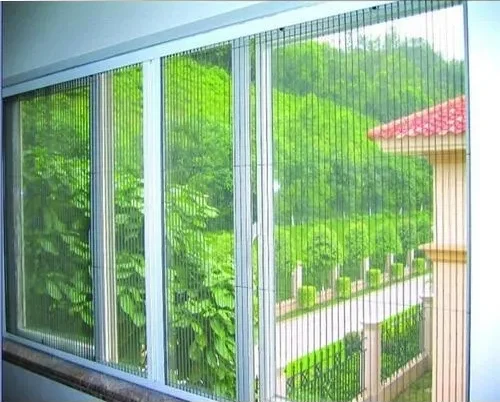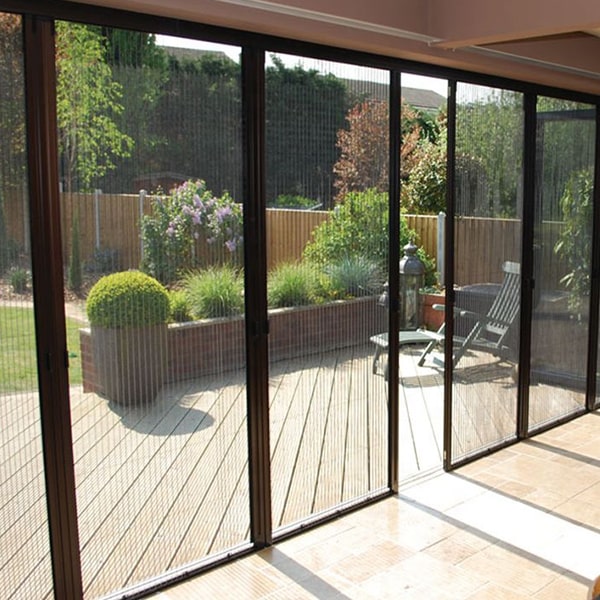

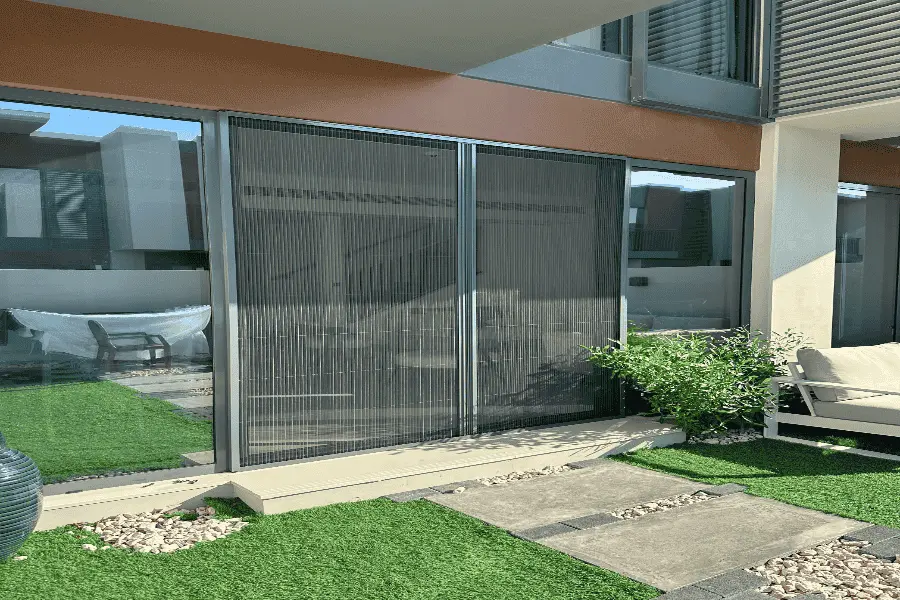
Dubai’s fly screen market has matured fast since local installers began offering made-to-measure, no-drill screens back in 2017. Homeowners today are not simply choosing between a fly screen or no fly screen, they are choosing between six distinct systems, each built for a different type of window or door, a different budget, and a different way of living in the home. This guide walks through all six, with what each system suits, the materials behind them, and the fitting process from the first phone call to the final press-fit, so you can work out exactly which one your home needs before you book a free measurement.
- Six main fly screen systems are fitted in Dubai: fixed, openable, double-sided/sliding windows, magnetic, retractable/sliding doors, and motorized patio screens.
- Every system is quoted after a free measurement, and current prices for each one are listed on its own page.
- Screens are fitted with mounting tape, not drilled, and a free home measurement gives the exact price before any work is booked.
- Fabrication takes 4–8 working days after measurement, and frames typically carry a 5-year warranty.
- Torn or faulty existing screens can usually be re-meshed or repaired in the original frame rather than replaced outright.
Why Fly Screens Are Essential for Dubai Homes
Summer in Dubai runs long and humid, typically from May through September, and that stretch is exactly when mosquitoes, flies and dust find their way indoors through any window or door left open for air. The World Health Organization identifies mosquitoes as the vector for several diseases that remain a public health concern worldwide, which is one reason screening every opening has become standard practice rather than an afterthought for households across the Emirates. A properly fitted fly screen keeps that barrier in place around the clock, letting a room breathe without letting anything else in.
It also takes pressure off the air conditioning, since windows and balcony doors can stay open for natural airflow during the cooler morning and evening hours instead of staying shut all day. Unlike sprays, coils or plug-in repellents, a fly screen is a one-time fit rather than a running cost, and a well-built one needs little more than an occasional wipe to keep doing its job for years.
Dust and sand are a year-round issue too, not just a summer one. Shamal winds can carry fine sand across the city at almost any time of year, and a denser mesh option catches a noticeable amount of that before it settles on furniture and floors, cutting down on how often rooms need dusting and how hard air filters have to work.
The Top 6 Fly Screen Installation Options in Dubai
These are the six fly screen systems fitted most often across Dubai villas and apartments, running from the simplest fixed panel through to a fully motorized setup, along with what each one costs and the opening it suits best.
1. Fixed Window Fly Screens
A fixed screen is a single mesh panel that sits permanently over a window frame, with no moving parts and nothing to slide or unlock. It is the lowest-cost option and the best fit for windows that rarely get opened, such as tall feature windows, stairwell windows or bathroom windows, where an openable mechanism would be wasted. Because there is nothing to wear out, a fixed screen also asks the least of you in maintenance terms; a wipe with a damp cloth every few months is normally enough to keep the mesh clear. Full sizing details are on our fly screens for windows page.
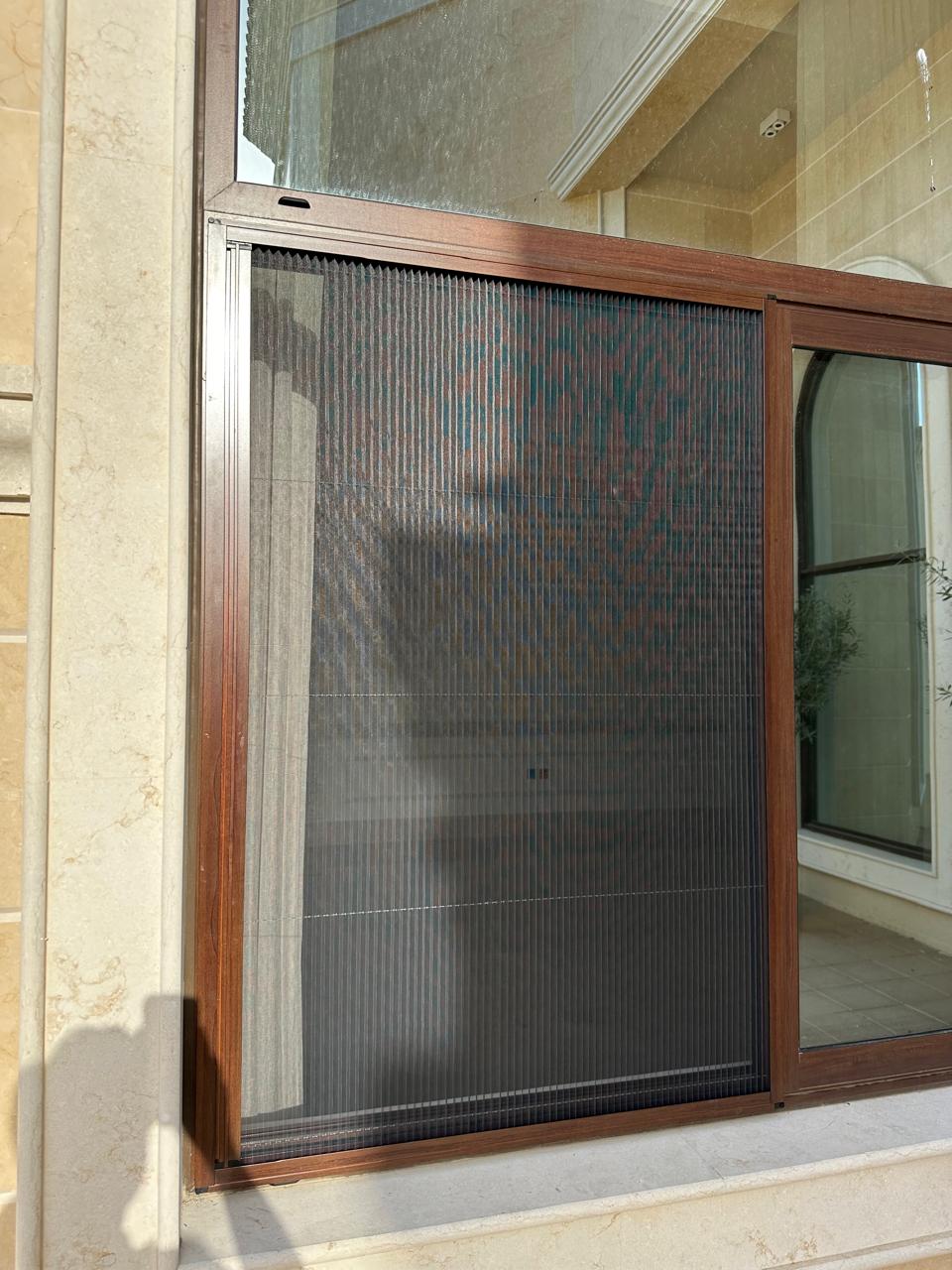
2. Openable (Single-Sided) Window Screens
Where a window gets opened and closed every day, a fixed panel gets in the way, so an openable screen is fitted instead, hinged or mounted so it moves with the window rather than blocking it. This is the standard choice for bedroom and kitchen windows, the ones used for daily ventilation, and it is built slightly heavier than a fixed screen to cope with the extra movement over years of use.
3. Double-Sided & Sliding Window Screens
Wide windows, and sliding windows in particular, need a different approach: two mesh panels meeting in the middle, or a single panel running on its own slim track alongside the sliding sash. A single wide panel would sag or bind against a frame that size, so splitting the coverage across two panels, or tracking it alongside a sliding window, keeps the fit tight and the operation smooth. This is the option most apartment balconies and villa sliding doors that double as windows tend to need.
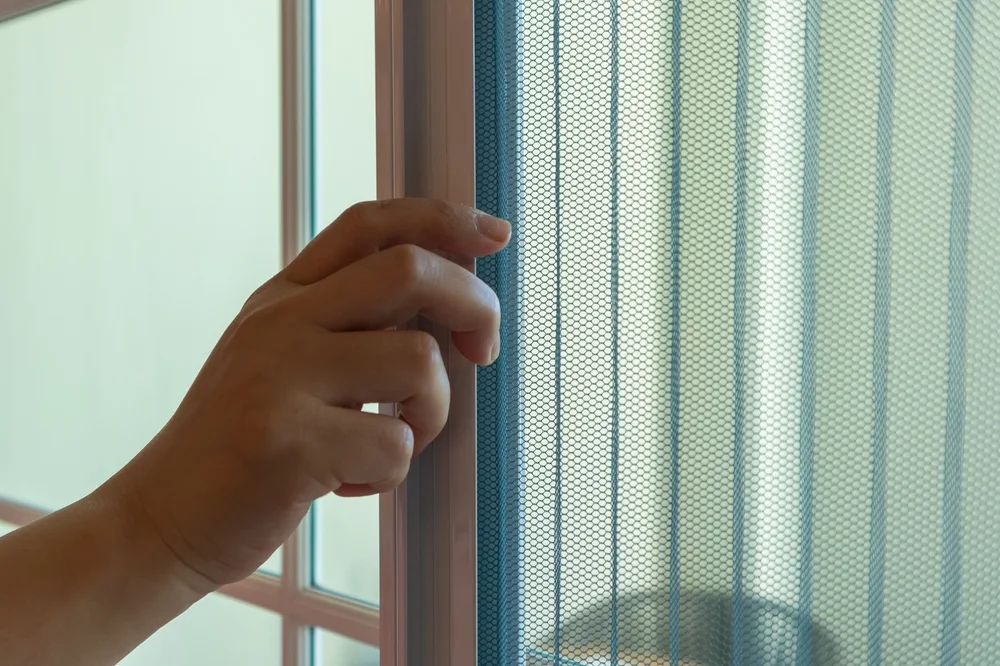
4. Magnetic Self-Closing Door Screens
For a walk-through door, a magnetic screen is two mesh panels joined by a magnetic strip down the centre, so you walk straight through and it snaps shut behind you without needing a free hand. It suits main entrance doors, kitchen doors and any doorway used constantly through the day, since there is no handle to operate and no risk of it being left open by accident. More on the fitting options is on our fly screens for doors page.
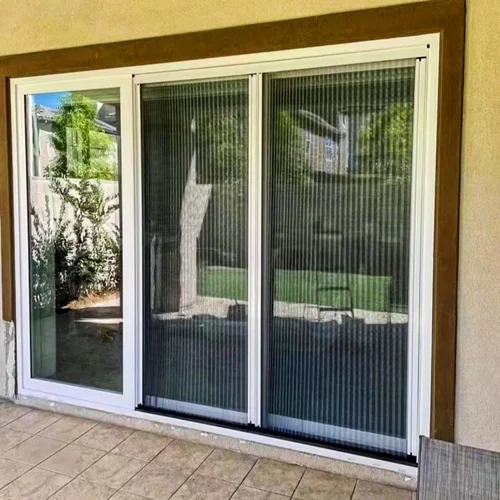
5. Retractable & Sliding Door Screens
A retractable screen pulls across the opening when you want the mesh in place and folds away into a slim side cassette when you do not, which makes it the most popular option for balcony and patio doors where an unobstructed view matters when the screen is not in use. A sliding door screen works on a similar principle but runs on its own track rather than retracting into a cassette, and both are built in aluminium to handle years of daily sliding without the track binding.
6. Motorized & Large Patio Screens
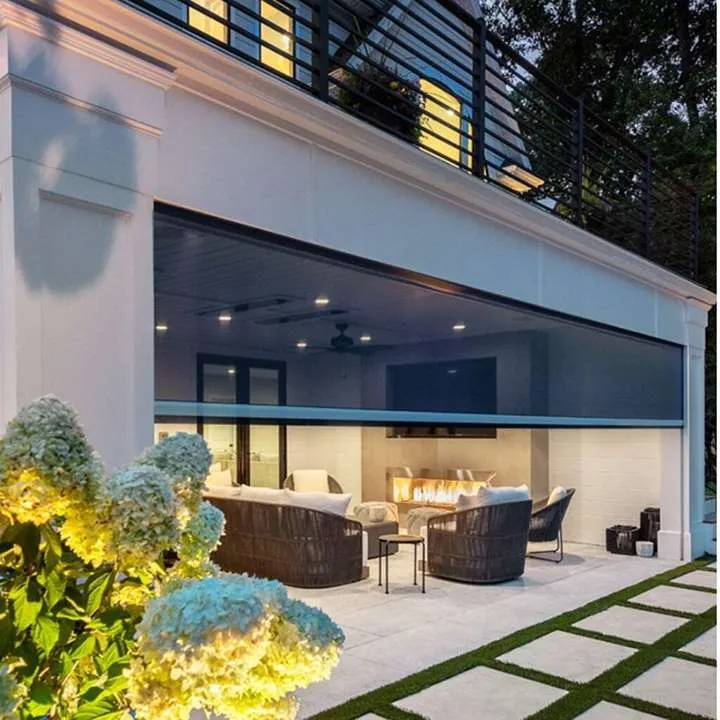
For oversized openings, wide patio doors, folding-door walls or balconies that span several metres, a motorized screen operated at the touch of a button is usually more practical than a manual system, since a mesh panel that size is heavy to slide by hand every day. These can also be linked into a home automation system for one-touch operation. Because the price depends heavily on the width and the mechanism, this is one of the figures best confirmed at a free, in-home measurement rather than estimated over the phone.
Fly Screen Pricing in Dubai for 2026
Every installer prices fly screens slightly differently, but the figures below reflect what Dubai homeowners are typically quoted in 2026 for made-to-measure, tape-fitted screens, all before 5% VAT:
- Fixed window screen — see current price on the fly screens for windows page
- Openable single-sided window screen — see current price on the fly screens for windows page
- Double-sided or sliding window screen — see current price on the double-sided screens page
- Magnetic or hinged door screen — see current price on the magnetic screens page
- Retractable or sliding door screen — see current price on the retractable screens page
- Large, double or patio door screens — see current price on the motorised screens page
The exact figure for your home depends on the size of each opening, the mesh you choose and how many windows and doors you are covering, so the numbers above are a starting point rather than a fixed quote. A free home measurement gives you the precise, itemised price before any work is agreed, and payment is normally taken by cash or card once the screens are fitted. Dubai Fly Screens currently also offers 10% off installations booked this month, applied automatically once the measurement is confirmed.
The Installation Process: From Measurement to Fitting
Step 1: Free Home Measurement
The process starts with a visit to your home, working through it room by room to measure every window and door you want covered down to the millimetre, since a screen only seals properly when it matches its frame exactly. The installer notes which openings are fixed and which are used daily, recommends a screen type for each, and gives you an itemised price before leaving. There is nothing to pay for this visit and nothing to sign on the spot.
Step 2: Made to Your Exact Sizes
Once the measurements are confirmed, each screen is fabricated to the exact dimensions of its window or door, in the mesh density and frame colour you selected. This custom fabrication typically takes four to eight working days, depending on how many openings are being covered and the screen types involved.
Step 3: Fitted Without Drilling
On the fitting visit, each screen is pressed into place using strong mounting tape rather than screws or drilling, so the window or door frame is left undamaged. The installer checks that every screen opens, closes and seals correctly before finishing, and talks you through basic care for the mesh and any moving parts.
Materials, Mesh Options & Warranty
Frames are generally built in powder-coated aluminium, chosen for its resistance to Dubai’s heat and coastal humidity without warping or corroding over time, and most installers back their frames with a five-year warranty. Mesh comes in a few grades: a standard fibreglass mesh handles everyday mosquitoes and flies at the lowest cost, a tougher pet-resistant mesh holds up against claws and is worth the upgrade for homes with cats or dogs, and a finer, denser weave is available for anyone in a dustier or midge-prone area, though it does reduce the view slightly.
Bring physical mesh samples to the measurement rather than choosing from photos. It is the easiest way to judge how much a finer mesh affects visibility for a specific window before committing.
Fitting Fly Screens in a Villa vs an Apartment
The screen types are the same either way, but the job itself looks different. A villa usually has more openings altogether, fixed and openable windows on multiple floors plus several doors, so the measurement takes longer and the fitting is often planned as a full day. An apartment typically has fewer openings and a simpler layout, so both the measurement and the fitting visit are usually finished in a couple of hours. Either way, you can screen the whole home in one go or start with the windows and doors that bother you most and add the rest later, since each screen is priced and fitted individually.
Signs Your Existing Fly Screens Need Replacing
Fly screens fitted several years ago do not always fail outright, they just quietly stop doing their job. A few signs it is worth getting a fresh quote rather than living with what is there:
- Small gaps at the edges of the frame where the mesh has pulled away from the tape or track
- Visible tears, sagging or a mesh that has gone brittle and discoloured from years of sun exposure
- A sliding or retractable screen that binds, jumps its track, or no longer glides smoothly
- A magnetic door screen where the strip no longer pulls the panels fully shut
- Mosquitoes or flies getting indoors even with the screen closed, which usually points to an oversized mesh aperture or a gap you cannot see at eye level
In most cases a re-mesh or a hardware fix solves it without touching the frame, which is worth raising with an installer before assuming the whole screen needs replacing.
How to Choose the Right Fly Screen Installer in Dubai
With several fly screen companies now operating across the Emirates, a little research before booking saves both money and hassle later. A few things worth checking:
- Experience and track record: an installer with several years and hundreds of completed homes behind them is more likely to size and fit a screen correctly the first time.
- No-drill fitting: tape-mounted screens leave frames undamaged and are far easier to remove or replace than a drilled, screwed-in frame.
- Material and warranty: aluminium frames and a written multi-year warranty are a reasonable minimum to expect for a made-to-measure screen.
- Coverage area: confirm the installer actually services your emirate, since not every Dubai-based company reaches Abu Dhabi, Sharjah or Ajman.
- Reviews and past work: photos of completed installations and genuine customer feedback are a faster way to judge quality than a sales call alone.
Dubai Fly Screens has fitted screens in more than 1,200 homes across Dubai, Abu Dhabi, Sharjah and Ajman since 2017, with every screen made to measure, fitted on tape rather than drilled, and backed by a five-year frame warranty. You can read more about how we work on the about page, or go straight to the contact page to book a free measurement.
Fly Screen Repairs & Maintenance
An existing screen with torn mesh, a bent frame, a stuck roller or a magnet that no longer catches does not necessarily need replacing outright. Torn mesh can usually be re-meshed inside the original frame at a fraction of the cost of a full replacement, and problems with rollers, springs, magnets or tracks are often fixed on the same visit. If you are dealing with a screen that no longer closes properly rather than starting from scratch, our fly screen repair page covers what a typical repair costs and how the assessment works.
Frequently asked questions
Most homes are measured in a single visit, after which screens are fabricated within four to eight working days. Fitting itself is quick: an apartment is usually finished within a couple of hours, while a villa with many windows and doors may need a full day.
No, provided they are tape-fitted rather than drilled. Reputable installers press-fit screens onto the frame using strong mounting tape, which holds securely for years and leaves no screw holes if the screen is ever removed.
To a degree, yes. A finer, denser mesh weave blocks more fine dust and sand than a standard fibreglass mesh, though it will slightly reduce visibility and airflow compared with a standard weave, so it is worth weighing that trade-off at the measurement stage.
Yes, retractable, sliding and motorized screens are all commonly fitted to balcony doors and patio openings, and are generally preferred over a fixed panel for these larger, frequently used openings.
Window screens and door screens are priced by opening size, screen type and mesh grade, all plus 5% VAT. Current starting prices for each system are listed on its own product page, and the free measurement gives you an exact figure for your home. A free home measurement confirms the exact price for your specific windows and doors.
Yes, torn mesh, bent frames and faulty rollers, springs, magnets or tracks can usually be repaired or re-meshed in the existing frame, often on the same visit, rather than requiring a full replacement.
For most homes, a mix works best rather than one single type: fixed screens on windows you rarely open, openable screens on daily-use windows, and a magnetic or retractable screen on the main door or balcony. A free measurement is the easiest way to get a room-by-room recommendation rather than guessing from photos online.
Want screens for your own home?
We measure and quote for free, and fit with no drilling, right across the UAE. Before you compare installers, it helps to know which product you actually need — see fly screen types in Dubai.