
Choosing a fly screen in Dubai is not really a choice between brands. It is a choice between about a dozen mechanisms, each built for a different kind of opening, and the wrong one on the right window is the most common reason a screen gets taken down within a year. This guide walks through every fly screen type we fit across Dubai, Abu Dhabi, Sharjah and Ajman, what each one suits, and how to match one to the opening you are standing in front of.
Start with the opening, not the product
Almost every bad screen decision starts the same way: someone picks a product they saw online, then tries to make their window fit it. Work the other way round. Look at the opening and answer three questions before you look at a single product page.
- Does it open, and how? A window that swings out needs a different screen from one that slides sideways, and a door you walk through needs something different again.
- How often is it used? A kitchen door opened twenty times a day and a guest-room window opened twice a year are different engineering problems.
- How wide is it? Past roughly two and a half metres, several mechanisms stop being practical and the shortlist narrows quickly.
Answer those three and the field usually narrows to two or three genuine options. Everything below is organised the same way, by opening first and product second.
Fly screens for windows
Windows are where most Dubai homes start, and they account for the majority of the screens we fit. Three mechanisms cover almost every window in the city.
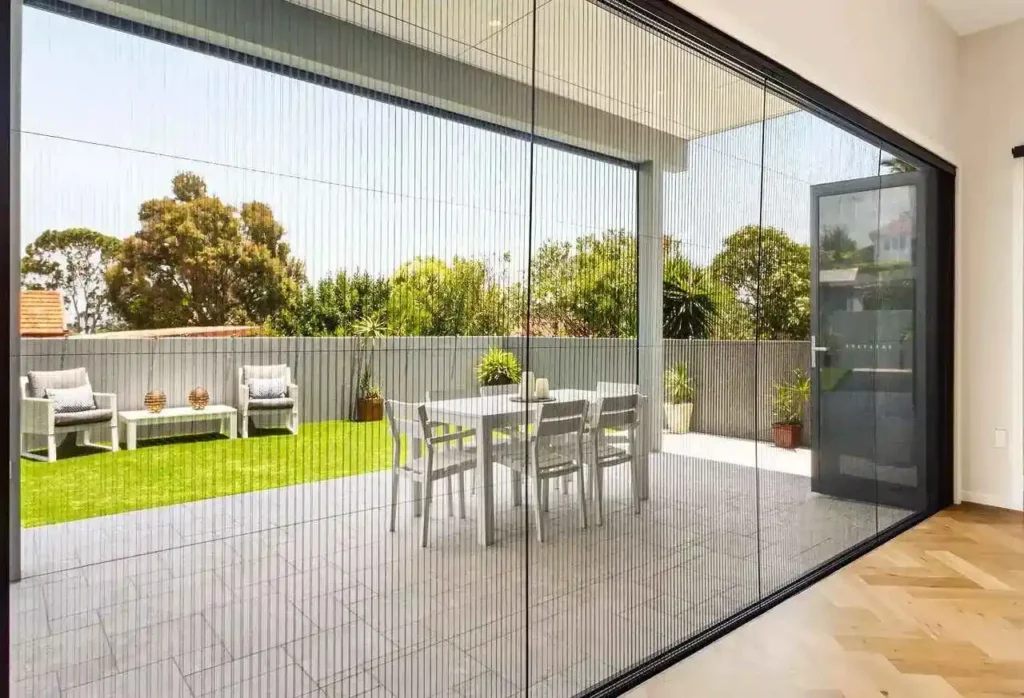
Fixed screens
A single panel of mesh tensioned into a slim aluminium frame, sitting permanently over the opening. Nothing moves, nothing to maintain, nothing to jam. This is the right answer for a window you keep shut, or one you only ever open for air rather than to reach through: a bathroom window, a stairwell, a guest room. Because there is no track and no moving part, a fixed screen is also the least visible option from inside. Read more on fixed fly screens.
Openable single-sided screens
Where the window gets opened and closed daily, a fixed panel gets in the way. A single-sided screen runs in its own slim track alongside the window and slides one way, left to right or right to left, so you can reach the glass, the handle or the ledge without taking anything off the wall. This is the everyday workhorse for bedroom and living-room windows. See fly screens for windows for the full range.
Double-sided screens
Once a window is too wide for one panel to cover comfortably, two half-panels meet in the middle instead. Each side slides independently, so you can open half the window without disturbing the other half. Wide villa windows and the long horizontal openings common in newer Dubai apartments are the usual candidates. More on double-sided fly screens.
Fly screens for doors
Doors in Dubai are harder than windows because a screen on a door has to solve a problem no window screen does: it has to let a person through, repeatedly, without being propped open or torn off. Three mechanisms handle it in different ways. The door screens hub compares them side by side.
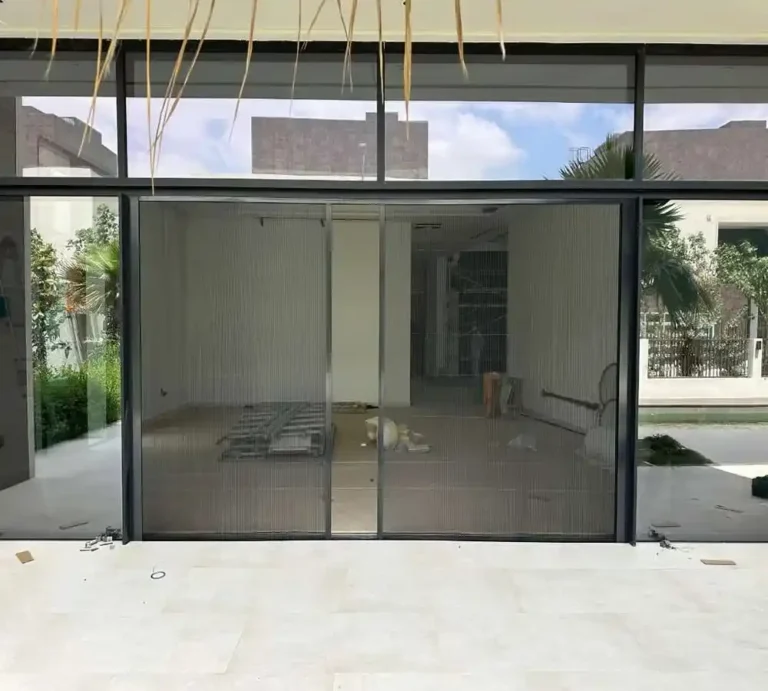
Magnetic screens
Two mesh panels joined down the middle by a magnetic strip. You walk through, and the panels snap shut behind you with no handle and no thought. This is the most forgiving door screen there is, which is why it suits homes with children carrying things and pets that come and go. It also fits openings where a track would be awkward. See magnetic fly screens.
Hinged screen doors
A framed screen door on hinges with a self-closing mechanism, fitted in front of the main door. It behaves like a second door, which makes it the sturdiest option for a main entrance or a garden door in constant use. Details on hinged fly screens.
Sliding door screens
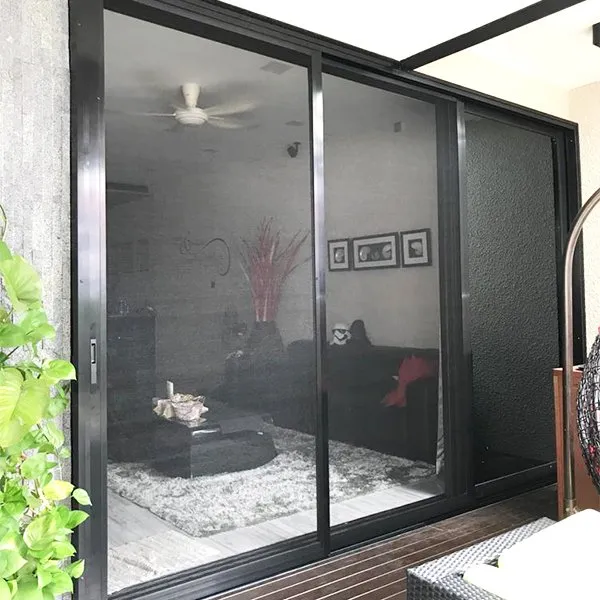
For a sliding glass door, the balcony door in most Dubai apartments and the patio door in most villas, a screen that slides in the same direction as the glass feels like part of the door rather than an addition. It carries no weight on the glass and needs no clearance in front. See sliding door fly screens, and balcony fly screens for the height and wind considerations that come with an apartment balcony.
Screens that get out of the way
The three mechanisms below all solve the same objection Dubai buyers raise most often: people who like the view and do not want mesh in front of it all year. Each parks the mesh somewhere out of sight when it is not needed.
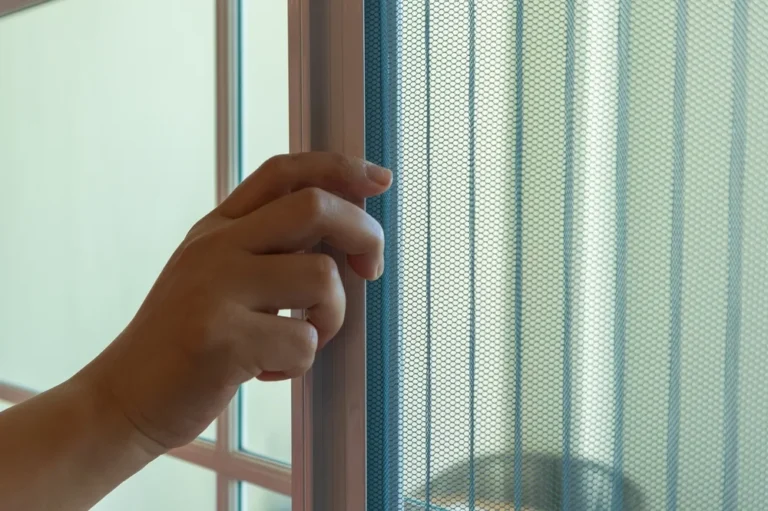
Retractable screens
The mesh winds into a compact side cassette, so the opening reads completely clear whenever the screen is parked. Pull it across when you want it, let it retract when you do not. The most popular choice for people who want screens without committing to them visually. See retractable fly screens.
Roller screens
The same idea running vertically. A spring-loaded roller sits above the opening and the mesh pulls down like a blind. Suits windows where there is head clearance but no side clearance for a cassette. See roller fly screens.
Pleated screens
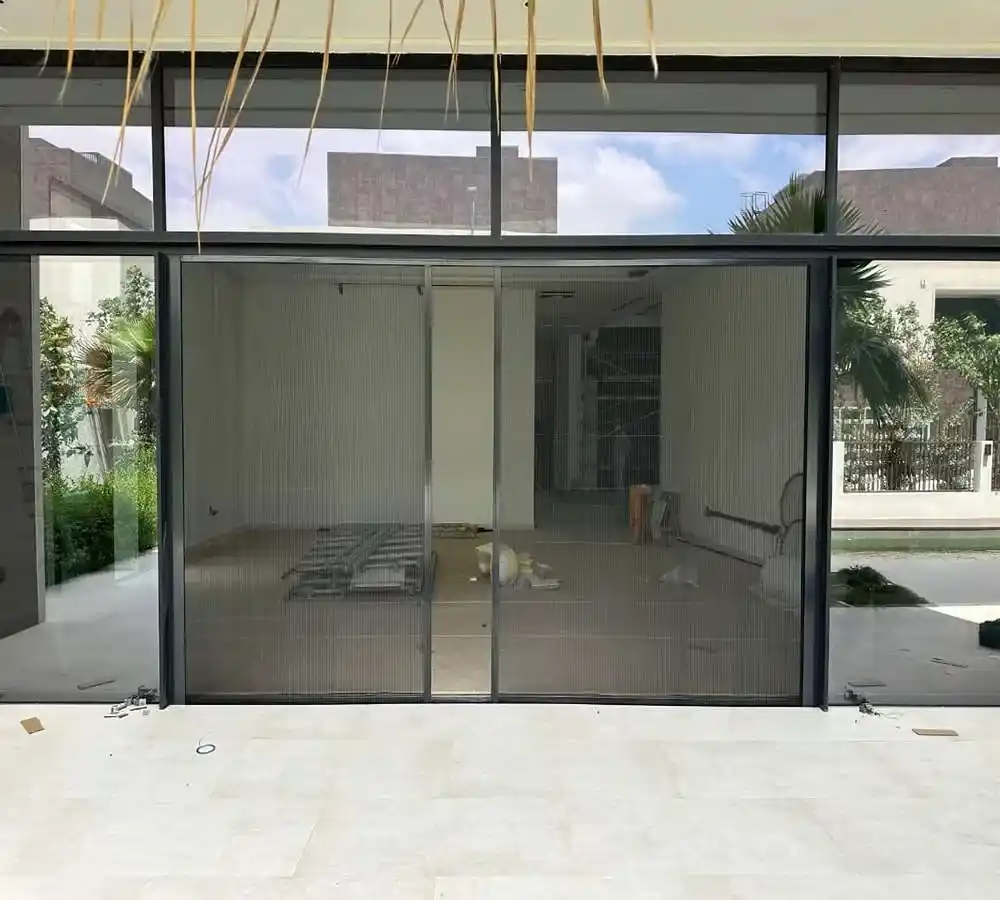
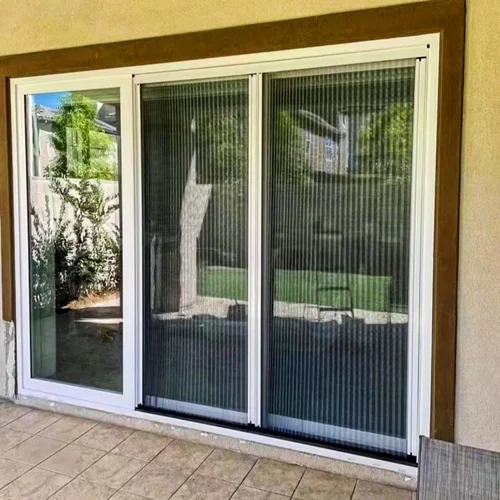
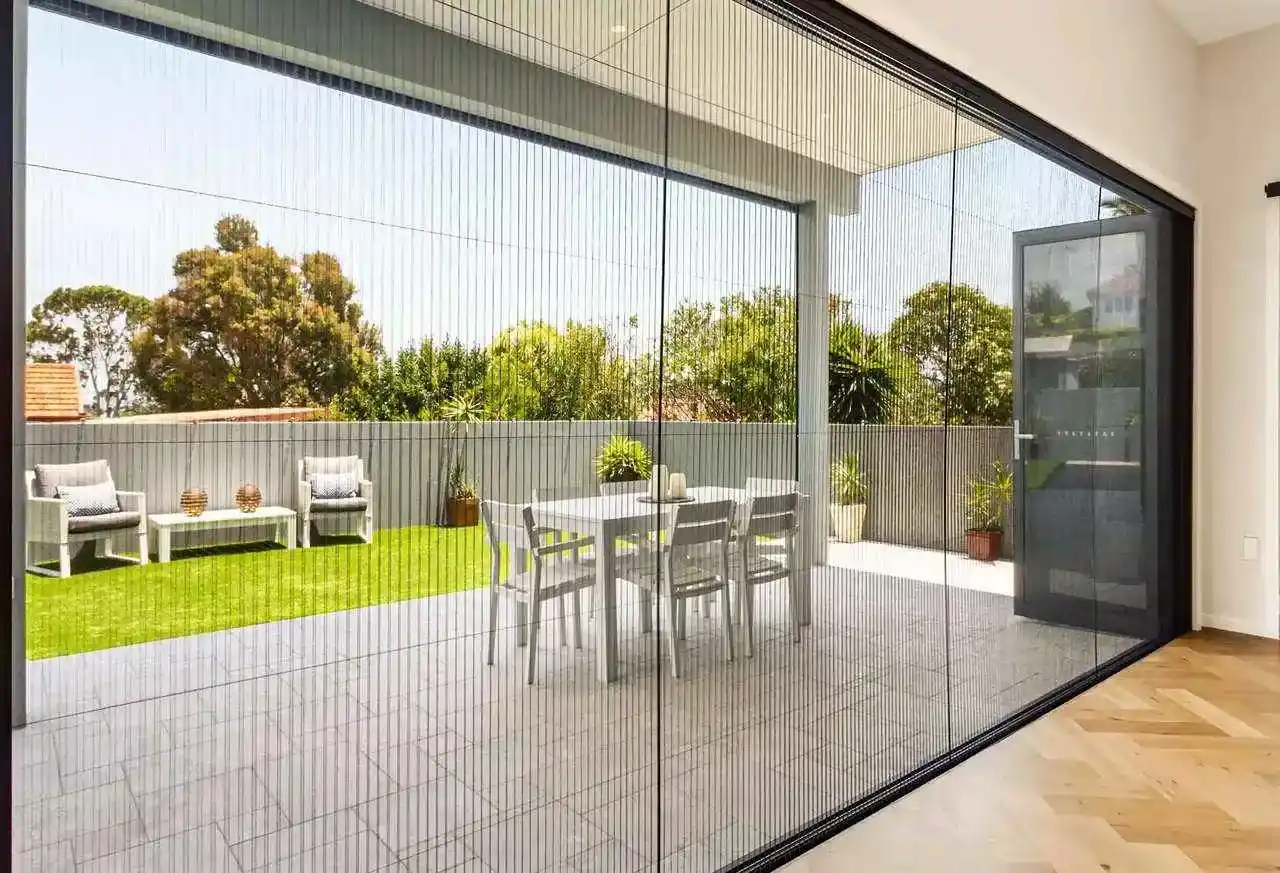
Concertina mesh that folds flat against one side of the opening. Pleated screens hold their shape across spans where a retractable cassette would struggle, which makes them the usual answer for wide patio doors and long window runs. See pleated fly screens.
Wide, tall and difficult openings
Every mechanism above has a practical span limit, and Dubai glazing runs wider than most. Past that limit, three specialist options take over.
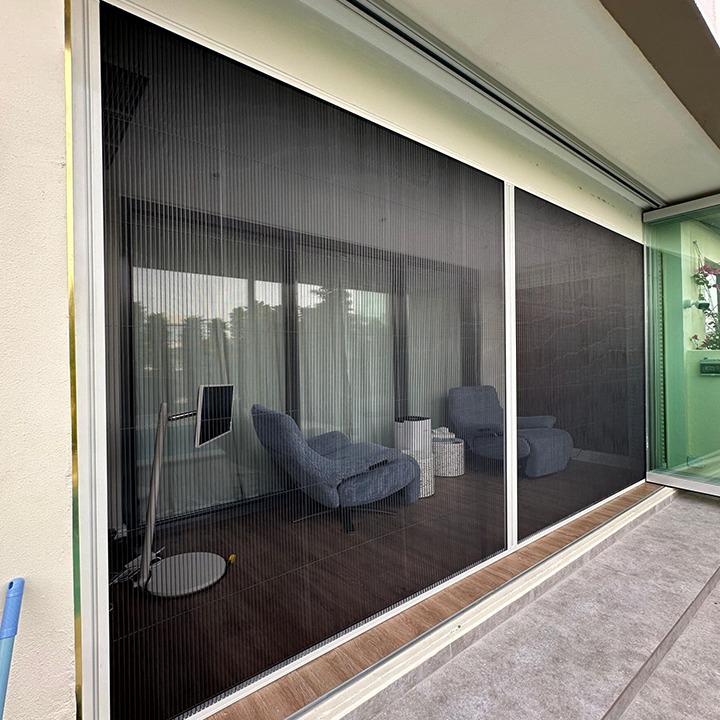
Zip-track screens
The mesh runs inside a track with a zip edge that holds it under tension along both sides. That tension is the point: on a high floor or an exposed terrace, an ordinary screen bows and flaps in the wind, and a zip-track one does not. If you are screening a balcony above the tenth floor or a pergola side that catches the shamal, this is the one to look at. See zip fly screens.
Extra-wide screens
Built for spans beyond what standard framing handles: bi-fold walls, folding-door runs and the full-width glazing found in newer villas. See extra-wide fly screens.
Motorised screens
The same mechanisms above, driven by a motor and a remote or a wall switch instead of a hand. Worth it on openings that are genuinely too tall or too wide to operate comfortably, and on installations where the screen is part of a wider smart-home setup. See motorised fly screens.
The two-in-one option
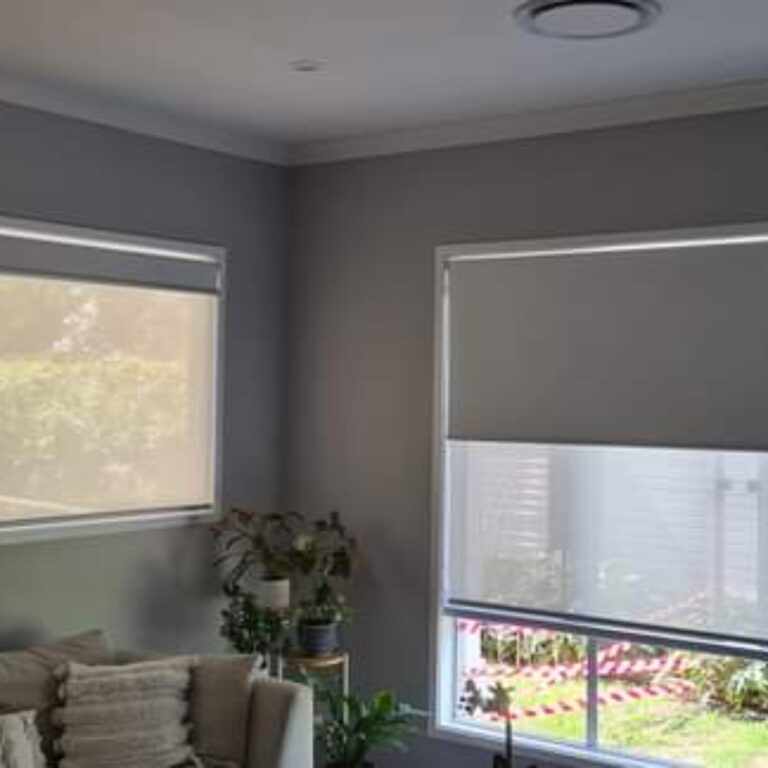
A blind screen combines insect mesh and a privacy or sun blind in a single unit, so one product handles both jobs in one track. In a west-facing Dubai apartment, where the afternoon sun is as much of a problem as the insects, this saves fitting two separate systems over the same window. See blind screens.
Villas and apartments need different answers
The same product behaves differently depending on where it is fitted, and the split in Dubai is fairly clean.
- Villas tend to have wide patio doors, garden doors in daily use, and ground-floor windows near planting. That pushes towards sliding and pleated door screens, hinged doors at the main entrance, and screens on every ground-floor window rather than a select few. Ground level is where ants, crawling insects and midges come in.
- Apartments are dominated by one balcony slider and a run of sealed windows. Height changes the calculation: above the tenth floor, wind load matters more than insect pressure, which is where zip-track earns its price. Balconies also collect dust faster than they collect mosquitoes, and a screen holds a surprising amount of it back.
What to check before you commit
Whatever mechanism you land on, the things that decide whether you are still happy in three years are the same across all of them.
- The mesh grade and colour. Darker mesh, grey, charcoal or black, fades against the daylight and gives the clearest view from inside. The weave has to be fine enough to stop the insect you actually have. Our companion guide on which mesh stops mosquitoes covers this in detail.
- Made to measure, not cut down. A screen trimmed from a standard size leaves gaps at the edge, and a gap anywhere is a gap everywhere as far as a mosquito is concerned.
- How it is fixed. We fit on mounting tape rather than drilling, which matters in a rented apartment and matters again when you want the screen off for cleaning.
- What happens when the mesh tears. Mesh is the part that eventually wears, not the frame. Ask whether it can be re-meshed in place. Ours can, and that is what fly screen repair covers.
- The warranty split. Ours is five years on the frame and one year on the mesh, which reflects which part actually fails.
How the fitting works
The process is the same whichever product you choose. A free measurement visit, where we measure each opening and tell you which mechanism we would fit and why. Manufacture to those exact measurements. Then fitting, usually in a single visit, on mounting tape with no drilling and nothing marking the plaster or the frame. We have been doing this across the UAE since 2017 and have completed more than 2,500 projects in that time.
Three mistakes worth avoiding
- Buying a ready-made screen for a custom opening. Almost no Dubai window is a standard size. A screen that nearly fits is a screen with a gap.
- Fitting a fixed screen on a window you actually use. It gets removed within weeks and never goes back up.
- Screening the bedroom and forgetting the kitchen. Flies come for food and bins, and an unscreened kitchen window undoes a screened bedroom.
Frequently asked questions
Which fly screen type is best for a Dubai apartment?
For the balcony door, a sliding screen that moves in the same direction as the glass, or a zip-track one above the tenth floor where wind is the bigger issue. For the windows, openable single-sided screens on anything you use daily and fixed panels on the rest. Apartments rarely need more than two mechanisms across the whole flat.
Do fly screens block airflow?
A standard insect grade takes a small amount of airflow and is not noticeable in normal use. What people usually notice is dust build-up on an old screen rather than the mesh itself. Brushing or vacuuming it two or three times a year restores it.
Can fly screens be fitted without drilling?
Yes, and this is how we fit them. Each screen is made to the exact opening and mounted on tape, so nothing is drilled and nothing marks the plaster or the window frame. It matters in a rented apartment and it matters again when you want the screen off for cleaning.
How long does a fly screen last in Dubai heat?
The aluminium frame is powder-coated and lasts for years, and ours carries a five-year warranty. The mesh is the part that eventually wears, and carries one year. When it goes, the frame is re-meshed rather than replaced.
Which type suits a wide patio door?
Pleated screens hold their shape across wide spans, and extra-wide systems handle bi-fold and folding-door walls beyond that. A single sliding panel is usually the wrong answer past about two and a half metres.
Do you cover Abu Dhabi, Sharjah and Ajman?
Yes. We measure and fit across Dubai, Abu Dhabi, Sharjah and Ajman, and the measurement visit is free in all of them. Working window by window instead? See which mosquito net fits your window type. Already screened and still bitten? See why mosquitoes still get into your Dubai home.