
You bought screens. You fitted them properly. And at eleven o'clock you are still hearing that whine next to your ear. It is one of the most frustrating experiences in a Dubai home, and it almost never means the screens failed. It means something else is open, and in a typical apartment or villa here there are more somethings than most people realise. This guide walks through every route a mosquito takes into a Dubai home, in the order they matter, and tells you exactly what to check tonight.
The honest answer: what a mosquito net can and cannot do
Let us be straight about this, because the internet is full of suppliers who will not be. A correctly specified, correctly fitted mosquito net stops mosquitoes passing through the opening it covers. That is the whole of its job and it does it completely. The mesh is finer than the insect, and there is no cleverness beyond that.
What a net cannot do is cover an opening it is not on. If you have screens on four bedroom windows and nothing on the kitchen window, the kitchen window is the front door as far as a mosquito is concerned. It will come in there, and it will find you in the bedroom afterwards, because a mosquito locates you by carbon dioxide and body heat from across a flat.
So the question is never really whether the net works. It is whether every route into your home is covered, and that is a survey question rather than a product question. The rest of this guide is that survey.
Route one: the gap around the mosquito net, not the mesh itself
Start here, because it is the most common cause by a wide margin and the easiest to miss. A mosquito net that looks perfect from two metres away can have a five-millimetre channel down one edge, and five millimetres is an open door.

Three things create that gap:
- A ready-made mosquito net trimmed to fit. Dubai glazing is not built to standard sizes, so an off-the-shelf net almost always leaves a margin somewhere along its edge. That margin is the entire failure, no matter how good the mesh is.
- A frame that has bowed. Wide mosquito nets without proper tensioning sag in the middle over months, and the sag opens a crescent along the top rail.
- Tape that has let go. Cheap mounting tape gives up in Dubai heat. One corner lifts, the screen sits proud of the frame, and there is now a triangle of open air at the corner.
How to check: at night, turn the room light off and shine a phone torch from outside, or have someone hold it outside while you look from inside. Any line of light around the screen edge is a gap a mosquito can walk through. Run a finger along all four edges: you are feeling for air movement, not looking for holes.
Route two: the front door and the corridor
In an apartment this is usually the real culprit and almost nobody suspects it. Building corridors are warm, dim and connected to the lobby, the car park and every other flat on the floor. Mosquitoes gather there. Every time your door opens for ten seconds, for a delivery, a guest or taking the bins out, a few come in with the air.
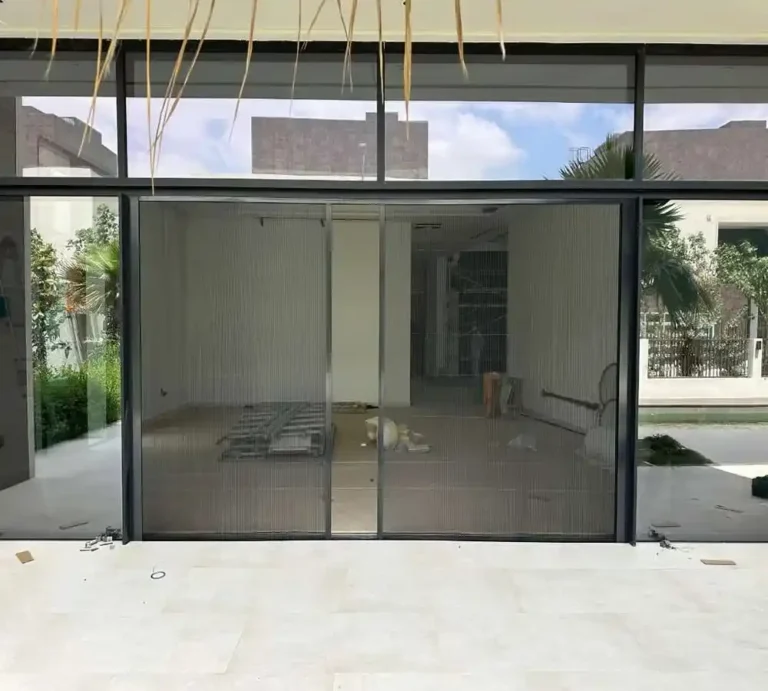
Villas have the same problem with the main entrance and the garden door, made worse because those doors are often propped open in the evening when it finally cools down. That is precisely the hour mosquitoes are most active.
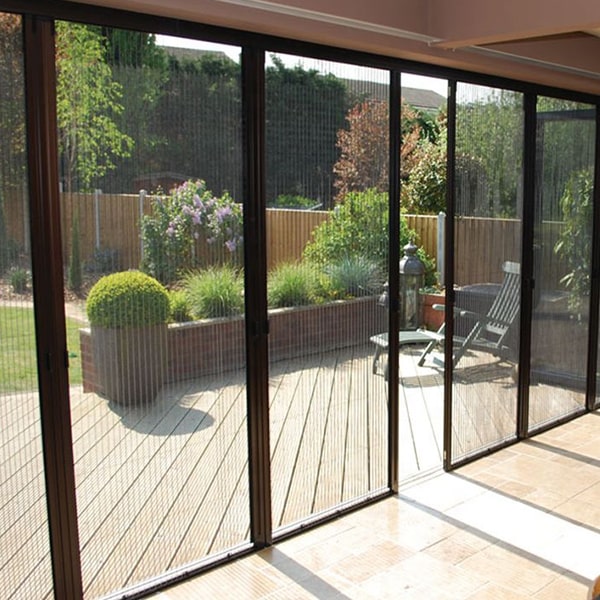
What fixes it: a mosquito net on the door itself. A magnetic screen is the most forgiving option because it closes behind you without you thinking about it, which removes the human failure entirely. A hinged screen door with a self-closer is the sturdier answer for a main entrance in daily use. Either way, the point is that the doorway is covered even while the door is open.
Route three: bathroom and kitchen extract vents
Every bathroom and most kitchens in a Dubai apartment have a mechanical extract vent, and it connects to a shaft that runs the height of the building. When the fan is off, that shaft is an unguarded tunnel between your bathroom and every other bathroom in the tower.
The grille on the ceiling has slots wide enough for an insect. Most people have never looked at it, and it is often the reason a bathroom with no window at all still has mosquitoes in it.
How to check: stand under the vent with the fan off and look up at the grille with a torch. If you can see through the slots into a dark shaft, that is a route. What helps: a fine mesh insert behind the grille. This is a small job and it is worth doing in every bathroom in the property.
Route four: drains and floor traps
Bathroom floor drains, laundry drains, kitchen sink overflows and balcony scuppers all connect to pipework. A properly working trap holds a plug of water that seals the pipe. A trap that has dried out does not.
In Dubai this matters more than it does in a cooler climate. Guest bathrooms, maid's rooms and second kitchens often go weeks without use, the water in the trap evaporates in the heat, and the drain becomes an open pipe into your flat. Some species will breed in that pipework and emerge indoors, which is why people occasionally find mosquitoes in a windowless bathroom on the fortieth floor and cannot explain it.
What fixes it: pour half a litre of water down every unused drain once a fortnight. It takes two minutes and it restores the seal. For drains you never use at all, a silicone drain cover costs almost nothing.
Route five: air conditioning and the condensate line
Split units and ducted systems both produce condensate, and that water leaves through a drain line. Where the line discharges, whether that is a balcony scupper, a service duct or a gully outside, you have a permanent source of standing water within a few metres of your home.
That is a breeding site, not just an entry route, and it is one you cannot see from inside. It is also completely fixable.
What to check: follow the condensate pipe from the outdoor unit and look at where it ends. If it drips into a tray, a plant pot saucer, a blocked scupper or any standing pool, you are irrigating a mosquito nursery on your own balcony. Clear it, or extend the line so it discharges into a drain rather than onto a surface.
Route six: the balcony door that stands open
Dubai evenings in the cooler months are genuinely pleasant and the balcony door ends up open for hours. This is not a fault, it is the reason people live here. But an open sliding door with no screen is a metre-wide entrance, and it is open at exactly the hour mosquitoes hunt.
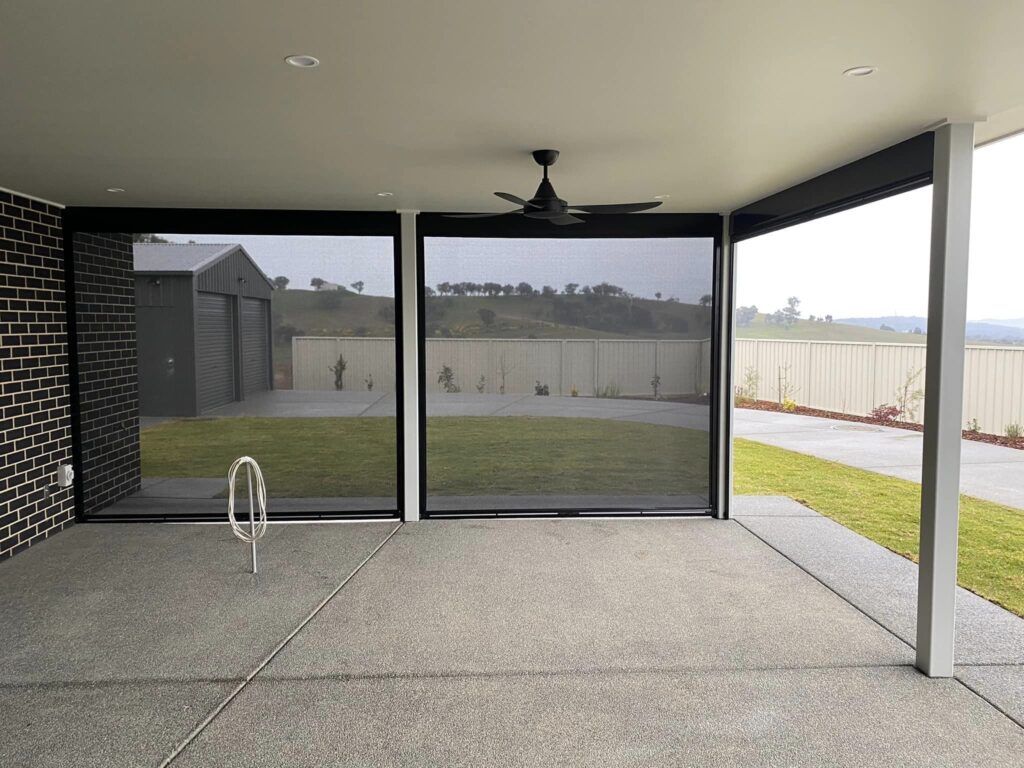
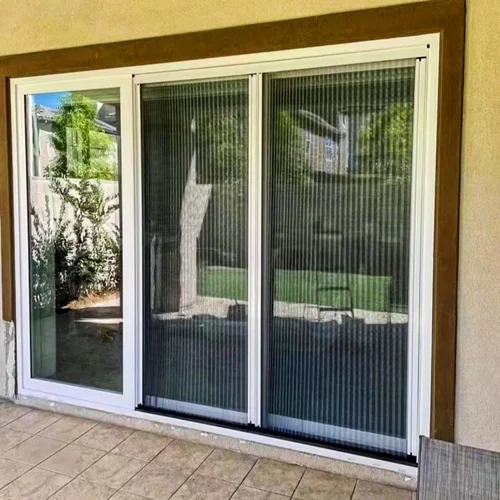
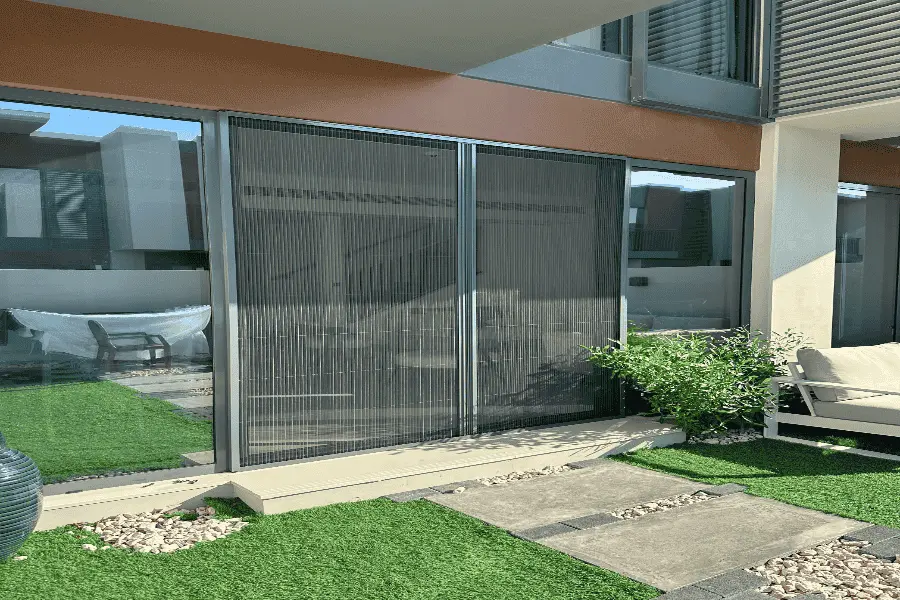
What fixes it: a mosquito net that slides with the door, so the opening is covered without changing how you use the balcony. See sliding door fly screens, and balcony fly screens for the wind and height factors that come with an apartment terrace. On a high floor an ordinary screen bows in the wind and breaks its own seal, which is where a zip-track screen earns its price by holding the mesh under tension on both edges.
Route seven: the ones you carry in yourself
Less common but real, and worth knowing about because it explains the occasional single mosquito in an otherwise sealed home. They ride in on shopping bags left in a car park, on delivery boxes that sat in a warm loading bay, on laundry brought in from a balcony line, and on people. A mosquito resting in the folds of a bag does not need to fly through anything.
You cannot engineer this one away, and it is not worth worrying about. If you are getting bitten every night, it is not because of a shopping bag. It is one of the six routes above.
Where Dubai mosquitoes are actually breeding
Stopping mosquitoes entering is half the job. The other half is not growing them yourself. A female mosquito needs standing water to lay in, and she is not fussy about how much: a bottle cap of water is enough, and the cycle from egg to biting adult takes only a week or two in Dubai warmth.

Walk your balcony, garden and service areas and look for these:
- Plant pot saucers. The single most common breeding site in a Dubai home. Empty them, or fill them with sand so the water drains through.
- Any container left outside, including buckets, watering cans, spare tiles stacked with a hollow, an upturned lid or a child's toy.
- Blocked balcony scuppers. Sand and dust silt them up, then a rain event or an AC drip leaves a shallow pool that never clears.
- Water features and fountains that are not circulating. Moving water is fine. Still water is a nursery.
- Pet water bowls left outside and topped up rather than changed.
- Roof drains and parapet gullies on villas, which nobody ever looks at.
- The gap under an unused pot where drip irrigation has been running unnoticed for months.
If you live near a community lake, a golf course, a park or heavy landscaping, you also have breeding sites you do not control. That does not make screening pointless. It makes it more important, because your own perimeter is the only part of the problem you can actually fix.
Room by room in a Dubai home: what to check tonight
Twenty minutes with a torch will usually find the answer in a Dubai apartment or villa. Work through the property in this order.
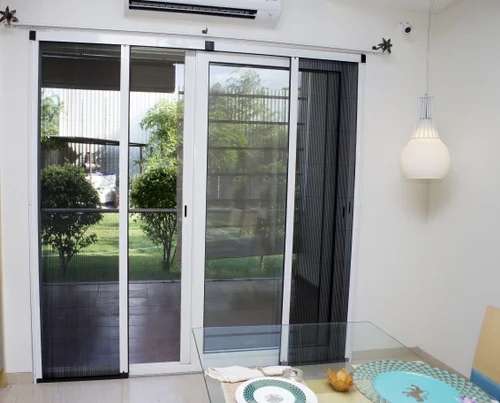
Bedrooms. Torch test around every screen edge. Check that the screen sits flush and that no corner of tape has lifted. If a bedroom has a balcony door, check that too, because bedroom balcony doors are screened far less often than living-room ones.
Living room. The balcony or patio slider is the biggest single opening in most homes. If it has no screen, stop here. This is your answer, and nothing else you do will matter as much.
Kitchen. Window screened? Extract vent meshed? Sink overflow and any floor drain holding water? Kitchens draw insects for their own reasons, food and warmth and bins, so an unscreened kitchen window is worse than an unscreened bedroom one.
Bathrooms. Extract grille, floor drain, and the window if there is one. Guest bathrooms are the classic dried-trap case because nobody runs the water.
Maid's room and laundry. Almost always has a floor drain, almost never used, almost always dry. Pour water down it.
Balcony. Standing water audit as above, plus where the AC condensate discharges.
Front door. Does it seal at the bottom? A worn threshold brush on an apartment door lets in more than mosquitoes.
The Dubai mosquito calendar
Mosquito pressure here is not constant, and knowing the pattern helps you act before the bad weeks rather than during them.
Humidity is the driver rather than heat alone, which is why the coastal and irrigated parts of the city feel it more than the dry inland ones. The deep summer months are often quieter than people expect in the middle of the day, because extreme heat suppresses activity, but dawn and dusk stay busy and indoor spaces stay comfortable for insects all day.
The sharpest spikes follow rain. A single heavy rain event fills every hollow, saucer, blocked scupper and construction depression in the city, and roughly a week to ten days later there is a noticeable wave of adults. If you do one preventive thing a year, walk your balcony and garden two days after rain and tip out everything holding water.
The transitional months, when evenings become pleasant enough to leave doors open, are when most people first notice a problem, not because there are suddenly more mosquitoes but because the house is suddenly open.
Which communities feel it most, and why
Two homes in the same city can have completely different experiences, and the pattern is fairly predictable.
Communities built around water features, lakes and canals see more, because there is permanent standing or slow-moving water within flight range. Golf-course communities and heavily landscaped villa developments see more, because irrigation keeps the ground damp and planting gives daytime shelter. Ground-floor and first-floor homes see more than high floors, simply because most species do not fly high without help from wind or a lift shaft.
Towers surrounded by paving, with no landscaping and no water feature, genuinely have less of a problem, until you account for corridors, shafts and drains, which is why a fortieth-floor apartment with a dry bathroom trap can still have mosquitoes.
If you back onto greenery, a lake or a park, you are not imagining it. It is worth specifying a finer weave for the mesh and screening the whole ground floor rather than selectively.
What genuinely works in a Dubai home, in order of effect
If you did only these things, in this order, you would solve most Dubai mosquito problems.
- Fit a mosquito net on the largest opening you leave open. Usually the balcony or patio door. This alone changes more than everything else combined.
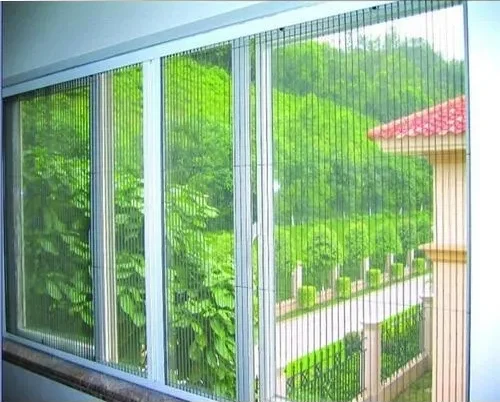
- Screen every window you open, including kitchen and bathroom. Partial screening moves the problem, it does not solve it.
- Fix the gaps on screens you already have. Free, and often the whole answer.
- Screen the entrance door if you are in an apartment with corridor access or a villa with a garden door in daily use.
- Kill the standing water on your own property. Saucers, scuppers, AC drip, containers.
- Restore dry drain traps and mesh the bathroom extract grilles.
- Then, and only then, consider repellents and plug-ins for the residual few.
Notice that the first four are all screening and the fifth and sixth are free. Sprays and plug-ins come last for a reason: they treat what got in, rather than stopping it getting in.
What does not work, honestly
Worth saying plainly, because a lot of money gets spent here.
Ultrasonic repellers have never performed well in controlled testing, and there is no accepted mechanism by which they would. Bug zappers kill enormous numbers of insects, but mostly not the biting ones, because mosquitoes are drawn to carbon dioxide and body heat rather than light, so the zapper is competing with you and losing. Citronella candles produce a genuine but very small and very local effect, easily defeated by a breeze on a balcony.
Fogging and outdoor spraying knock down adults for a few days and do nothing about the next generation, which is why communities that fog on a schedule still have mosquitoes on the day after the fog clears. It is a symptom treatment.
None of this is a reason to feel foolish for trying them. It is a reason to spend the money on the barrier instead, because the barrier is the part that keeps working while you sleep. The World Health Organization's guidance on vector-borne diseases makes the same point about physical barriers and source reduction being the foundation.
When the mosquito nets are right and it still happens
If every opening is screened, the seals are good, the drains hold water and the balcony is dry, and you are still being bitten, work through these in order.
Check the mosquito nets are actually closed. A retractable screen pulled nearly across is an unscreened window. This is by far the most common answer at this stage.
Check the mesh grade. Standard insect mesh stops mosquitoes comfortably. If your biters are very small and appearing near water or greenery, they may be midges or sand flies rather than mosquitoes, and those need a finer weave. Our guide to what actually stops mosquitoes covers the grades in detail.
Check for a tear. A hole the size of a fingernail makes the whole screen decorative. Mesh can be re-tensioned into the frame you already own rather than replacing the screen. That is what fly screen repair and re-mesh covers.
Check the neighbours' side. In a villa with a shared boundary or an apartment above a landscaped podium, the breeding site may be six metres away and not yours. Your screens still hold the line; you simply need all of them, all the time.
The short version for a bite-free Dubai home
A mosquito net keeps your home bite-free when it covers every opening you use, seals at every edge, and is backed by getting rid of the standing water you are unknowingly providing. It fails when one window is unscreened, when a screen was cut down from a standard size, or when a drain has dried out. None of those are the mesh's fault, and all of them are fixable in an afternoon.
If you want the mechanisms compared before you choose, our guide to every fly screen type in Dubai works through all of them by opening, and which mosquito net fits your window type covers windows specifically. For the product range itself, see mosquito nets in Dubai.
Frequently asked questions
Can a mosquito net really keep a Dubai home completely bite-free?
Yes, provided every opening you use is covered and every screen seals at its edges. The mesh itself is not the variable, because a standard insect grade stops mosquitoes completely. The variable is coverage. One unscreened kitchen window, or a five-millimetre gap down the side of a screen that was cut down from a standard size, undoes the rest of the house.
Why do I still get bitten when all my windows have screens?
In roughly this order: a gap at the edge of one screen rather than the screen itself; an unscreened door, usually the balcony slider or the front door; a bathroom extract vent with no mesh behind the grille; and a floor drain whose water trap has dried out. Work through those four before you suspect the mesh.
How do mosquitoes get into a high-floor apartment in Dubai?
Three ways, and none of them involve flying up forty storeys. They ride the lift and the corridor from the lobby, they come up service and extract shafts that connect every bathroom in the tower, and they emerge from pipework where a floor trap has evaporated dry. A tower flat with sealed windows can still have mosquitoes for all three reasons.
Do mosquito screens stop other insects too?
Yes. The same weave that stops a mosquito holds back houseflies, midges and sand flies, wasps and bees, and moths. With a tight bottom seal on a door, it also holds back ants and crawling insects at a ground-floor threshold. Screens are also surprisingly effective at holding back dust, which is not why anyone buys them but is worth having in Dubai.
When is mosquito season worst in Dubai and the UAE?
Humidity drives it more than heat, so coastal and irrigated areas feel it more than dry inland ones. The sharpest spikes come roughly one to two weeks after heavy rain, when every hollow, saucer and blocked scupper in the city has filled. Most people first notice a problem in the transitional months, when evenings turn pleasant and doors start being left open.
Does a mosquito net reduce airflow in a Dubai home?
A standard insect grade takes a small amount of airflow and is not noticeable in normal use. What people usually notice on an older screen is dust build-up rather than the mesh, and brushing or vacuuming it two or three times a year restores it completely. If you deliberately specify a very fine weave for midges, you trade a little more airflow for that protection, which is a decision worth making consciously at the measurement visit.
Should I screen the kitchen and bathroom windows too?
Yes, and if you are doing the house in stages, do those two first. Kitchens draw flies and mosquitoes for their own reasons, food and warmth and bins, and bathrooms tend to be opened for exactly long enough. Both are usually small windows, so both are quick and inexpensive, and both undo the bedrooms if you skip them.
Do plug-ins, ultrasonic devices or bug zappers work?
Ultrasonic repellers have never performed well in controlled testing. Bug zappers kill a lot of insects but mostly the wrong ones, because mosquitoes navigate by carbon dioxide and body heat rather than light. Plug-in vaporisers do have a real effect in a closed room, which makes them a reasonable last line for whatever still gets in. None of them are a substitute for covering the opening.
What can I do for free tonight?
Four things. Torch-test every screen edge for gaps. Pour half a litre of water down every drain you never use, especially in guest bathrooms and the laundry. Tip out every plant pot saucer and container on the balcony. Follow the air conditioning condensate pipe and make sure it is not dripping into a standing pool. That costs nothing and fixes a surprising share of cases.
Can you fit mosquito nets to a home that already has screens from another supplier?
Usually yes. If the frames are sound, the mesh can be re-tensioned into them rather than replacing the whole screen, which is faster and cheaper. If the previous screens were standard sizes trimmed to fit, they will have edge gaps that cannot be corrected, and those are worth replacing with made-to-measure ones. A free measurement visit will tell you which situation you are in.