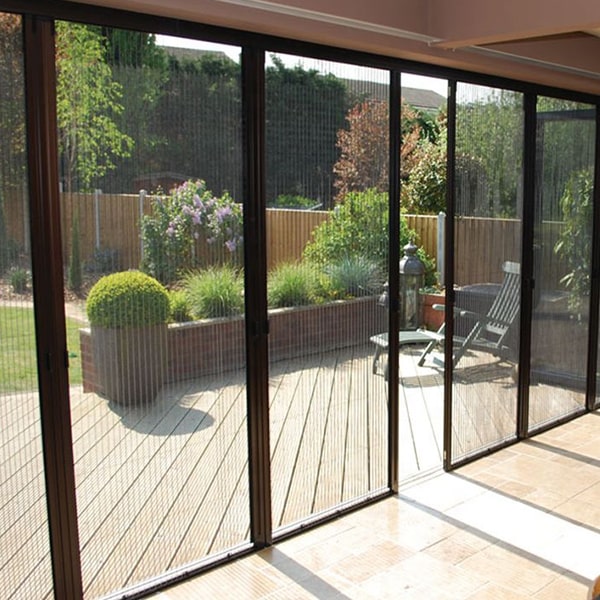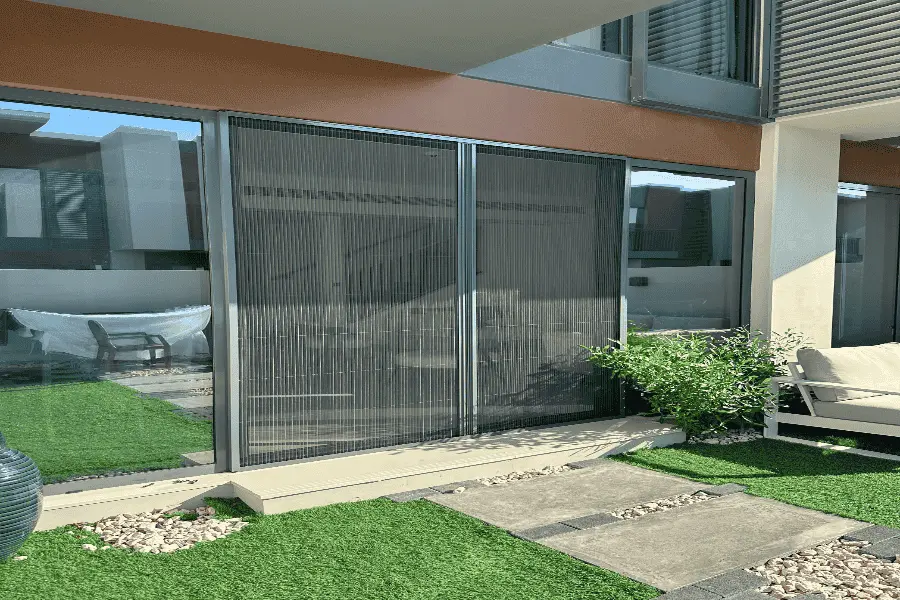

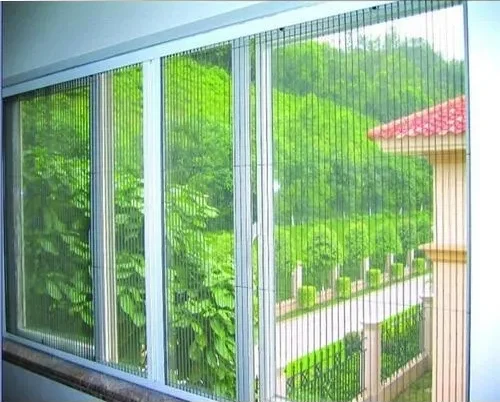
Almost nobody buys a mosquito net for a window and finds it fits. Dubai windows are not built to a standard size, and they are not built to a standard shape either. A tower apartment has sliding sashes in an aluminium track; a Jumeirah villa has casements that swing outward over a sill; a newer Dubai Hills house has floor-to-ceiling glazing with no frame to mount to at all. Each one needs a different mosquito net, fitted a different way. This guide goes window type by window type and tells you which mosquito net for windows actually works on yours.
Why a ready-made mosquito net rarely fits a Dubai window
Ready-made mosquito nets are sold in a handful of sizes and are meant to be trimmed or stretched to fit. That works in markets where windows come from a small number of standard moulds. It does not work here, for three reasons.
- The sizes genuinely vary. Developers specify their own glazing, so two apartments in the same community can have windows that differ by several centimetres. A net cut to nearly the right size leaves a margin, and a margin is a doorway.
- The mounting surface varies more. Some frames give you a flat 20mm face to mount on. Some give you 8mm and a bevel. Some give you nothing at all because the glass runs to the edge.
- Heat moves things. A net stretched under tension to close a gap will relax through a Dubai summer and open that gap again by autumn.
Made to measure is not a premium upsell here. It is the only way to get a screen that seals, and sealing is the whole job: mosquitoes do not go through mesh, they go around it.
Sliding windows
The most common window in Dubai apartments. Two or more sashes run horizontally in a track, and one slides behind the other.
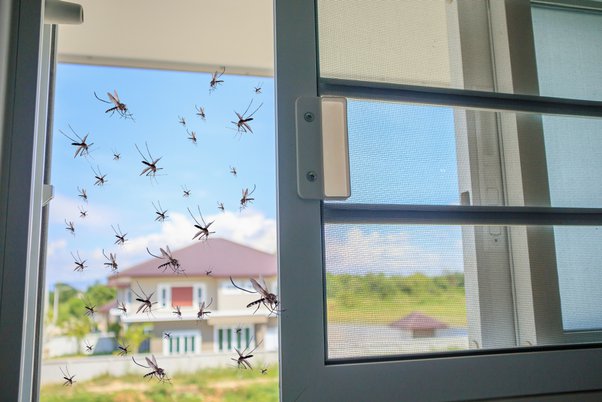
What fits: a sliding mosquito net in its own slim track, mounted alongside the existing window track so the screen moves the same way the glass does. You slide the glass, you slide the screen, and you can still reach the handle. A fixed panel is wrong here, because you would have to take it off every time you wanted the window open.
What to watch: the track needs to be fitted dead level or the screen binds. On a wide sliding window, a single panel will sag over time; two panels meeting in the middle hold tension far better. See double-sided screens for that case.
Casement windows
Hinged at the side and swinging outward, standard in older Jumeirah, Umm Suqeim and Al Barsha villas, and in most bathroom and kitchen windows across the city.

What fits: a fixed mosquito net mounted on the inside face of the frame. Because the glass swings out and the screen sits in, they never touch. You open the window through the screen, which is exactly what you want on a window you open for air rather than reach through.
What to watch: if the handle sits where the screen would cover it, the screen needs a magnetic or clip-off panel so you can still work the catch. That is a measurement-visit decision, not something you can order online.
Awning and top-hung windows
Hinged at the top and pushing outward from the bottom. Common on stairwells, corridors and above kitchen counters, and popular because they can stay open in light rain.
What fits: a fixed internal mosquito net, same principle as a casement. Awning windows are usually small and rarely reached through, which makes them the easiest window in the house to screen and the one most often forgotten.
What to watch: the winder mechanism. If there is a crank handle, the screen has to clear it or carry a cut-out.
Tilt-and-turn windows
European-style hardware, increasingly common in newer Dubai developments. The sash tilts inward at the top for ventilation, or swings fully inward like a door.
What fits: this is the one window type where a fixed internal screen fails, because the sash comes into the room. A roller screen mounted above the opening, or a pleated screen to one side, keeps the mesh out of the sash's path and lets you tilt freely.
What to watch: the depth of the reveal. Tilt-and-turn needs clearance, and the screen has to sit outside that swing arc without fouling the curtain track.
Floor-to-ceiling and full-height glazing
Common in newer villas and in tower apartments where the living room glass runs from slab to slab.
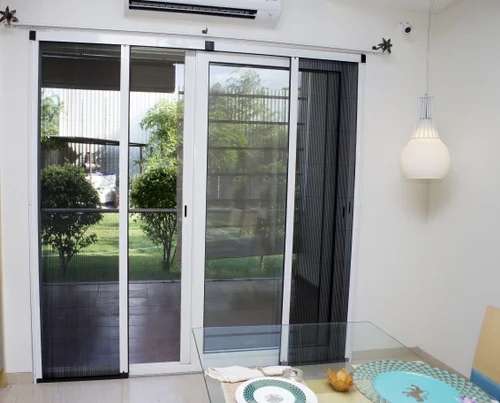
What fits: a retractable screen in a side cassette, so the mesh disappears completely when it is not needed and the view is uninterrupted. For spans beyond what a single cassette handles, extra-wide systems take over.
What to watch: tall screens catch wind. On a high floor or an exposed elevation, a zip-track screen holds the mesh under tension along both edges so it cannot bow or flap.
Arched, circular and shaped windows
Feature windows above doors, on stairwells and in older villa architecture around Al Wasl and Jumeirah.
What fits: a fixed screen with the frame bent to match the shape. This is the clearest case for measuring on site: a shaped opening cannot be quoted from a photograph, and it definitely cannot be bought off a shelf.
What to watch: shaped frames take longer to fabricate. Build a few extra days into your timeline.
Kitchen and bathroom windows
Worth calling out separately, because these are the windows people skip and the ones that matter most.
Kitchens attract flies for obvious reasons, food, warmth and bins, and a screened bedroom behind an unscreened kitchen achieves very little. Bathrooms are usually opened for a few minutes at a time, which is exactly long enough. Both are typically small casement or awning windows, so both are cheap and quick to screen. If you are doing the house in stages, do these two first.
How a custom mosquito net for windows is measured
The measurement visit is short and it decides everything that follows. Here is what happens on it.
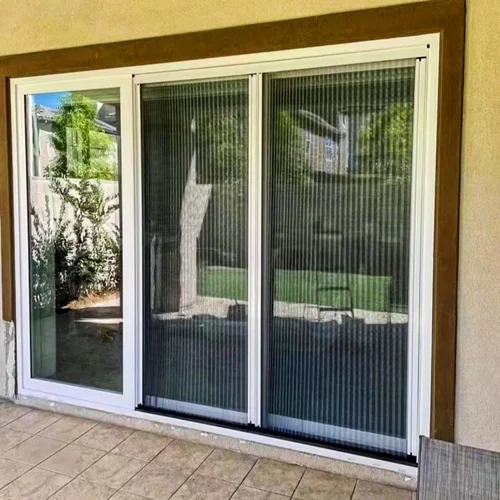
- Width and height at three points each. Openings are rarely perfectly square, and the screen is built to the tightest dimension so it seals all the way round.
- The mounting face. How much flat surface the frame gives us, and whether the screen mounts inside the reveal or on the face.
- Which way the window opens, and whether you reach through it or just open it for air. This decides fixed versus sliding more than anything else.
- Handle, winder and lock positions, so the screen clears them.
- The mesh grade and colour. Darker mesh reads clearer from inside. Finer weave if midges are a problem where you live. Our guide to what actually stops mosquitoes covers the choice in detail.
Everything is then fabricated to those figures and fitted on mounting tape, with no drilling into your frames, nothing marking the plaster, and a screen that comes off cleanly if you move.
Fixed or sliding: the question that decides the rest
Strip away the window jargon and almost every window comes down to one question: do you reach through this window, or do you just open it?
If you only ever open it for air, on a bathroom, stairwell, guest room or any awning window, a fixed screen is better. It seals more completely, costs less, has nothing to jam, and disappears visually because there is no track.
If you reach through it to clean the glass, water a plant, work a handle or pass something out, which covers most bedroom and living-room windows, you need a screen that moves. See fly screens for windows for the full range, or our guide to every fly screen type in Dubai if you are comparing mechanisms across doors as well.
Four mistakes worth avoiding
- Buying by window size alone. Two windows with identical dimensions can need completely different mosquito nets if one is a casement and the other slides.
- Fitting a fixed mosquito net on a window you use daily. It comes off within a month and never goes back.
- Screening the bedrooms only. Insects come in wherever the gap is and find the bedroom afterwards.
- Ignoring the mesh colour. Pale mesh sits visibly in front of the view. Grey, charcoal and black nearly vanish, and cost the same.
Keeping a window mosquito net working
Window mosquito nets need almost nothing. Brush or vacuum the dust off two or three times a year, because dust build-up rather than the mesh itself is what makes a screen feel like it blocks airflow. Rinse gently rather than scrubbing, and never press hard against fibreglass.
If a screen tears, the frame almost never needs replacing with it. The mesh is re-tensioned into the frame you already own, which is faster and cheaper than a new screen. That is what fly screen repair and re-mesh covers. Our warranty reflects the same reality: five years on the frame and one year on the mesh, because the mesh is the part that wears.
Frequently asked questions
Can you fit a mosquito net to any window in Dubai?
In practice, yes. Sliding, casement, awning, tilt-and-turn, arched and floor-to-ceiling all have a screen that suits them. The mechanism changes with the window, which is why the measurement visit comes before the quote rather than after it.
Do I need a custom mosquito net, or will a ready-made one do?
A ready-made mosquito net will physically cover most windows. It will not seal them. Dubai glazing is not built to standard sizes, and a screen trimmed or stretched to fit leaves a margin somewhere, which is all a mosquito needs.
Can I still open my window with a mosquito net fitted?
Yes, and this is the main thing the measurement visit is deciding. On a casement or awning window the screen sits inside and the glass swings out, so you open the window straight through the mesh. On a sliding window the screen slides too, on its own track alongside the glass.
Will it damage my window frames?
No. We fit on mounting tape rather than drilling, so nothing is bored into the frame and nothing marks the plaster. It matters in a rented apartment and it matters again when you want the screen off to clean it.
Which windows should I screen first if I am doing it in stages?
Kitchen and bathroom, then bedrooms. Kitchens draw flies to food and bins, and bathrooms get opened for exactly long enough. Both are usually small windows, so both are quick and inexpensive to do.
How long does a window mosquito net last in Dubai?
The powder-coated aluminium frame lasts for years and carries a five-year warranty. The mesh is the wearing part and carries one year. When it goes, the frame is re-meshed rather than replaced. For the whole-home picture, read why mosquitoes still get into your Dubai home.