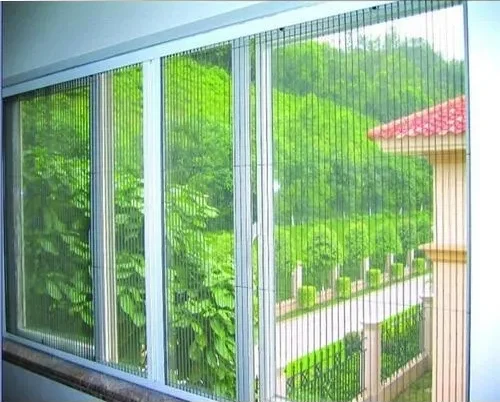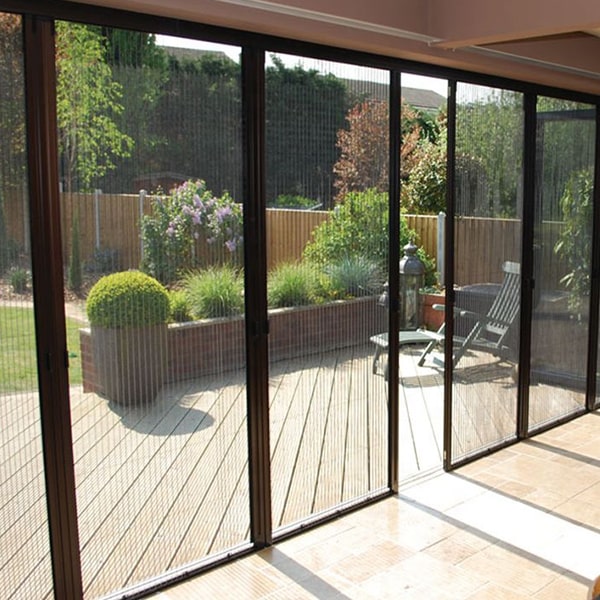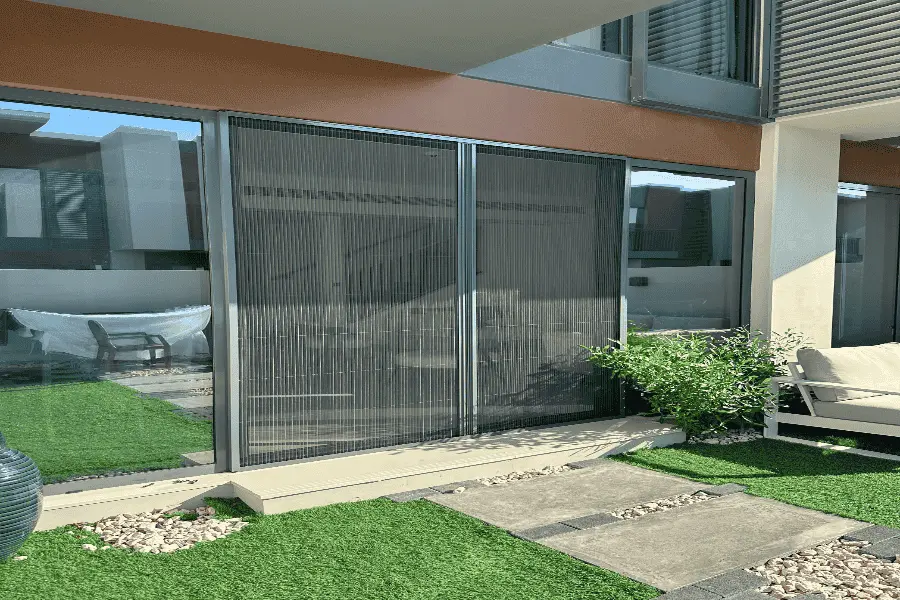

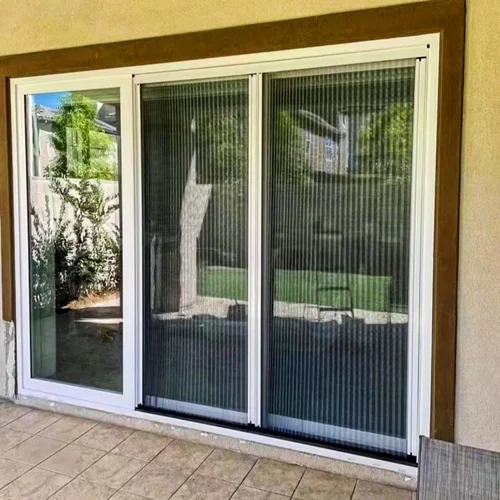
Every fly screen sold in Dubai claims to stop mosquitoes. Most of them do, some of the time. The difference between a screen that works and one that lets three mosquitoes into your bedroom every night is rarely the brand on the frame. It is the grade of the mesh, the material it is woven from, and whether the screen actually seals at the edges. This guide covers all three, in the order that matters.
What a mosquito has to get through
An adult mosquito is not small in the way people assume. Body and wingspan together are comfortably larger than the apertures in a standard insect mesh, which is why a correctly specified screen stops them completely rather than mostly. The insects that genuinely test a mesh in the UAE are not mosquitoes at all. They are midges and sand flies, which gather near water, greenery and damp ground and are noticeably smaller.
That is the real specification question. A screen that stops mosquitoes is easy. A screen that also stops what breeds in the irrigation channels behind a villa community after rain takes a finer weave, and it is worth knowing which one you are buying.
Mesh grade: the number that matters
Insect mesh is described by how many strands are woven per inch in each direction. The standard insect grade sits around eighteen by sixteen, eighteen strands one way and sixteen the other. That is the grade that stops mosquitoes and houseflies while still letting a usable amount of air through, and it is what goes on most window and door screens we fit.

Go finer and you stop smaller insects, but you also cut airflow and make the mesh more visible. Go coarser and you gain airflow you will not notice while losing insects you will. In a climate where the whole point of a screen is being able to leave the window open, that trade-off is the entire decision, and it is why we specify at the measurement visit rather than selling one grade for every opening.
Fibreglass, polyester or stainless steel
The fibre carries the mesh, and the three in common use behave very differently once they are on a wall in Dubai.

Fibreglass mesh
Soft glass fibre coated in PVC. It holds its shape, will not crease or kink if it gets pushed, and springs back rather than denting. The coating also fights UV, which matters more here than almost anywhere, because uncoated netting turns brittle and fades inside a single Dubai summer. Fibreglass is the sensible default for most windows and for doors that are not in constant use.
Polyester mesh
Tougher and considerably more tear-resistant. It takes knocks and pushes better, which is why we lean towards it on a door opened twenty times a day, on a balcony where furniture moves against it, and in any home with pets or young children. It costs a little more and it is worth it in those three situations specifically.
Stainless steel mesh
The strongest option and effectively cut-resistant, which makes it the choice where a cat sharpens its claws on the screen or where security is part of the brief. The trade-off is honest: steel mesh is more visible from inside than a dark fibreglass weave, and it costs more. Worth it for a specific problem, over-specified for a bedroom window.
Colour changes what you see, not what you stop
Mesh colour has nothing to do with insect performance in Dubai or anywhere else, and everything to do with whether you are happy looking at it. Grey, charcoal and black read clearest from inside, because a darker mesh recedes against bright daylight and your eye focuses past it. Pale mesh catches the light and sits visibly in front of the view.
From a metre back, a dark fine mesh on a slim frame is close to invisible. It is the single easiest way to make a screen you will not resent, and it costs nothing extra.
The seal beats the weave
This is the part almost every fly screen guide in Dubai skips, and it is the part that decides whether you get bitten. A perfect mesh with a five-millimetre gap at the edge is worse than an ordinary mesh with no gap at all. Mosquitoes do not chew through a screen. They walk around it.

Gaps come from three places, and all three are avoidable:
- A screen cut down from a standard size. Almost no Dubai window is a standard size. A ready-made screen trimmed to fit leaves a margin somewhere, and that margin is the entire failure.
- A frame that has bowed. Wide spans without proper tensioning sag in the middle over time and open a gap along the top edge.
- A door threshold with no bottom seal. The most common one. The screen looks perfect from a metre away and has a finger-width gap at floor level where ants and crawling insects walk straight in.
Every screen we make is measured and built for its specific opening for exactly this reason, and fitted on mounting tape so it pulls flat with no sag and no drilling into your frames.
What the same mesh also keeps out
People across Dubai screen up for mosquitoes and then discover the rest of the benefit. The weave that stops a mosquito also holds back:
- Houseflies, a daytime pest in the heat, drawn to kitchens, food and bins.
- Midges and sand flies, tiny biters near water and greenery, usually worse after rain.
- Wasps and bees, a real nuisance near a garden or a pool, and ones you do not want loose indoors.
- Moths, drawn to indoor lights at night through any open window.
- Ants and crawling insects, at a ground-floor threshold, where a tight bottom seal does most of the work.
- Dust, not the reason anyone buys a screen, but a fine mesh holds back a surprising amount of what a shamal carries.
When mosquitoes are worst in the UAE
Mosquito pressure here is not evenly spread through the year and it is not evenly spread across the city. Humidity is the driver, so the coastal and irrigated parts of Dubai see more than the dry inland ones, and the weeks after rain see a spike as standing water appears in places that are normally dry.
Communities near water features, golf courses, parks and heavy landscaping carry more of it than towers surrounded by paving. If you back onto greenery or a lake, you are not imagining it, and it is worth specifying a finer weave and screening the ground floor completely rather than selectively.
Which screen type holds the seal best
Mesh being equal, some mechanisms seal more reliably in a Dubai home than others, simply because of how they work.
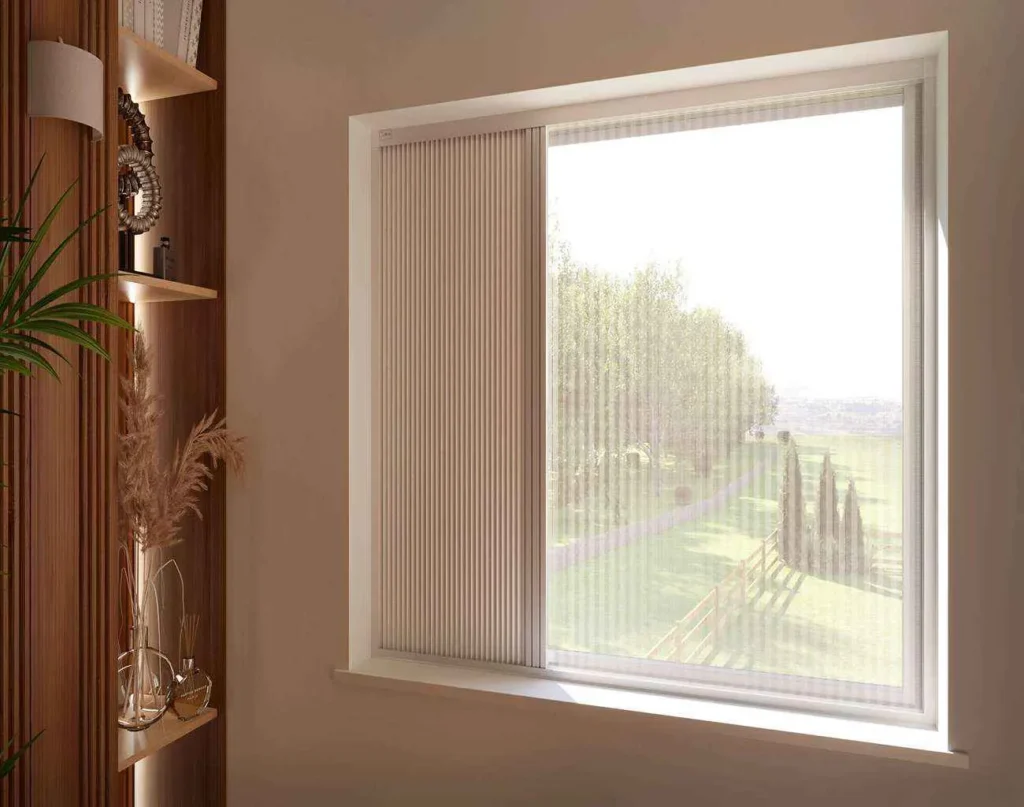
- Fixed screens seal best of all, because nothing moves. On a window you keep shut, this is the most mosquito-proof option there is. See fixed fly screens.
- Magnetic door screens close themselves behind you, which removes the commonest human failure, leaving the screen open. See magnetic fly screens.
- Sliding and pleated screens seal well when the track is fitted level and the brushes are intact. See sliding door fly screens and pleated fly screens.
- Zip-track screens hold the mesh under tension along both edges, which is what keeps a high-floor balcony sealed on a windy night. See zip fly screens.
- Retractable screens are the most flexible and need the most care, because the seal depends on the mesh being pulled fully across rather than nearly across. See retractable fly screens.
If you are still deciding between mechanisms rather than meshes, our guide to fly screen types in Dubai works through all of them by opening.
Four mistakes that let mosquitoes in
- Screening the bedroom only. Mosquitoes enter wherever the gap is and find you afterwards. A screened bedroom behind an unscreened kitchen window achieves very little.
- Ignoring the bottom of a door. The gap at floor level is the one nobody looks at, and it is where the crawling insects come from.
- Leaving a torn screen up. A tear of any size makes the whole screen decorative. Mesh can be replaced in the existing frame. See fly screen repair and re-mesh.
- Buying on price per window. The cheapest quote almost always means a coarser mesh, a thinner frame or a standard size trimmed to fit, and all three show up in year two.
What a good quote should tell you
Two quotes for the same window can differ by a wide margin and both be honest, because they are often not quoting the same product. Before you compare numbers, make sure you are comparing the same four things: the mesh grade, the mesh material, the frame profile, and whether the price includes a made-to-measure build or a standard size adjusted on site. A quote that does not name the mesh is not a quote you can compare.
It is also worth asking what happens in year two. A supplier who will re-mesh the frame you already own is a different proposition from one who will only sell you a replacement screen, and that answer tells you more about the build quality than any spec sheet.
Keeping the mesh working
Mesh is the part that wears in Dubai heat, which is why our warranty runs five years on the frame and one year on the mesh. Keeping it in good order is straightforward: brush the dust off with a soft brush or vacuum it with the upholstery attachment two or three times a year, rinse gently rather than scrubbing, and never press hard against a fibreglass weave. Dust build-up is the main reason a screen starts feeling like it blocks airflow, and it is entirely reversible.
If the mesh has torn, sagged or clouded with age, the frame almost never needs replacing with it. We re-mesh in the existing frame, which is faster and cheaper than a new screen. If you want the mosquito side of the range specifically, mosquito nets in Dubai covers window, door, balcony, cot and bed nets in one place.
Frequently asked questions
What mesh size stops mosquitoes?
The standard insect grade, woven at roughly eighteen by sixteen strands to the inch, stops mosquitoes and houseflies while keeping usable airflow. A finer weave is worth specifying if midges or sand flies are your actual problem, which is common near water and heavy landscaping.
Is fibreglass or polyester mesh better?
Neither outright. They suit different openings. Fibreglass holds its shape, resists UV and is the sensible default for most windows. Polyester is tougher and more tear-resistant, so it earns its place on a busy door, a balcony, or a home with pets and young children.
Can you see through mosquito mesh?
Yes, and the colour decides how well. Grey, charcoal and black recede against daylight and give the clearest view. From a metre back, a dark fine mesh on a slim frame is close to invisible.
Does the UAE sun damage mosquito mesh?
Not the mesh we fit. The fibreglass is coated to resist UV so it does not go brittle or fade in a season the way cheap uncoated netting does, and the aluminium frame is powder-coated for the same reason.
Why do mosquitoes still get in when I have screens?
Almost always a gap rather than the mesh. Check the bottom of any door screen first, then the edges of anything that was cut down from a standard size, then the middle of any wide screen that may have bowed. A screen that seals properly stops them completely.
Do mosquito screens stop other insects?
Yes. The same weave holds back houseflies, midges and sand flies, wasps and bees, moths, and, with a tight bottom seal, ants and crawling insects at a ground-floor threshold. For the window side specifically, see which mosquito net fits your window type. If the mesh is right and they still get in, read why mosquitoes still get into your Dubai home.